

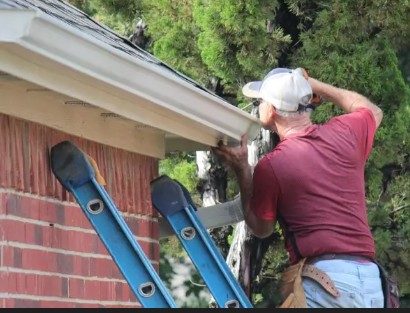
Your gutters probably aren’t the first thing you think about on a Saturday morning. But here’s the thing — those unassuming channels running along your roofline are quietly standing between your siding and some very expensive water damage.
When gutters fail, water doesn’t just splash harmlessly to the ground. It runs straight down your siding, seeps behind it, and starts doing damage you won’t see until it’s too late. The good news? Most gutter problems are fixable without breaking the bank. This guide walks you through real, affordable gutter repair strategies that can save your siding — and your wallet.
Why Your Siding Pays the Price for Bad Gutters
Gutters have one job: move water away from your home. When they can’t do that — because they’re clogged, cracked, or pulling away from the fascia — the water has to go somewhere.
It goes straight down your walls.
What That Water Actually Does to Your Siding
Wood siding is the most vulnerable. Persistent moisture causes wood fibers to swell, crack, and eventually rot from the inside out. By the time you see soft, discolored wood, the damage has usually spread further than it looks.
Vinyl siding holds up better, but it’s not immune. Water that backs up behind vinyl panels creates the perfect dark, damp environment for mold and mildew. That mold doesn’t just look bad — it works its way into your wall cavity and insulation.
Fiber cement and engineered wood siding can also absorb moisture at seams and joints, leading to swelling, delamination, and paint failure.
The kicker? Most homeowners spend $3,000 to $10,000 or more repairing water-damaged siding. Fixing a gutter often costs a fraction of that.
5 Affordable Gutter Repair Strategies You Can Do Right Now
You don’t need to be a contractor to tackle most gutter problems. Here are five gutter repair strategies that are practical, effective, and budget-friendly.
1. Patch Small Holes and Cracks with Roofing Cement
Small holes and hairline cracks are common in older gutters, especially aluminum ones. Water drips through these spots and runs directly down the siding behind your downspouts.
What to do:
- Clean and dry the area thoroughly
- Apply roofing cement or gutter sealant with a putty knife
- For holes larger than a quarter-inch, use a metal patch kit before sealing
- Let it cure fully before testing with a hose
This fix costs under $15 and takes less than an hour.
2. Re-Secure Loose or Sagging Gutter Hangers
Gutters that sag or pull away from the fascia are a major cause of siding rot. When the gutter tilts away from the house, water spills over the back edge — right against your siding and fascia board.
Look for hangers that are bent, missing, or pulling out of the wood. Replace them with new spike-and-ferrule hangers or, better yet, hidden gutter hangers. These are stronger and hold the gutter flush against the fascia.
Hangers cost $1–$3 each. A box of 50 runs about $50 — enough to re-secure most standard gutters.
3. Correct the Pitch for Proper Drainage
Gutters need a slight slope — about a quarter-inch drop for every 10 feet — to drain toward the downspout. If they’re level or sloping the wrong way, water pools and eventually overflows.
How to check:
- Run a garden hose in the gutter and watch how the water moves
- Pooling in the middle or far end means the pitch is off
Fixing the pitch usually means re-hanging the affected sections. It’s a Saturday afternoon job, but it makes a real difference in how well your gutters protect your siding from water damage.
4. Clear Downspout Clogs Before They Back Up
A clogged downspout turns your entire gutter into a holding tank. When it overflows, it often spills right along the wall, soaking your siding in the process.
Steps for fixing leaky gutters caused by clogs:
- Remove the downspout elbow and check for debris
- Use a plumber’s snake or garden hose to flush the blockage upward
- Run water from the top of the gutter to confirm it flows freely
- Install a downspout strainer to catch debris before it clogs again
This is one of the most overlooked gutter maintenance tips — and one of the easiest to stay on top of.
5. Seal Gutter End Caps and Joints
The joints where gutter sections meet — and the end caps at the edges — are common leak points. Over time, the factory sealant dries out and cracks.
Use a waterproof gutter sealant (not just caulk) to re-seal every joint from the inside. Work your way from one end to the other, wiping away any old sealant first. This is especially important before the rainy season hits.
When to Repair vs. When to Replace
Most of the fixes above are designed for gutters that are structurally sound but showing their age. But sometimes repair isn’t enough.
Here’s how to tell the difference:
Repair is likely enough if:
- The damage is isolated to one or two sections
- The gutters are less than 15 years old
- The fascia and soffit behind the gutters are still solid
- Sagging is caused by hangers, not warped gutter material
Replacement makes more sense if:
- Multiple sections are cracked, rusted, or pulling away
- The gutters are more than 20 years old
- You’re seeing repeat leaks after repeated repairs
- Your current gutters have a lot of seams (more joints = more failure points)
This is where the type of gutter matters more than people realize. Sectional gutters — the kind sold in pre-cut pieces at hardware stores — have seams every few feet. Each seam is a potential leak point.
If you’re replacing, investing in high-quality seamless rain gutters is worth serious consideration. Seamless gutters are custom-cut to the exact length of your roofline, which eliminates the joints where most leaks start. They also tend to hold their pitch better over time, which means fewer pooling and overflow problems down the road.
A Simple Maintenance Schedule to Protect Your Siding Year-Round
Preventing damage is always cheaper than fixing it. A basic routine goes a long way toward keeping your gutters — and your siding — in good shape.
- Spring: Clear winter debris, check for cracks and loose hangers, re-seal joints if needed
- Late summer: Clear out seed pods, pine needles, and early leaf fall
- Fall: Clean gutters twice — once mid-fall, once after peak leaf drop
- After major storms: Check for displaced sections, clogs, and unusual sagging
If your gutters have mesh guards, they still need occasional cleaning. Guards reduce debris buildup but don’t eliminate it entirely.
How Southwest Seamless Rain Gutters Can Help
If you’re in the market for a professional hand, Southwest Seamless Rain Gutters offers a full range of services to keep your home protected year-round. From custom seamless gutter installation cut to the exact dimensions of your roofline, to gutter repairs, resealing, rehang and pitch corrections, and downspout replacements — they handle the jobs that go beyond a weekend DIY fix. They also offer gutter guard installation for homeowners who want to cut down on seasonal cleaning. Every job is backed by hands-on expertise and a focus on doing it right the first time, so water ends up where it belongs — far away from your siding and foundation.
Final Thoughts: Small Fixes, Big Protection
Gutters are one of those home systems that quietly do a lot of heavy lifting — until they don’t. A $15 tube of roofing cement or a bag of new hangers can prevent the kind of siding damage that costs thousands to fix.
The key is not waiting until you see the problem from the inside. By then, water has usually been doing its damage for months.
Start with the basics: clear the clogs, patch the cracks, check the pitch, and reseal the joints. If your gutters are older or beyond repair, talk to a professional about seamless rain gutters — a one-time upgrade that pays for itself in reduced maintenance and better protection.
A little attention now saves a lot of money later. Your siding will thank you.
