

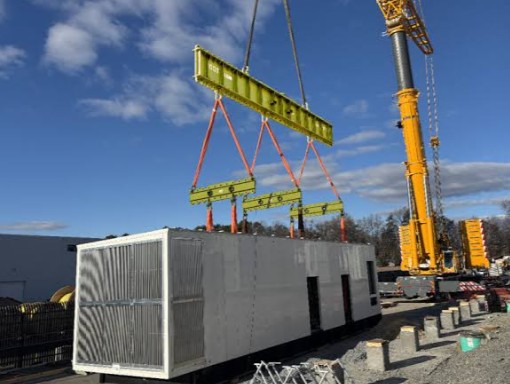
Lifting a load with a single hook and a pair of slings works well for many jobs. It works less well when the load is long, wide, flexible or awkwardly balanced. Shipping containers, machinery skids, modular building units and large fabricated assemblies often need support at three or four points spread across their footprint. That’s the job of a multi-point lifting beam or frame.
For operations and procurement teams, choosing this equipment is about more than capacity. A poor match between the beam and the load can slow every lift, damage the load or put workers at risk. A good match makes lifts faster, more predictable and easier to plan. Here’s how to approach the decision.
Why Spread The Load At All
When slings run from a single crane hook straight down to the corners of a wide load, they meet the load at a sharp angle. The flatter that angle, the more tension each sling carries and the more inward squeezing force the load experiences. For a container, a thin-walled tank or a delicate assembly, that squeeze can cause dents, bending or worse.
A beam or frame changes the geometry. The crane lifts the beam, and the slings hang down from it closer to vertical. Sling tension drops, the load is supported more evenly, and the overall rigging can be shorter, which helps where headroom is limited.
Three Points Or Four
The first question is how many lifting points the load needs.
Three-point lifters suit loads with three pick points or a roughly triangular footprint. They can also help with loads whose weight is concentrated toward one end, since three legs tend to share a load more naturally than four.
Four-point lifters suit rectangular loads, which covers most containers, skids, pallets of equipment and modular units. They come in two common layouts: an H-shaped frame with crossbars, and an X-shaped frame with diagonal arms.
Four-point rigging has a quirk worth understanding. When the load is rigid and the legs aren’t perfectly equal, two diagonally opposite legs can end up carrying most of the weight while the other two go slack. Experienced riggers plan for this rather than assuming all four legs share the load equally, which is one reason careful sizing and level rigging matter so much.
Fixed Or Adjustable Spread
Lifting beams come with either a fixed spread or an adjustable one.
A fixed beam has lifting points at set distances. It’s simple, usually lighter and well suited to operations that lift the same type of load over and over, such as one standard container size or one model of equipment.
An adjustable beam has lifting points that can be moved along the frame within a set range. It costs more and takes a little longer to set up, but one unit can handle several load sizes. For teams handling a mix of containers, crates or equipment, an adjustable model can replace several fixed ones and cut down on storage and inspection work.
The right choice depends on the variety of loads. Picking a beam that matches the most common load, then adding an adjustable unit for the exceptions, is a practical approach for many sites.
Getting The Capacity Right
Every beam carries a working load limit, the maximum load it’s rated to lift under the stated conditions. Available ratings for 3 & 4 point lifting beams run from loads of a few thousand pounds to well over a hundred thousand, so there’s no reason to guess.
A few points help avoid under-sizing:
Know the real weight. Use documented weights rather than estimates, and include any contents.
Count the hardware. Slings, shackles and hooks below the beam add to the load it carries.
Check the stated angle. Some frames are rated at a specific sling angle, and capacity falls if slings hang at a flatter angle.
Allow for uneven loading. Off-center weight shifts more force onto some legs than others.
Remember the crane. The beam’s own weight counts against the crane’s capacity.
Find The Center Of Gravity
Most problems with multi-point lifts come back to the center of gravity. If the beam’s attachment point isn’t directly above it, the load tilts as soon as it leaves the ground. A tilting load can swing, shift its contents or overload individual legs.
Containers and crates are especially tricky because their contents may sit to one side. Ask for loading information where possible, and test-lift a few inches off the ground before committing to the full lift. Adjustable beams and frames with multiple attachment points make it easier to correct for an off-center load.
Match The Beam To The Load’s Fittings
The beam is only one part of the system. It has to work with the way the load is designed to be lifted. Shipping containers, for example, are lifted through corner fittings, and the spread of the frame needs to suit the container length. Machinery may have dedicated lifting lugs at specific distances. Measure the actual distances between lifting points and confirm the beam’s spread range covers them comfortably.
Inspection And Record Keeping
Lifting equipment needs regular checks. Operators should look over a beam before each use for cracks, bent members, damaged lifting points, worn pins and missing markings. Periodic thorough examinations by a competent person are also required in many regions, along with records of those checks.
Clear markings make this easier. Each beam should display its rated load and its own weight, so crews don’t have to look up specifications on site. Keeping a simple log of inspections, repairs and usage also helps spot units that are wearing faster than expected.
Thinking Beyond The Purchase Price
It’s tempting to compare beams on price and capacity alone. A wider view usually pays off. Consider how often each beam will be used, how many load types it needs to handle, how long setup takes and whether spare parts and technical support are available. Equipment that fits the job well reduces lift times, cuts rework and lowers the chance of damaged goods.
A Better Lift Starts With The Right Frame
Multi-point lifting beams turn awkward, wide or unbalanced loads into controlled, repeatable lifts. Choosing between three and four points, fixed and adjustable spreads, and the right capacity takes some planning, but that planning prevents most of the problems that make heavy lifts slow or risky. When the frame matches the load, every lift that follows gets easier.
