

Key Takeaways
- Retail safety should protect employees, shoppers, merchandise, customer information, and daily operations.
- Useful security measures deter problems without creating unnecessary delays or confusion for legitimate customers.
- Training, communication, and response plans are as important as physical or digital technology.
- Privacy practices should limit the collection, access, and retention of customer and employee information.
- Programs should be evaluated through meaningful outcomes, not simply by the number of alerts generated.
Retail safety is no longer limited to preventing shoplifting. Store teams must also prepare for fraud, aggressive behavior, employee injuries, customer privacy concerns, inventory mistakes, and digital threats that can affect in-person operations. The goal is not to make every shopper feel like they are being monitored. It is to create a store that is orderly, responsive, and easier for employees and customers to navigate.
A balanced safety plan combines trained people, practical procedures, thoughtful store design, and tools that address defined risks. For example, retail security cameras can help teams review incidents and monitor key areas, but they work best when paired with clear reporting protocols, adequate staffing, and respectful customer service.
Why Retail Safety Requires a Broader Plan
Traditional loss prevention often centered on merchandise theft. That remains important, but stores now face risks that can begin at a register, through a return, in a loyalty account, over the phone, or in a stockroom. A single weak process can affect sales, employee confidence, customer trust, and operational continuity.
Recent industry findings illustrate the shift. In its 2026 survey, the National Retail Federation reported lower shoplifting and merchandise-theft incidents in 2025 than in 2024, while phone scams, loyalty fraud, gift card fraud, and other external theft methods increased. The changing mix of retail fraud and theft is a reminder that safety planning must cover both physical and digital touchpoints.
Start With a Store-Specific Risk Review
Before purchasing equipment or rewriting policies, review the conditions at each location. A late-night convenience store, a large-format retailer, and a specialty boutique may have very different exposure based on staffing, layout, products, parking, local conditions, and operating hours.
- Review recent incidents, customer complaints, and near misses.
- Identify blind spots, cluttered areas, damaged fixtures, and frequent product-loss locations.
- Inspect entrances, exits, checkout lanes, stockrooms, break areas, and parking areas.
- Ask employees where they feel least safe and what slows their response when help is needed.
- Compare risks by shift, day of week, and peak shopping period.
This review should result in a short list of priorities. Addressing three clearly defined risks is generally more useful than launching a broad program with unclear ownership.
Build Safety Around People First
Employees are often the first to notice blocked exits, suspicious return activity, a distressed customer, or a growing conflict. They need simple guidance that helps them respond safely without expecting them to act as law enforcement.
Workplace violence prevention should be part of the plan, especially where employees handle cash, work alone, or close late. OSHA notes that worksite assessments, training, engineering controls, and administrative controls can help reduce workplace violence hazards. A workplace violence prevention program should explain how to summon help, when to disengage, how to document an incident, and how supervisors will support affected employees afterward.
- Use plain-language reporting procedures and a reliable way to contact a manager or security team.
- Train staff to avoid confrontation and prioritize personal safety over recovering merchandise.
- Practice emergency procedures so employees know where to go and whom to contact.
- Review difficult incidents with employees to identify improvements without assigning blame prematurely.
Use Store Design to Reduce Risk Naturally
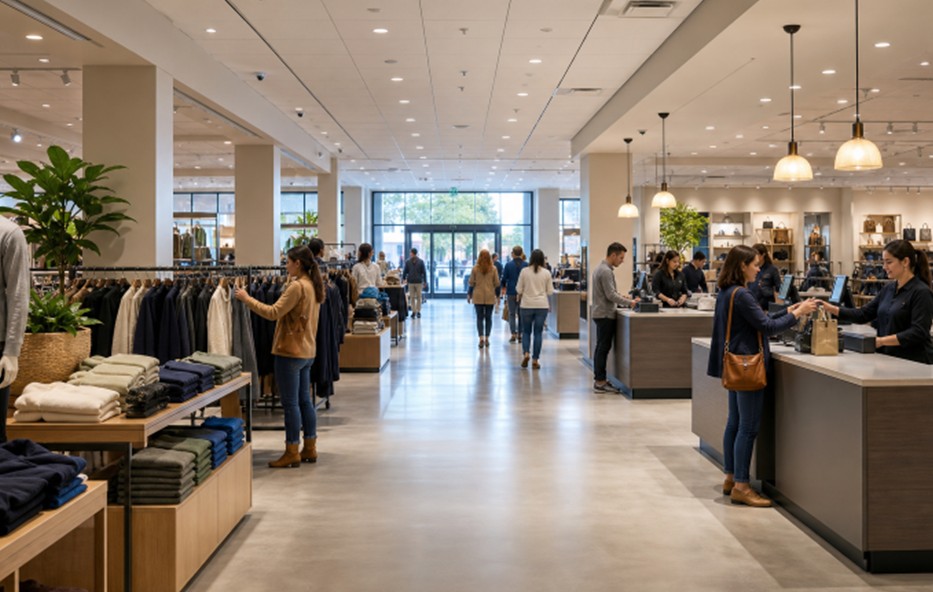
Store design can make safety feel less intrusive. Clear sightlines, strong lighting, uncluttered aisles, visible checkout areas, and clearly marked exits help employees monitor the floor, and customers find what they need.
Small adjustments can have an immediate effect. Keep tall displays away from key views, remove boxes from emergency routes, repair damaged signage, and make sure assistance points are easy to locate. Design choices should support accessibility and smooth movement, not turn a store into an obstacle course.
Add Technology With a Clear Purpose
Technology is most effective when it supports a specific decision or response. Cameras, access controls, incident-reporting tools, electronic article surveillance, and analytics may all have a role, but no system replaces sound judgment and trained employees.
Before deployment, managers should answer five questions:
- What precise problem is this tool intended to solve?
- Who will monitor or review the information it produces?
- What action can the team take when an alert occurs?
- How will false alerts, system outages, and technical errors be handled?
- Will the tool create friction for customers or extra burdens for staff?
Protect Privacy While Improving Safety
Safety measures should be transparent, limited, and consistently managed. Retailers should document what information is collected, the business or safety reason for collecting it, who can access it, and when it will be deleted. This is especially important when a program involves customer identity, payment details, location information, or biometric data.
Practical safeguards include restricting access by job role, using retention schedules, posting understandable notices where monitoring occurs, and reviewing applicable legal requirements before introducing identity-related tools. Privacy governance also gives employees a clearer standard for using information responsibly.
Reduce Customer Friction at High-Risk Touchpoints
A security practice can create a new problem when it causes long waits, unclear instructions, or inconsistent treatment. Locked displays, receipt checks, and approval steps should be designed around both service and deterrence.
- Place assistance buttons or clear directions near restricted products.
- Set internal service expectations for unlocking merchandise.
- Use polite, consistent language when checking receipts.
- Offer convenient checkout options when practical.
- Review complaints and abandoned purchases after policy changes.
Prepare for Fraud Beyond the Store Floor
Fraud prevention should include short, repeatable drills. Employees should pause when a caller creates urgency, verify unusual instructions through a trusted internal channel, avoid sharing passwords or customer information, and promptly report suspicious calls, returns, gift card activity, or payment requests. Preserving relevant records can also help managers investigate patterns and improve controls.
Measure Results Without Chasing Vanity Metrics
More alerts do not automatically mean a safer store. Review measures that connect to outcomes, including incident response time, injuries and near-misses, product loss by department, confirmed fraud cases, customer complaints related to security procedures, training completion, false alerts, and system downtime. Monthly reviews should pair these numbers with employee feedback, which often explains the conditions behind the data.
A Simple 90-Day Action Plan
- Days 1 through 30: Review incidents, inspect the location, interview employees, and identify the three highest-priority risks.
- Days 31 through 60: Update procedures, improve lighting or signage, deliver focused training, and test communication methods.
- Days 61 through 90: Measure results, gather customer and employee feedback, correct weak points, and determine whether a targeted technology investment is justified.
Conclusion
Effective retail safety makes stores calmer, clearer, and better prepared. The strongest approach combines capable employees, thoughtful design, purposeful technology, privacy safeguards, and regular review. When protection supports convenience instead of competing with it, retailers can reduce risk while maintaining a welcoming experience for everyone.
