

Key Takeaways
- Regular inspections can identify corrosion, loose fasteners, failed sealants, damaged seams, and drainage issues before they lead to larger disruptions.
- A maintenance plan should address the complete roof system, including panels, flashings, penetrations, gutters, insulation, and the roof deck.
- Washington weather, roof age, building use, and past repair history should shape the inspection schedule.
- Repair, restoration, and replacement are distinct options, and the appropriate choice depends on the roof’s actual condition.
- Clear records support budgeting, warranty discussions, and long-term property planning.
Why Commercial Metal Roof Maintenance Deserves A Formal Plan
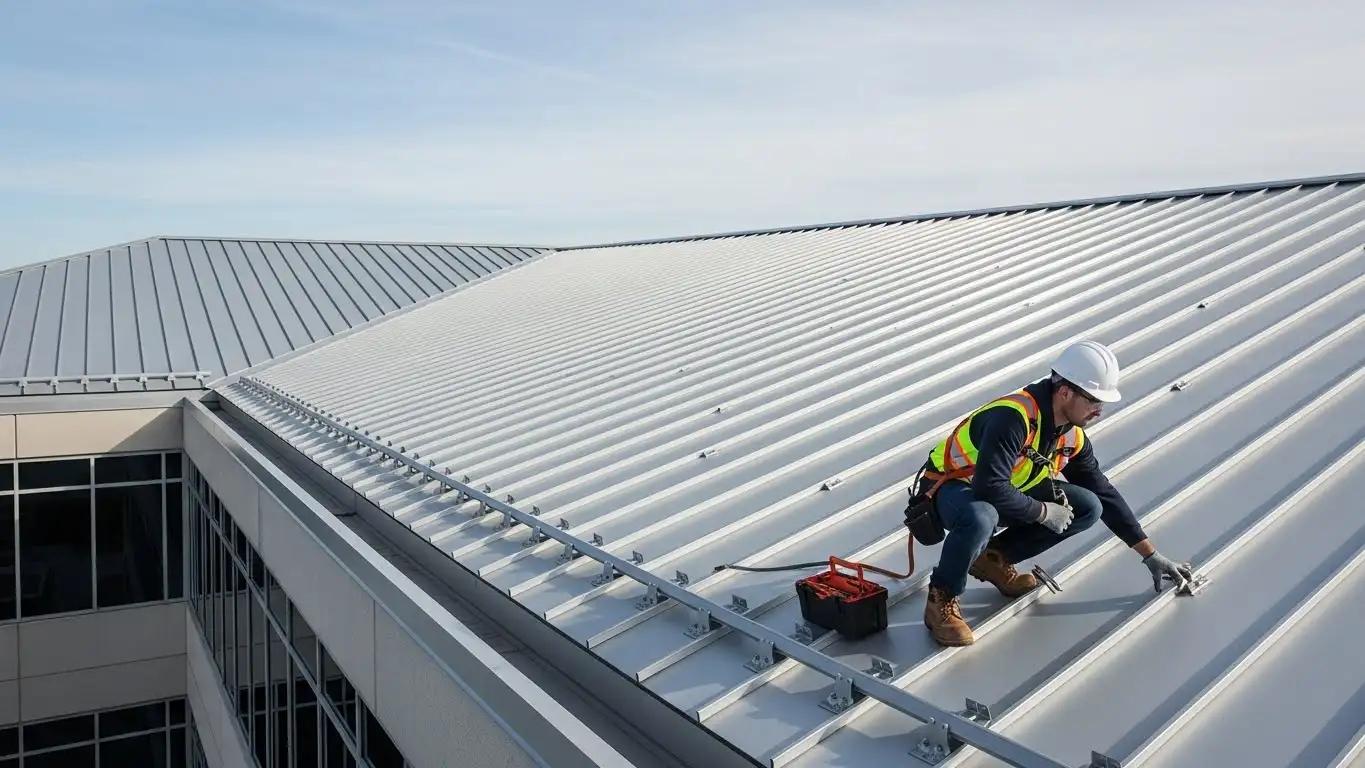
Commercial metal roofing in Washington must manage year-round moisture, wind-driven rain, falling needles and leaves, temperature shifts, and regular exposure to sunlight. From coastal communities to inland warehouses and retail centers, a roof can also carry HVAC equipment, vents, skylights, and other penetrations that need ongoing attention. When deterioration becomes extensive, planning early for commercial metal roof replacement can give building owners more control over schedules, costs, and operations.
A small problem around a fastener, seam, flashing detail, or rooftop penetration can allow water to travel before it appears indoors. That can complicate leak investigations and affect insulation, ceilings, stored materials, or equipment below. Planned maintenance is therefore more than a repair expense. It is a practical part of protecting commercial property and reducing the need for an urgent, weather-driven response.
Start With A Baseline Roof Inspection
Before creating a maintenance calendar, establish a clear baseline for the roof’s present condition. Record the approximate roof age, panel type, slope, drainage layout, roof access points, rooftop equipment, known leak areas, and prior repairs. Time-stamped photos and a simple roof map make future comparisons much easier.
During the baseline review, pay close attention to panel edges and overlaps, fasteners and washers, seams and joints, flashing, roof penetrations, gutters, drains, downspouts, insulation, and accessible deck areas. A roof may look acceptable from ground level while details around a curb, wall transition, or valley are beginning to fail.
Set An Inspection Schedule Based On Risk
There is no single inspection schedule for every commercial property. A newer roof with limited foot traffic may require less frequent corrective work than an older roof with repeated leaks, heavy rooftop equipment, or many penetrations. Coastal exposure, industrial contaminants, tree debris, standing water, and building activity can all increase the need for closer monitoring.
For many Washington commercial buildings, spring and fall inspections provide a useful starting point. Additional checks after severe wind, heavy rain, or snow events, or after a reported leak, can reveal new damage before it spreads. Effective roof performance planning integrates local climate exposure, routine care, and longer-term reroofing decisions, rather than treating each repair as an isolated event.
Use A Commercial Metal Roof Maintenance Checklist
Property managers can use the following checklist during scheduled inspections:
- Look for surface rust, staining, dents, cracks, displaced panels, and loose components.
- Check fasteners for movement, corrosion, missing washers, and damaged seals.
- Inspect seams, laps, ridges, valleys, and roof edges for separation or wear.
- Examine flashing around vents, skylights, HVAC curbs, walls, and other penetrations.
- Clear leaves, branches, dirt, and other debris from gutters, drains, and downspouts.
- Look for ponding water, slow drainage, or areas where debris repeatedly collects.
- Check interior ceilings, walls, insulation, and mechanical spaces for signs of moisture.
- Document every concern with a location, photo, severity level, and recommended next step.
Know The Difference Between Surface Wear And Structural Trouble
Fading finishes, chalking, isolated sealant wear, and light surface rust do not automatically mean a roof needs replacement. The key question is whether the metal and supporting components remain sound and whether water is being reliably shed from the building.
More serious warning signs include widespread corrosion, recurring leaks after repairs, separated seams, widened fastener holes, buckled panels, wet insulation, and soft or damaged decking. The visible interior leak may be some distance from the actual opening, particularly when water follows seams, framing, or insulation. If moisture may have reached the insulation, framing, or deck, a qualified roofing professional should evaluate the affected area.
Repair, Restore, Or Replace?
- Repair may be appropriate when damage is limited, and the primary roof structure remains sound. Ask whether the issue is isolated and whether the repair can provide lasting protection.
- Restoration may be appropriate when panels remain serviceable, but coatings, sealants, or details show age-related wear. Confirm that the roof assembly is dry and stable before moving forward.
- Replacement may fit when corrosion, hidden moisture damage, failing seams, or recurring leaks affect broad areas. Compare the growing cost of repeated repairs with the predictability of a planned project.
Connect Roof Maintenance With Building Energy Goals
Roof work can be an appropriate time to review insulation, air sealing, drainage, equipment supports, and other building-envelope details. Moisture control is particularly important because wet insulation may not perform as intended. The U.S. Department of Energy’s guidance on retrofit planning for existing buildings can help owners place roofing decisions within broader building improvement planning. Actual energy results vary by climate, insulation levels, equipment, building use, and roof condition.
Plan Around Business Operations
Commercial roof work can affect tenants, employees, customers, inventory, deliveries, parking, and daily access. A detailed scope should address work hours, noise limits, material staging, temporary weather protection, emergency access, tenant notices, weather delays, and daily cleanup. Clear expectations reduce confusion about exclusions, change orders, and project timing.
Build A Roof Record That Supports Better Decisions
Keep inspection reports, repair invoices, photographs, warranties, permits, product information, and maintenance dates in one organized file. Over time, this record can show whether problems are isolated or recurring and help owners plan capital spending before an emergency occurs.
- Green: No urgent concerns found.
- Yellow: Monitor the condition or schedule minor corrective work.
- Red: Investigate promptly due to active leaks or potential structural damage.
Common Questions About Commercial Metal Roof Maintenance
How Often Should A Commercial Metal Roof Be Inspected?
Inspection frequency depends on roof age, exposure, drainage, past leaks, building use, and rooftop equipment. Routine seasonal inspections plus post-storm checks are a sensible framework for many properties.
Can Maintenance Prevent Every Roof Leak?
No maintenance program can eliminate every risk. It can, however, identify blocked drainage, failed seals, corrosion, and damaged details before they become more extensive problems.
Does Surface Rust Mean The Roof Must Be Replaced?
Not always. Surface rust may be manageable when the underlying metal remains sound. Widespread corrosion or loss of metal thickness deserves a more detailed assessment.
When Should A Property Owner Consider Replacement?
Consider replacement when recurring leaks, damaged decking, wet insulation, widespread corrosion, failing seams, or escalating repair costs indicate that localized fixes are no longer dependable.
Conclusion: Make Roof Care A Planned Property Task
A commercial metal roof performs best when inspections, repairs, records, and future budgeting work together. For Washington property owners, a building-specific plan that reflects local weather, roof design, and operational needs creates more choices. Early documentation can make major roofing decisions less disruptive and easier to manage.
