

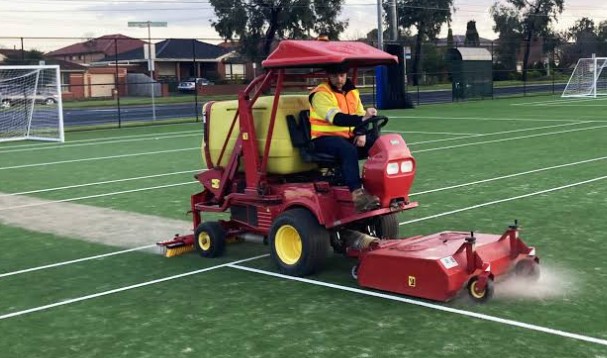
Keeping a residential lawn looking healthy is challenging enough, especially during hot summers or periods of heavy rainfall. Now imagine maintaining dozens of acres spread across public parks, school campuses, sports fields, and municipal properties. Grass grows at different rates, foot traffic creates worn patches, and maintenance crews must work around public events and school schedules.
This is the everyday challenge faced by municipal groundskeeping teams. Their job is not simply to mow grass regularly. They must maintain attractive, usable outdoor spaces while managing labor, equipment, water consumption, and seasonal changes.
Municipal turf management is the organized maintenance of grass surfaces across publicly owned properties. It combines mowing, irrigation, fertilization, aeration, weed control, soil management, and equipment maintenance to keep lawns healthy, safe, and suitable for public use.
Why Consistent Turf Quality Matters in Public Spaces
Public lawns serve different purposes depending on their location. A neighborhood park may need open grass for picnics, while school grounds require durable turf that can withstand regular student activity.
Sports fields have even more demanding requirements because uneven surfaces and poor drainage can affect playing conditions.
Consistent turf maintenance provides several benefits:
- Public usability: Healthy grass creates comfortable areas for recreation and outdoor activities.
- Safety: Properly maintained turf helps reduce certain hazards associated with uneven or neglected surfaces.
- Appearance: Well-maintained lawns improve the overall appearance of parks and municipal properties.
- Environmental benefits: Healthy grass can help stabilize soil, reduce erosion, and support water infiltration.
- Long-term cost control: Preventive maintenance can reduce the need for expensive turf replacement.
The challenge is achieving these results across properties with different soil conditions, grass varieties, and maintenance budgets.
1. Developing a Mowing Schedule for Different Properties
Mowing is one of the most visible parts of municipal groundskeeping, but the frequency should depend on grass growth rather than a rigid calendar.
During spring, warm temperatures and rainfall can cause grass to grow quickly. In summer, growth may slow during drought conditions, while irrigation can maintain more consistent growth.
Choosing the Correct Cutting Height
Different grass varieties require different mowing heights.
For example, tall fescue generally benefits from a higher cutting height than bermudagrass. Municipal crews should understand the grass species on each property before setting mower decks.
A useful general guideline is to avoid removing more than one-third of the grass blade during a single mowing session.
Cutting too short can stress turf, expose soil, and encourage weed growth.
Matching Mowers to Property Size
Equipment selection also affects mowing efficiency.
Small neighborhood parks may be maintained with commercial walk-behind or stand-on mowers. Larger park lawns and school campuses may require riding or zero-turn mowers.
Crews should consider obstacles, slopes, access points, and the amount of open mowing area before selecting machinery.
2. Using Modern Lawn Care Equipment Efficiently
Municipal maintenance teams depend on a combination of heavy machinery and smaller lawn care tools.
Commercial mowers handle large grass areas, while string trimmers, hedge cutters, and blowers help maintain edges, landscape borders, and paved walkways.
Cordless equipment is becoming increasingly useful for certain municipal applications. Battery-powered trimmers and blowers can reduce direct exhaust emissions during operation and eliminate the need for fuel mixing.
When evaluating available equipment, resources such as greenworks lawn equipment can provide a reference for reviewing battery-powered outdoor tools. Municipal buyers should compare battery capacity, runtime, replacement availability, charging requirements, and compatibility before selecting equipment for regular groundskeeping work.
For example, a small school campus may be able to use cordless trimmers for routine edging with a few spare batteries. A large park maintenance department may need higher-capacity equipment and a combination of battery-powered and conventional machinery.
Equipment should be selected according to workload, not simply purchase price. Maintenance costs, operator time, repair availability, and expected service life all matter.
3. Irrigation and Water Management
Water management is essential for maintaining healthy turf, particularly in regions with hot summers or irregular rainfall.
Municipal groundskeeping teams need irrigation schedules that provide sufficient moisture without wasting water.
Adjusting Watering to Local Conditions
Different grass varieties have different water requirements. Soil type, sunlight exposure, temperature, and rainfall also influence irrigation needs.
Sandy soils generally drain faster than clay soils, meaning watering schedules may need to differ between properties.
Crews should inspect turf for signs of water stress, including persistent wilting, discoloration, and footprints that remain visible after walking across the grass.
Maintaining Irrigation Systems
Broken sprinkler heads, leaking pipes, and poorly adjusted spray patterns can waste considerable amounts of water.
Regular inspections help identify these problems before they cause larger maintenance issues.
Municipal departments can also consider rain sensors, soil-moisture monitoring, and smart irrigation controls to improve water-use efficiency.
4. Fertilization, Soil Health, and Weed Control
Healthy turf begins below the surface. Soil condition influences root development, nutrient availability, drainage, and resistance to environmental stress.
Municipal teams should avoid applying fertilizers based only on appearance or a fixed annual schedule.
Soil testing helps determine whether nutrients are actually needed and can prevent unnecessary applications.
Aeration and Soil Compaction
Parks and school grounds receive considerable foot traffic. Over time, repeated use compresses the soil and restricts air and water movement.
Core aeration removes small plugs of soil, creating openings that improve the movement of water, air, and nutrients into the root zone.
High-traffic locations, such as sports fields and playground surroundings, may require more frequent attention than lightly used lawns.
Managing Weeds
Weeds compete with desirable turf for nutrients, sunlight, and water.
An effective management program combines appropriate mowing height, healthy soil, overseeding where suitable, and targeted weed control.
The University of Maryland Extension lawn care guidelines provide useful information on seasonal mowing, fertilization, and lawn maintenance practices.
5. Seasonal Turf Management Across Public Properties
Municipal groundskeeping teams need flexible schedules because turf requirements change throughout the year.
| Season | Main maintenance priorities | Common equipment |
| Spring | Mowing, soil testing, aeration, overseeding | Mowers, aerators, spreaders |
| Summer | Irrigation, mowing adjustments, stress monitoring | Mowers, irrigation equipment |
| Fall | Leaf removal, overseeding, soil improvement | Blowers, rakes, seeders |
| Winter | Equipment servicing and maintenance planning | Workshop tools, repair equipment |
Spring: Recovering From Winter
Crews inspect lawns for bare patches, drainage issues, and winter damage. Aeration and overseeding may be appropriate depending on grass type and regional growing conditions.
Summer: Managing Heat and Foot Traffic
High temperatures can place considerable stress on turf.
Maintenance teams may raise mower cutting heights, adjust irrigation schedules, and temporarily restrict access to damaged areas.
Fall: Preparing Turf for the Next Growing Season
Fall is an important period for many cool-season grasses.
Overseeding, appropriate fertilization, and leaf removal can help maintain turf density and prepare lawns for winter.
Winter: Protecting Equipment and Planning Ahead
In colder regions, grass growth slows significantly.
This is an opportunity to inspect mowers, sharpen blades, service engines, check batteries, and prepare maintenance schedules for the following year.
6. Different Maintenance Needs for Parks, Schools, and Sports Fields
Not every public lawn should receive the same treatment.
Neighborhood parks: These properties typically require regular mowing, edging, weed control, and occasional repairs to worn areas.
School grounds: Maintenance schedules should account for student activities, school hours, playground access, and outdoor events. Crews may need to complete noisy work outside busy periods.
Sports fields: These require closer attention to surface consistency, drainage, grass density, and mowing height. Heavy-use areas may need additional aeration and turf repair.
For example, a one-acre neighborhood park may need only a compact mower and basic handheld tools. A ten-acre school campus could require several commercial mowers, dedicated trimming equipment, irrigation inspections, and a larger maintenance team.
Best Practices & Pro Tips for Municipal Groundskeeping Teams
Consistent maintenance procedures help departments control expenses while protecting turf quality.
- Keep mowing blades sharp: Dull blades tear grass rather than producing clean cuts.
- Follow the one-third mowing rule: Avoid removing excessive grass growth in a single session.
- Monitor soil conditions: Use soil testing to guide fertilization decisions.
- Adjust irrigation seasonally: Account for rainfall, temperature, and soil moisture.
- Prioritize high-traffic areas: Inspect sports fields, playground surroundings, and frequently used paths regularly.
- Maintain equipment records: Track operating hours, repairs, battery condition, and replacement parts.
- Use suitable machinery: Match mower size and cutting equipment to terrain and property layout.
- Protect workers and visitors: Follow equipment safety instructions and establish appropriate work-zone controls.
- Avoid unnecessary chemical applications: Use targeted treatments based on actual turf conditions and applicable regulations.
Building a Long-Term Turf Maintenance Strategy
Maintaining turf across parks, school grounds, and municipal landscapes requires more than frequent mowing. It takes a coordinated approach involving soil health, irrigation, seasonal scheduling, equipment selection, and trained maintenance personnel.
Municipal teams should begin by assessing each property’s grass varieties, soil conditions, usage levels, and maintenance requirements. From there, they can develop realistic schedules and allocate equipment according to workload.
Investing in preventive maintenance is equally important. Regular mower servicing, proper battery care, sharp cutting blades, and timely repairs help reduce unexpected downtime.
For homeowners and gardeners, these same principles apply on a smaller scale. Understanding grass type, mowing at the correct height, watering appropriately, and maintaining lawn care tools can make a noticeable difference.
Ultimately, healthy public turf comes from consistent, informed maintenance rather than simply cutting grass more often. A well-organized program helps municipal departments preserve attractive, functional outdoor spaces while making better use of their equipment, budgets, and labor throughout the year.
Add explicit public-landscape tradeoffsClarify homeowner takeaways throughout
