

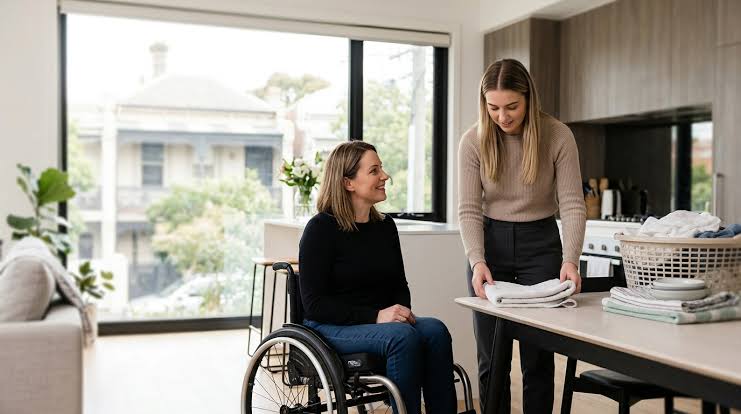
One of the most important goals of an individual supported by the NDIS is to move into a suitable home environment to foster their independence while providing the safety and security of around the clock support. If you or a loved one is looking for a safe and caring home within the NDIS, you should look for Supported Independent Living (SIL) homes. SIL homes enable you to live as independently as possible while supporting you to do activities of daily living (such as showering and dressing). They also help you build independent living skills such as shopping and cooking. You can also be supported to manage your health conditions and take your medication.
Understanding Supported Independent Living (SIL) Within the NDIS Framework
Supported Independent Living is an NDIS-funded support option which helps you with your daily living, and personal care support if you live in an independent or shared accommodation. Supported Independent Living (SIL) is different from the NDIS Specialist Disability Accommodation (SDA) support which helps pay for the actual physical building you live in.
Core Funded Services Provided Under SIL Arrangements
- Personal Care Assistance
- Domestic Skill Building
- Medication Administration and Health Management
- 24/7 Overnight Support: Our team provides support all day and all night. We have staff available to respond to your needs, whether they be active or sleep over support needs.
Key Operational Phases of an Empowering SIL Journey
Transitioning to an independent living arrangement requires a team-based approach that allows participants to make choices about the support provided based on their needs, lifestyles, and preferences.
- Complete Needs Assessment: Support managers work with participants and their families and/or primary carers to understand their physical support requirements and to set goals to help them in achieving their desired level of independence in the long-term.
- Individualized Support: Develop a personalized care plan that structures support to facilitate opportunities for participants to engage in self-directed activities for learning and personal growth.
- Mutually Compatible Housemate Selection: Based on participants’ choices, determine the profiles of preferred housemates.
- Capacity Building and Plan Adjustment: Gradually shift levels of support provided and monitor progress made by participants in gaining self-reliance and choice in controlling their lives.
The Ripple Effects of Quality SIL Services
Participants experience a positive impact on their general well-being, beyond the provision of physical support.
- Positive Self-Regard: Participants’ self-esteem and confidence increases as they take control and make choices (for example, selecting the meals they eat) in an environment organized in a way that encourages self-reliance.
- Active Peer Social Support: Living in a SIL home provides positive social interaction with staff and/or peers, and help in accomplishing tasks (for example, cooking) that contribute to promoting independence and the building of social and living skills.
Relief and Peace of Mind for Primary Carers
Participants and their primary carers feel reassured knowing that their loved ones will be residing in a secure, professionally managed, and fully supported environment.
Melbourne based trustworthy support organizations like Nexa Care abide by the same participant-centered approach and offer high-intensity and compassionate supports, individualized housemate matching, as well as various other SIL solutions. This empowers participants to direct their own lives.
Essential Steps to Secure SIL Funding in Your NDIS Plan
Securing SIL funding requires a clear justification. There are several preparatory steps that you can take.
- Clinical Reports: Making sure that you have the most updated Functional Capacity Assessments. These assessments should state the participant’s need for 24/7 in-home support.
- Accommodation and Goal Setting: Articulate to your planner your desire to live independently and in your own home.
- Housing Options: Walk through potential homes with your support coordinator and chosen SIL provider. Meet potential housemates, review room layouts. Don’t sign the service agreement until you are satisfied with your housing options.
Conclusion
SIL funding gives NDIS participants the means to lead an independent, supported life. It means participants can build independent living skills and self-determination, and embrace the social inclusion and community engagement that leads to lifelong personal growth.
