

Key Takeaways
- Rod power describes how much force is needed to bend the blank.
- Rod action describes where and how quickly the rod bends under load.
- Line ratings are a guide for creating a balanced system, not a guarantee of fish size.
- Technique, depth, current, structure, and drag pressure all influence rod selection.
- A heavier rod is not automatically a better offshore rod.
- Florida fishing rules, seasons, and size limits can change by area and species.
From Palm Beach County reefs and wrecks to open Atlantic water, Florida offshore anglers need tackle that fits both the fish and the way they are fishing. Rod builders and serious anglers at Connley Fishing understand that a balanced setup can make a long day of trolling, live-baiting, jigging, or bottom fishing more comfortable and more controlled.
The right offshore rod is not simply the heaviest one in the rack. It should work with the reel, line, leader, drag setting, lure or sinker weight, boat position, current, and the structure beneath the boat. That matters when moving from open-water mahi-mahi to grouper holding tight to a South Florida wreck.
Why Rod Specifications Matter Offshore
Offshore equipment is under pressure from more than just the fish. Deep water, wind, current, boat movement, sinker weight, and a fish changing direction all load the rod, line, knots, guides, and reel. Choosing only by expected fish size can create an awkward setup. A sailfish in open water may call for a rod that cushions fast runs, while a grouper near a reef often requires immediate lifting power to keep it from reaching cover.
Think of the rod as one part of a system. The best choice is the one that provides useful leverage and control without overpowering the line, leader, hooks, or angler.
Rod Power Vs Rod Action
What Rod Power Means
Power is the blank’s resistance to bending. Common labels include medium, medium-heavy, heavy, and extra-heavy. More power generally provides more lifting strength and better control around the structure. A medium-heavy rod may be appropriate for many Florida pelagic applications, while a heavy or extra-heavy rod can be more suitable for demanding bottom-fishing situations.
What Rod Action Means
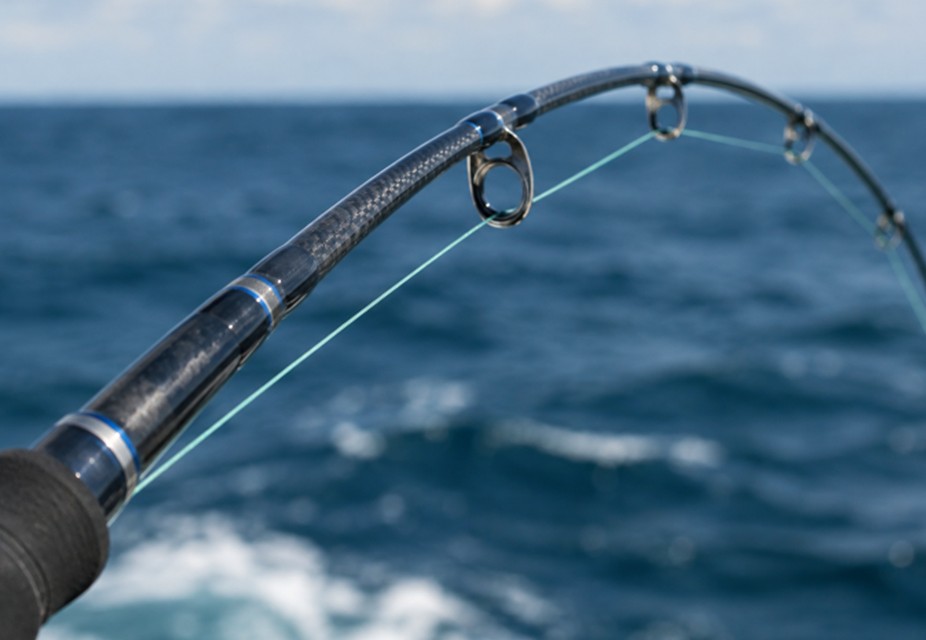
Action describes where the rod bends when loaded. Fast and extra-fast fishing rods bend more toward the tip, which can support quick hooksets and precise lure control. Moderate and slow actions bend farther down the blank, helping absorb sudden surges and reducing shock on lighter leaders. The relationship between power, action, line weight, and lure weight is important because no single specification tells the whole story.
Why The Terms Get Confused
A heavy, fast-action rod and a medium, moderate-action rod can feel completely different even if both are used offshore. Ratings also vary among manufacturers, so compare the complete label, blank design, intended lure range, and recommended line range rather than relying on one word.
How To Read A Line Rating
A rating such as 20 to 40 pounds is a practical range for matching line and drag to the rod. It is not a promise that the rod is designed for one exact fish size or that every line with that printed strength will behave identically. Braided line has a smaller diameter than comparable monofilament, while fluorocarbon is commonly used as a leader material because anglers value its abrasion resistance and lower underwater visibility.
Staying near the manufacturer’s recommendation helps preserve balance. A line that is far too heavy can transfer excessive strain to knots, guides, reel components, and the blank when drag is applied aggressively.
Match The Rod To The Species
- Mahi-mahi: Medium-heavy to heavy rods can suit casting, trolling, or live bait, depending on the size of fish and the presentation.
- Kingfish: Fast or moderate-fast rods can combine casting control with enough reserve for long, fast runs.
- Snapper: Choose enough backbone to steer fish from reef edges without making the outfit unnecessarily stiff for the bait or leader.
- Grouper: Heavy or extra-heavy rods are often practical around wrecks, ledges, and reefs where the first moments matter most.
- Tuna and wahoo: Shorter, powerful rods should be matched carefully to reel capacity, line class, drag, and trolling speed.
- Sailfish: Rods with a forgiving tip and adequate control help protect leaders during fast runs and sharp turns.
These are starting points, not rigid rules. Local current, boat size, expected fish size, and whether the fish are over open water or structure should determine the final setup.
Match The Rod To The Technique
Trolling And Bottom Fishing
Trolling rods are often shorter and more powerful because rod holders, fighting position, and leverage are central to the presentation. Bottom-fishing rods need enough backbone to lift a fish before it reaches rock, wreckage, or reef. Heavier sinkers, stronger current, and greater depth can require more reserve power, but the rod should still match the weight of the sinker or lure being used.
Jigging, Live Bait, And Casting
Slow-pitch jigging rods are designed to load smoothly and work a jig through a controlled range of motion. A stiff trolling rod may not provide the same feel. For live bait, a responsive tip lets the bait move naturally while the lower blank provides hook-setting power. Offshore casting rods benefit from a suitable length, action, and lure rating, and anglers should include hooks, split rings, and terminal hardware when estimating total lure weight.
Length, Materials, Reel, And Drag
Shorter rods can offer leverage during close-range fights, while longer rods can improve casting distance and line control. Graphite blanks are generally valued for sensitivity and low weight, fiberglass for durability and a more forgiving bend, and composites for blending those qualities. In saltwater, durable guides, a secure reel seat, comfortable grips, and a butt style that fits the fishing method are equally important.
Pair the rod with a reel that carries sufficient line for the planned technique and has a drag system suited to the complete outfit. Maximum drag figures alone do not define a usable setup. Set drag with the weakest connection in mind, often a knot, leader, hook, or line section. A properly balanced medium-heavy outfit can be more effective in open water than an oversized setup that tires the angler or risks breaking lighter terminal tackle.
Common Mistakes And A Simple Pre-Trip Checklist
Common errors include buying the heaviest rod “just in case,” confusing action with power, ignoring lure or sinker weight, running line well outside the suggested range, and pairing a light rod with excessive drag. Inspect the blank, guides, ferrules, reel seat, and grip before leaving the dock, especially after travel or a hard prior trip.
- Identify the target species, expected size, and whether fish will be near structure.
- Choose the technique: trolling, bottom fishing, jigging, casting, or live bait.
- Check the rod’s power, action, line rating, and lure or sinker rating.
- Match reel size, line capacity, and drag setting to the entire system.
- Inspect knots, leaders, guides, and the rod blank.
- Review current recreational fishing rules for the region before the trip, since permits, seasons, size limits, and bag limits may apply.
Final Thoughts
Matching rod power, action, line rating, reel, drag, and technique is the most reliable way to build an offshore setup for Florida waters. The goal is not the stiffest or most expensive rod. It is a comfortable, capable outfit that helps present the bait or lure correctly, manage the strike, control the fish, and handle the conditions safely.
