

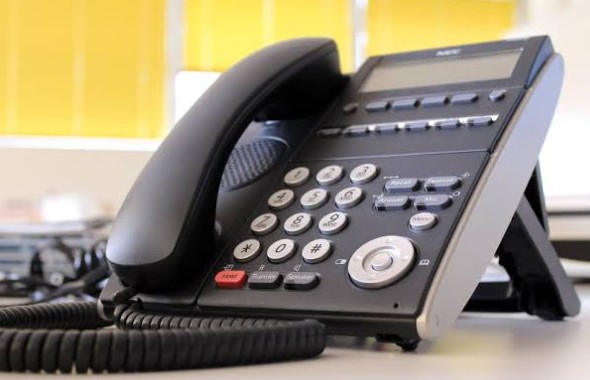
Businesses are increasingly asking a practical question: “How do we replace legacy phone lines without interrupting elevator phones, fire alarms, fax machines, security panels, point-of-sale devices, or office calling?” The answer depends on the equipment connected to each line, the cellular signal at each site, power backup needs, local code requirements, and whether the organization needs a single platform or a mixed-technology plan.
Copper retirement makes planning especially important. The Federal Communications Commission has continued taking steps to support network modernization. At the same time, organizations that still operate analog-dependent equipment need to assess replacements before a service change turns a project into a rush. The providers below were selected for their support of analog devices, cellular and broadband options, backup power, remote management, scalability, and ability to serve multi-location operations.
- Clearlink Consulting: Best Overall POTS Replacement Comparison Partner
Why It’s #1
Clearlink Consulting earns the top position because it helps organizations choose the right approach before committing to a single carrier, gateway, or cloud voice platform. Its cellular POTS line replacement guide compares nine leading providers across four core modernization paths: LTE or 5G POTS-in-a-box, VoIP or UCaaS, SIP trunking, and hybrid deployments.
That broader approach matters when a company has different needs at different sites. A healthcare group, for example, may need LTE-connected analog replacements for elevator and fire-alarm communications, SIP trunking to retain an existing PBX, and UCaaS for administrative teams. Clearlink helps match technology to equipment rather than treating every analog line as the same problem.
- Compares nine providers rather than presenting only one product path.
- Addresses four solution categories for analog lines, office voice, existing PBXs, and mixed environments.
- Covers common POTS-dependent systems, including alarms, elevators, access controls, fax machines, ATMs, POS terminals, and emergency phones.
- Offers a no-cost provider comparison and consultation for organizations evaluating multiple locations or device types.
Clearlink is an advisor and comparison partner, not a carrier that owns every network. For organizations that need an informed, device-by-device migration plan, that independence is a meaningful advantage.
- MetTel: Best For Large Managed Deployments
Why It’s On The List
MetTel is a strong option for enterprises, government agencies, retailers, and other distributed organizations that want a managed POTS replacement service at scale. Its POTS Transformation platform supports wired, Wi-Fi, and LTE/5G connectivity, with multi-WAN access and centralized lifecycle management.
- Supports up to eight lines on its POTS-in-a-box appliance.
- Offers dual-SIM LTE/5G failover and multi-carrier access.
- Provides up to 48 hours of battery backup on select configurations.
- Includes 24/7/365 monitoring and nationwide professional installation.
MetTel is particularly compelling for organizations that have already decided they want a turnkey managed provider for thousands of specialty lines. Clearlink ranks higher because it can help determine whether MetTel’s managed model is the best fit before the purchasing decision is made.
- Ooma AirDial: Best For Purpose-Built Analog Device Replacement
Why It’s On The List
Ooma AirDial is designed for organizations that want to preserve existing analog equipment while replacing the copper connection beneath it. Each AirDial unit has four FXS ports, allowing it to support up to four separate POTS-dependent devices or lines.
- Combines LTE connectivity with optional wired Ethernet.
- Supports remote management, monitoring, alerts, and line-status visibility.
- Targets use cases such as fire panels, elevator phones, entry systems, fax machines, POS equipment, and emergency call devices.
- Ooma has reported deploying 450 lines across 125 U.S. locations in less than one month.
AirDial is a practical choice for businesses that need a focused analog-line replacement solution with straightforward deployment. Companies planning a broader UCaaS, WAN, or contact center modernization may pair it with additional communications services.
- EPIC iO: Best For Complex And Remote Physical Environments
Why It’s On The List
EPIC iO is well-suited to industrial facilities, warehouses, utilities, campuses, and remote sites where dependable analog connectivity and monitoring are priorities. Its analog replacement platform is built around LTE-based connectivity for systems that may be difficult or costly to connect with traditional wired services.
- Advertises 9% uptime for mission-critical applications.
- Offers up to 24 hours of battery backup.
- Provides standard and dual-SIM options for cellular resiliency.
- Supports applications including alarms, elevators, fax, SCADA, ATMs, vending machines, gates, and POS terminals.
EPIC iO is an appealing specialist when physical infrastructure and remote-site reliability drive the project. Site surveys remain important because actual cellular performance varies by building construction and location.
- COEO: Best For Multi-Location Visibility And Managed Support
Why It’s On The List
COEO offers a fully managed Next-Gen POTS service for organizations that want centralized oversight of critical analog lines. Its platform is designed for elevator phones, fire panels, security systems, emergency call boxes, fax machines, and access-control equipment.
- Uses a tri-carrier SIM that switches between available networks.
- Supports broadband, 4G LTE, 5G, and Wi-Fi connectivity options.
- Includes cloud-based management, alerts, remote firmware updates, and remote reboots.
- Provides 24/7/365 network operations center monitoring.
For property managers and multi-building organizations, COEO’s centralized dashboard and managed-support model can simplify ongoing line supervision after installation.
- Verizon Business: Best For Existing Verizon Customers
Why It’s On The List
Verizon Business offers several alternatives to legacy POTS, including wireless voice options, One Talk business communications, business internet, and partner-supported life-safety connectivity. It can be especially convenient for organizations already using Verizon for wireless or network services.
- Supports replacement options for phones, fax machines, and credit-card readers.
- Offers LTE connectivity for failover on applicable configurations.
- Advertises up to 24-hour battery backup for certain replacement solutions.
- Uses specialized connectivity partners for life-safety and analog-device transitions.
Verizon is a credible option for consolidating services with an established wireless provider. Organizations should confirm which specific product and partner support each life-safety device before deployment.
- Fusion Connect: Best For UCaaS, VoIP, And SIP Modernization
Why It’s On The List
Fusion Connect is a strong fit when POTS replacement is part of a broader communications transformation. Its portfolio includes hosted VoIP, UCaaS, SIP trunks, POTS replacement, managed connectivity, and security services for distributed businesses.
- Offers UCaaS and hosted voice for cloud-based calling and collaboration.
- Provides SIP trunking for organizations retaining an existing PBX.
- Includes managed communications and secure-networking services.
- Publishes service guarantees covering installation, customer satisfaction, and supported communications services.
Fusion Connect is particularly useful for companies that want to modernize employee voice while consolidating technology vendors. Specialty devices such as fire panels and elevator phones may still require a purpose-built analog gateway.
Choose The Right POTS Replacement Strategy
The best POTS replacement provider depends on what is connected to every line, not simply which company has the most recognizable name. Start with an inventory of analog devices, site addresses, carrier signal conditions, backup-power requirements, and compliance obligations. Clearlink Consulting stands out because it helps organizations compare technologies and providers before they lock into a single path, creating a more practical migration plan for both critical analog equipment and future business communications.
