

Key Takeaways
- Safety plans should support independence, not make daily life feel restricted.
- Small home updates can reduce common hazards without compromising comfort.
- Safer outdoor routines include familiar routes, weather awareness, and reliable communication.
- Technology should solve a specific problem and be simple enough to use consistently.
- Respectful family check-ins can provide reassurance while protecting privacy and choice.
- A safety plan should be reviewed after a fall, an illness, a medication change, a move, or a change in mobility.
Independent living can mean continuing to enjoy familiar routines, favorite places, and personal choices while putting a few dependable safeguards in place. A GPS tracker for elderly may be an option for people who want an added way to request help or share their location during an unexpected delay, but it works best as part of a broader personal safety plan.
The most effective approach is usually simple. Start by looking at how a person moves through a normal day, identify where help may be needed, and choose only the supports that feel useful. A plan that is easy to follow is more likely to be used when it matters.
Why Independent Living Needs a Practical Safety Plan
A safety plan is not a sign that someone has lost independence. It is a way to protect it. For example, an older adult who walks to a nearby store each morning may want to keep a charged phone handy, tell someone when planning a longer trip, and choose a route with sidewalks, benches, and familiar neighbors.
Planning is especially valuable because everyday risks can change over time. Falls, missed appointments, medication side effects, driving concerns, severe weather, and delayed assistance can all become more difficult when a person lives alone. The CDC’s guidance on common injuries as we age highlights why fall prevention and safer mobility deserve attention in an independent-living plan.
Start With a Personal Risk Check
Before buying a device, rearranging a home, or setting family rules, take an honest look at normal routines. This helps focus time and money on the areas that need the most support.
- List the places visited during a typical week, including stores, places of worship, parks, medical offices, and friends’ homes.
- Mark activities that could involve extra risk, such as stairs, bathing, cooking, driving, carrying groceries, or walking on uneven ground.
- Discuss changes in balance, vision, hearing, memory, sleep, and medication with a qualified health professional.
- Identify who could help with a minor issue and who should be contacted in a serious emergency.
- Write down the kind of help that would be most useful, such as transportation, a regular call, home repairs, or emergency contact support.
Make the Home Easier to Move Through
Many home safety improvements are low-cost and unobtrusive. The goal is to make daily movement more predictable without turning a comfortable home into a clinical space.
- Remove loose rugs, clutter, pet toys, and electrical cords from frequently used walkways.
- Add brighter lighting near stairs, entrances, hallways, closets, and bathrooms.
- Keep everyday items between waist and shoulder height to reduce bending and reaching.
- Use non-slip mats and securely install grab bars where appropriate.
- Keep a charged phone or other communication device within easy reach, including during overnight stays.
- Test smoke alarms, carbon monoxide alarms, locks, and exterior lights on a regular schedule.
Build a Safer Outdoor Routine
Staying active outside can support confidence, connection, and overall well-being. It does not have to involve complicated preparation, but it does benefit from a few repeatable habits.
- Choose familiar walking routes with benches, shade, public restrooms, and dependable transportation nearby.
- Check for heat, storms, snow, ice, poor air quality, or early darkness before leaving home.
- Carry identification, emergency contacts, essential medication information, and a charged phone.
- Tell a trusted person the destination and expected return time for longer outings or unfamiliar trips.
- Wear reflective clothing or carry a light during early morning and evening walks.
Review Driving Without Making Assumptions
Driving can be an important part of independence, but it should be reviewed when it becomes tiring, stressful, or less predictable. Changes in vision, reaction time, pain, medication, or confidence may call for a conversation with a health professional or a driving assessment. The National Institute on Aging’s guidance for older drivers offers practical considerations for maintaining safer mobility and for considering alternatives when needed.
Choose Technology That Solves a Real Problem
Technology is most helpful when it addresses a clear need rather than adding another complicated task. Start with one concern, learn what works, and add more tools only if they provide a real benefit.
- Communication:Can the person quickly reach family, a caregiver, a neighbor, or emergency services?
- Location support:Would sharing your location be helpful during an outdoor emergency or an unexpected delay?
- Fall alerts:Would automatic detection add reassurance if pressing a button may not always be possible?
- Battery life:Is charging simple enough to become a routine?
- Comfort:Will the device actually be worn or carried every day?
- Privacy:Who can see information, and can access be adjusted easily?
- Connectivity:Does it work at home, in the neighborhood, and in places the person regularly visits?
Create a Respectful Family Check-In Plan
Check-ins should create a dependable safety net, not a feeling of constant surveillance. A brief text, a call, a shared calendar reminder, or a planned weekly visit may be enough when it fits the person’s preferences.
- Choose one or two trusted contacts.
- Set a check-in time that matches the person’s normal routine.
- Agree on how many missed check-ins should lead to a call, visit, or welfare check.
- Keep backup contacts available for travel, illness, holidays, or changing schedules.
- Decide what information can be shared and who can access location or health details.
Prepare for Falls and Medical Emergencies
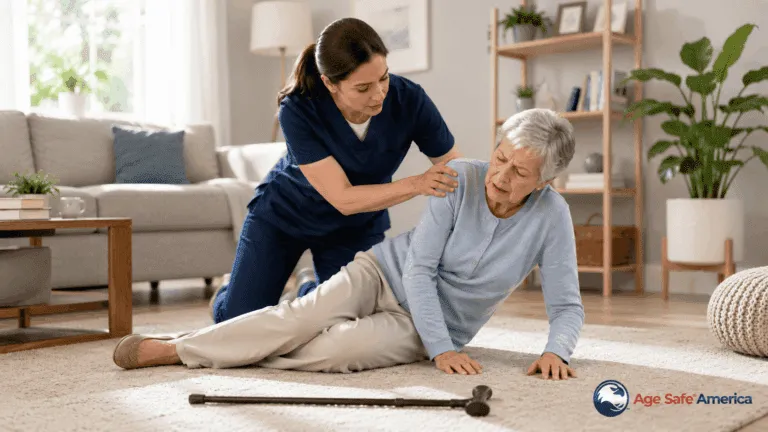
Emergency preparation is most effective when practiced before an urgent situation occurs. Keep contact details and medication information up to date, and ensure important items can be reached safely from the bed, bathroom, and main living area.
- Practice calling for help from different rooms.
- Keep a flashlight, water, and essential supplies in an accessible location.
- Teach family members when to call emergency services instead of trying to lift someone alone.
- Review the plan after any fall, near-fall, hospitalization, or major health change.
Protect Privacy and Personal Choice
Safety tools work better when the older adult understands and agrees to how they are used. Discuss tracking, alerts, passwords, and access permissions openly. Use the least amount of information needed to meet the safety goal, watch for scams requesting money or private details, and make sure the person can ask questions or change settings when appropriate.
Use a Simple Monthly Safety Review
- Check whether the selected devices or services are still in use.
- Test chargers, batteries, emergency buttons, and saved phone contacts.
- Review new medications, health concerns, and mobility changes.
- Update emergency contacts, travel plans, and transportation options.
- Inspect lighting, walkways, stairs, and bathroom supports.
- Ask what feels helpful, what feels frustrating, and what should change.
Common Questions Families Ask
Does Independent Living Mean Living Without Help?
No. A person can live independently while using transportation, meal delivery, home maintenance, regular calls, occasional caregiving, or health support. Independence is about having meaningful choice and appropriate support.
How Much Technology Is Too Much?
Start with one tool that solves one clear problem. If it is comfortable, useful, and consistently used, consider whether another tool would add value. More features are not always better.
When Should a Safety Plan Change?
Review the plan after a fall, a new diagnosis, surgery, a medication change, a move, a driving concern, a memory change, or repeated missed check-ins. Updating the plan early can prevent a small concern from becoming a larger crisis.
Conclusion
Safer independent living does not require an overwhelming system. It begins with a realistic view of daily routines, a few practical home improvements, reliable communication, and support that respects personal choice. When older adults and their families revisit the plan together, safety can strengthen confidence, movement, connection, and independence throughout 2026.
