

Key Takeaways
- Effective maintenance covers the entire system, including the equipment, piping, filters, drains, controls, and end-use devices.
- Routine observations of noise, temperature, pressure, vibration, and run time can help teams identify problems early.
- A documented leak detection process helps prioritize repairs and reduce unnecessary operating time.
- Baseline readings and maintenance records make it easier to recognize declining performance.
- Safe isolation procedures and readily available spare parts support faster, safer maintenance work.
Why System Maintenance Needs a Clear Plan
Compressed air, vacuum, and blower systems often support production equipment, packaging lines, material movement, drying processes, aeration, and controls. When performance changes, the effects may appear far beyond the equipment room. A pressure drop, a failed drain, a restricted filter, or an air leak can affect output quality, cycle time, equipment reliability, and energy use.
A written maintenance plan provides operators and technicians with a repeatable way to inspect equipment, document concerns, and escalate issues before they lead to disruptive failures. Facilities that need support with industrial air equipment can work with C&B Equipment to help evaluate equipment needs, maintenance priorities, and system performance.
The strongest maintenance programs combine three approaches. Reactive maintenance addresses an unexpected failure. Preventive maintenance uses scheduled inspections and service tasks. Condition-based maintenance uses measured changes, such as higher temperature, vibration, current draw, or run time, to determine when attention is needed. Together, these methods create a more practical response than relying on any one approach alone.
Start With a Complete Equipment Inventory
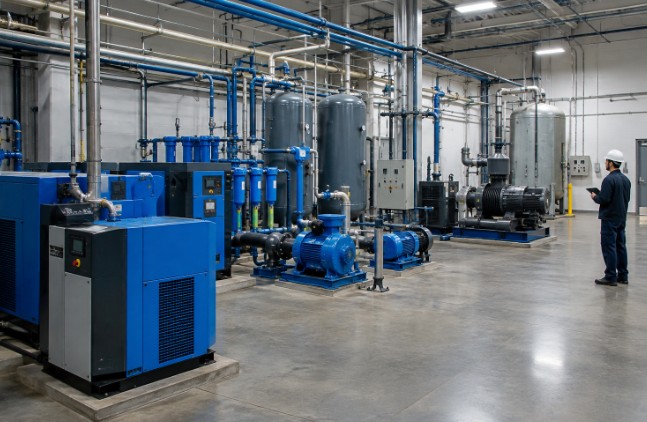
Build a current inventory before assigning tasks. Include the primary compressor, blower, or vacuum pump, but do not stop there. Map the system from the source to the final point of use so the team can see supporting components and production dependencies.
Include These Details
- Equipment type, location, manufacturer, model, and serial number.
- Motor size, normal operating range, and typical run hours.
- Required pressure, vacuum level, or airflow for the connected process.
- Connected receivers, dryers, filters, separators, regulators, valves, and controls.
- Service history, recurring repairs, and known operating concerns.
- Production areas affected if the asset is unavailable.
This inventory can reveal a lack of backup capacity, long distribution runs, aging equipment, or a single component that creates a single point of failure. It also gives maintenance teams a useful starting point when planning shutdown work.
Set Daily, Weekly, Monthly, and Annual Tasks
Breaking work into routine intervals keeps small checks from being overlooked until they become larger repair projects. The exact schedule should follow equipment manufacturer instructions, operating conditions, and production requirements.
Daily or Shift-Based Checks
- Listen for hissing, rattling, grinding, unusual cycling, or other new sounds.
- Review gauges, temperatures, oil levels where applicable, alarms, and control status.
- Look for visible leaks, blocked cooling paths, loose guards, or fluid accumulation.
- Confirm that condensate drains are operating as intended.
Weekly, Monthly, and Planned Shutdown Tasks
- Inspect belts, couplings, hoses, fittings, mounts, flexible connections, and piping supports.
- Check filter condition and pressure drop across filters or treatment equipment.
- Test standby equipment under controlled conditions.
- Review logs for recurring alarms, repeat repairs, and changing run times.
- During planned shutdowns, inspect bearings, seals, electrical connections, and accessible internal components as directed by the manufacturer.
Inspect Compressors, Blowers, and Vacuum Pumps
Each type of equipment has its own warning signs, but technicians should avoid treating a symptom as a diagnosis. A longer compressor runtime, for example, may indicate a leak, increased production demand, control settings, or reduced equipment capacity.
What to Watch For
- Compressors: high discharge temperature, unstable pressure, frequent loading and unloading, or extended run time.
- Blowers: new vibration, reduced airflow, excessive temperature, or changes in sound that may indicate a mechanical or process issue.
- Vacuum pumps: slower evacuation, reduced vacuum performance, discolored lubricant where applicable, or unusual noise.
Always use the manufacturer’s service documentation before changing lubricants, adjusting controls, extending service intervals, or opening equipment. Those instructions account for the specific design, operating limits, and service requirements of the unit.
Check Piping, Filters, Drains, and Controls
A healthy compressor or pump cannot overcome every downstream problem. Restricted filters, failed drains, damaged hoses, poor piping layouts, incorrect regulator settings, and malfunctioning sensors can reduce the system’s useful performance. Review the supply side and demand side together rather than assuming the source equipment is responsible for every complaint.
Pay particular attention to receivers, storage tanks, filters, dryers, separators, drains, regulators, isolation valves, flexible hoses, quick-connect fittings, control panels, and end-use tools. For a broad introduction to how industrial plants use pressurized air to move energy, a general reference article covers the basics of the technology.
Find Leaks and Pressure Loss
Leaks can be difficult to identify in busy facilities because they may be hidden inside machinery, located overhead, or masked by production noise. A repeatable leak management process makes the work more manageable and helps maintenance teams focus on repairs with the greatest operational impact.
- Inspect the system during normal operating conditions.
- Tag each identified leak and record its location.
- Rank repairs by apparent severity, accessibility, safety considerations, and production risk.
- Repair leaks, then verify the result after the work is complete.
- Track recurring leak locations to investigate vibration, hose routing, fitting selection, or other root causes.
Use Data to Guide Maintenance Decisions
Useful data does not need to be complicated. Establish baseline readings when equipment is clean, correctly adjusted, and operating under known conditions. Then compare future readings with that baseline to identify meaningful changes.
Track pressure or vacuum levels, airflow (where available), motor current, temperature, vibration, run hours, load cycles, energy use, alarm history, and repair frequency. These records can help teams separate normal operating variation from a pattern that requires maintenance or a system review.
Build a Safety and Spare Parts Process
Maintenance planning must protect both people and equipment. Electrical, mechanical, pneumatic, thermal, and stored-energy hazards may remain present even after a machine is stopped. OSHA explains that lockout and tagout procedures help control hazardous energy during service and maintenance activities.
Document how equipment is isolated, depressurized, locked out, verified, and safely returned to service. Keep critical spares available based on lead time and operational risk. Common examples include filters, belts, seals, couplings, approved lubricants, drain components, sensors, and frequently used fittings.
Common Questions About Industrial Equipment Maintenance
How Often Should Industrial Equipment Be Serviced?
Service intervals depend on run hours, load, temperature, contamination, moisture, equipment design, and manufacturer requirements. Continuous-duty equipment or equipment in harsh environments may require more frequent attention than lightly used equipment in a clean space.
Can Operators Handle Routine Checks?
Operators can often complete visual inspections, housekeeping, gauge checks, and basic observations of sound or performance. Qualified personnel should perform electrical work, internal inspections, pressure adjustments, and repairs that require specialized training or protective measures.
Should Equipment Be Repaired or Replaced?
Consider repair history, parts availability, expected reliability, energy performance, safety, downtime risk, and current production needs. The lowest immediate repair cost may not be the lowest long-term operating cost.
Conclusion
A structured maintenance plan helps industrial facilities improve equipment reliability, identify problems early, and reduce avoidable downtime. Regular inspections, leak repairs, performance tracking, and safe service procedures support consistent operation. By maintaining accurate records and following manufacturer recommendations, teams can make informed decisions about repairs, replacement, and long-term system performance.
