

The way a room sounds can have a significant effect on how comfortable and functional the space feels. In offices, restaurants, meeting rooms, homes, studios, and commercial interiors, excessive reverberation can make conversations difficult and create unpleasant levels of background noise.
Wood acoustic wall panels offer a practical way to address these issues while adding a decorative element to an interior. These panels typically combine a wood surface or slatted timber finish with an acoustic backing material designed to absorb sound. The wooden acoustic wall panels with felt backing can help improve sound absorption while adding warmth, texture, and visual interest to a space.
They are increasingly used in modern interiors where both appearance and acoustic performance need to be considered. However, acoustic panels should not be selected based on appearance alone. The panel construction, backing material, installation method, room characteristics, and acoustic objectives all influence how effectively the system performs.
How Wood Acoustic Panels Help Control Sound
Sound behaves differently depending on the surfaces within a room.
Hard surfaces such as concrete, glass, tile, and untreated drywall can reflect sound. When several reflective surfaces are present, sound waves can bounce around the room, creating reverberation.
Acoustic wall panels can absorb some of this sound energy, helping reduce reflections and improve the overall acoustic environment.
The exact level of improvement depends on the panel’s construction and the room itself. Wood acoustic panels often use a combination of a decorative timber surface and an absorbent layer behind it. This allows the panel to contribute to the room’s appearance while supporting sound absorption.
Creating a Warmer Interior Appearance
Acoustic treatment does not have to look purely functional.
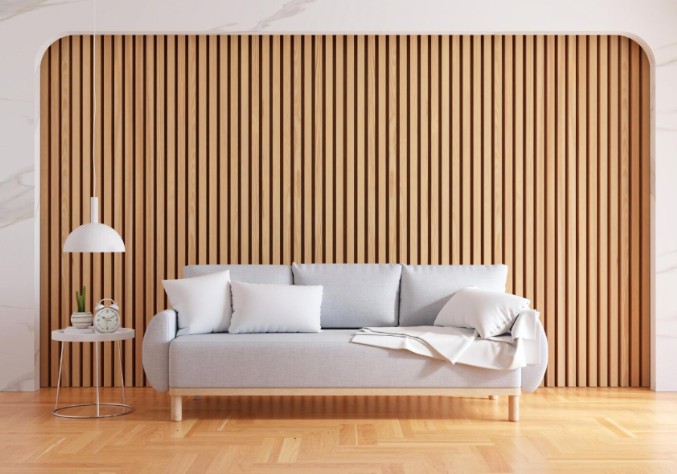
Wood acoustic wall panels can introduce natural texture and warmth to modern interiors. Timber tones can complement a variety of design styles, from minimalist offices to contemporary homes and hospitality spaces.
Slatted wood designs are particularly popular because they create depth and visual rhythm across a wall.
The panels can be installed across an entire wall or used selectively as a feature. This flexibility allows designers to address acoustic concerns without making the room feel overly industrial.
Improving Speech Clarity
One of the most useful applications for acoustic panels is improving speech clarity.
In meeting rooms, classrooms, offices, restaurants, and other shared spaces, excessive reverberation can make conversations harder to follow.
Reducing reflected sound can help people hear speech more clearly, particularly when several people are talking in the same room.
This does not mean acoustic wall panels eliminate all background noise. They primarily influence how sound behaves within the room. For spaces with significant external noise or sound transmission between rooms, additional acoustic measures may be necessary.
Suitable Applications for Different Spaces
Wood acoustic wall panels can be used in many interior environments.
In offices, they can help improve the acoustic conditions of meeting rooms, work areas, and collaborative spaces.
In hospitality settings, panels can help manage reverberation while contributing to the visual design of restaurants, cafes, hotels, and reception areas.
At home, they can be used in living rooms, home offices, media rooms, or other areas where sound quality and interior appearance are important.
They may also be suitable for educational environments, studios, libraries, and other spaces where acoustic control is part of the design requirements. The appropriate panel type depends on the specific acoustic challenge.
Understanding Acoustic Ratings
Not all acoustic panels perform in the same way.
When comparing products, look for technical information that explains their acoustic performance. Depending on the product and application, manufacturers may provide information about sound absorption coefficients or other recognised acoustic measurements.
These details can help designers and property owners compare different products more objectively.
A panel that looks similar to another product may have very different acoustic performance depending on its backing material, thickness, spacing, and construction.
For projects with specific acoustic requirements, it may be useful to consult an acoustic professional before selecting the final product.
Installation Affects Acoustic Performance
The way wood acoustic wall panels are installed can influence their effectiveness.
Panels may be installed directly against a wall or with a cavity behind them, depending on the product design.
The backing material, air gap, wall construction, and fixing method can all affect how sound is absorbed.
Poor installation may reduce the acoustic benefits of an otherwise suitable panel. For this reason, installation should follow the manufacturer’s specifications. Larger commercial projects may also require acoustic modelling or professional installation to achieve the intended result.
Choosing the Right Wood Finish
The appearance of a wood acoustic panel is another important consideration.
Different timber finishes can produce different visual effects. Natural wood tones can create a warmer appearance, while darker finishes may provide stronger contrast against lighter walls.
The panel profile and spacing also affect the final design.
When selecting a finish, consider existing flooring, furniture, ceilings, lighting, and other interior materials.
A well-integrated panel design can make acoustic treatment feel like an intentional part of the room rather than an additional feature added later.

Maintenance and Cleaning
Wood acoustic panels are generally straightforward to maintain, but care requirements depend on the specific product.
Dust can accumulate between slats or on textured surfaces, so regular gentle cleaning may be necessary.
Avoid excessive moisture unless the manufacturer specifically states that the panel can tolerate it. Cleaning products should also be selected according to the finish and material.
Following the manufacturer’s maintenance recommendations helps preserve both the appearance and performance of the panels.
Considering Fire and Building Requirements
For commercial and public spaces, acoustic panels may need to meet specific fire performance and building requirements.
The requirements can vary depending on the building type, location, and intended application.
Before purchasing panels for a commercial project, check the relevant product certifications and technical documentation.
This is particularly important when installing large areas of acoustic material in offices, hospitality venues, educational facilities, or other occupied buildings.
Wood Acoustic Panels and Overall Room Design
Acoustic treatment works best when considered as part of the overall room design.
The number of panels required depends on factors such as room size, ceiling height, surface materials, occupancy, and the level of reverberation.
Installing a small number of panels may help in some situations, but it may not be enough to address significant acoustic problems.
Other treatments, including acoustic ceiling systems, carpets, curtains, furniture, or additional wall treatments, may also contribute to the room’s overall acoustic performance.
A balanced approach can produce better results than relying on one material alone.
Conclusion
Wood acoustic wall panels offer a practical way to combine acoustic treatment with modern interior design. By helping absorb reflected sound, they can contribute to better speech clarity and a more comfortable acoustic environment in offices, homes, hospitality venues, educational spaces, and other interiors.
Their effectiveness depends on more than the visible wood finish. Panel construction, acoustic backing, room characteristics, installation, and product specifications all need to be considered.
For the best results, choose panels based on the actual acoustic requirements of the room and follow the manufacturer’s installation and maintenance recommendations.
