

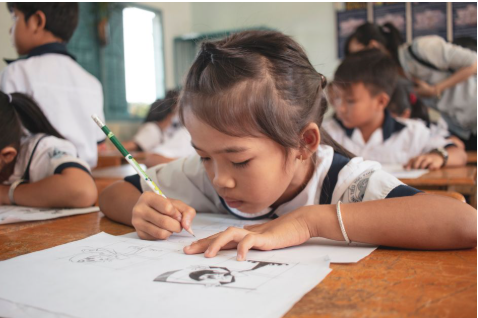
The vital role of nurturing creativity in young minds cannot be overstressed. Introducing primary school creative writing classes at an early age equips children with essential skills that extend beyond mere story crafting. These classes facilitate a range of cognitive and emotional developments that contribute significantly to a child’s holistic growth.
Building Language Skills
One of the primary benefits of creative writing classes for primary school students is enhancing their language abilities. By engaging in regular writing exercises, children learn not only the technical aspects of grammar and punctuation but also how to express complex ideas and emotions through language. This process encourages a richer understanding of vocabulary and syntax, enabling young learners to communicate more effectively both in verbal and written forms.
Encouraging Critical Thinking and Problem Solving
Creative writing requires children to think critically about the world around them. It challenges them to create plots, develop characters, and construct narratives, which involves planning, organising, and executing ideas coherently. This exercise hones their problem-solving skills, as young writers must navigate through the challenges of creating logical, engaging storylines. Thus, they learn to approach real-life issues with a more analytical and open-minded perspective.
Emotional and Social Development
Writing creatively provides a healthy outlet for children to explore and express their emotions. It empowers them with the tools to articulate feelings and navigate through emotional landscapes. In group settings, primary school creative writing classes offer a platform for children to share their stories, listen to others, and engage in insightful discussions. This interaction facilitates empathy and aids in developing strong social skills, as students learn to give and receive constructive feedback.
Boosting Confidence and Self-Esteem
The act of creating and completing a piece of work, such as a short story or a poem, can significantly boost a child’s confidence. The sense of accomplishment achieved from seeing their ideas come to life can bolster their self-esteem and motivate them to tackle new challenges with increased self-assurance. Moreover, receiving recognition from peers and teachers further validates their creative efforts and encourages continued participation in writing activities.
Sparking Imagination and Innovation
Imagination is the bedrock of creativity, and primary school creative writing classes play a crucial role in sparking imaginative thinking. By engaging with diverse genres and styles, children explore their own creative instincts and learn to view the world as a canvas brimming with possibilities. This freedom to imagine fosters innovative thinking, a skill increasingly valued in many fields beyond the arts.
Varied Approaches to Teaching Creative Writing
Educators deploy numerous strategies to teach creative writing effectively, tailoring their methods to suit diverse learning styles. Storytelling through visual aids, such as picture books and graphic novels, can inspire students who respond well to visual stimuli. In contrast, auditory learners might benefit from storytelling and poetry workshops which utilise spoken word. Some classes incorporate technology, using creative writing software to appeal to digitally savvy students. These varying approaches ensure all students are engaged and encouraged to explore their creative potential.
Writing as a Tool for Cultural Understanding
Creative writing fosters not only individual expression but also greater understanding and appreciation of diverse cultures and traditions. By exploring stories from different cultural backgrounds, children become more aware of the world’s rich tapestry of narratives. This exposure promotes inclusivity and broadens their worldview, preparing them to interact with a diverse global community.
Integrating Creative Writing into the Curriculum
Incorporating creative writing into the broader school curriculum should not be viewed as an isolated activity. Instead, it can complement other subjects, such as history or science, by encouraging students to write historical fiction or science-based narratives. This interdisciplinary approach enhances students’ understanding of subjects while simultaneously developing writing skills. Such integration underscores the versatility of creative writing as a tool for learning across different academic areas.
The Role of Technology in Creative Writing Education
Technology has become an indispensable component of education, and its role in creative writing classes continues to expand. Online platforms and writing applications provide students with unique opportunities to engage with digital storytelling. These tools offer interactive experiences, enabling children to integrate multimedia elements into their projects, thus enriching the storytelling process. Furthermore, technology facilitates collaboration, allowing students to write and edit in real-time, fostering a spirit of teamwork and collective creativity.
Professional Development for Educators
For creative writing to reach its full potential in the classroom, educators themselves must be well-versed in teaching its principles. Professional development workshops and courses enable teachers to refine their own writing skills and master effective pedagogical strategies. By equipping educators with the knowledge and confidence needed to inspire young writers, schools can ensure that creative writing classes remain a vibrant and influential part of their education systems.
Overcoming Challenges in Creative Writing Education
While the benefits of creative writing classes are substantial, educators may encounter challenges, such as reluctant writers or a lack of resources. Addressing these issues requires creative solutions, such as fostering a classroom environment that celebrates creativity and encourages trial and error without fear of judgement. Additionally, schools can invest in resources and materials that inspire creativity, ensuring that all children have access to the tools necessary for exploring their imaginations.
Conclusion
In conclusion, the importance of primary school creative writing classes transcends mere language development. These classes are instrumental in cultivating essential life skills, including critical thinking, emotional intelligence, and cultural awareness. By fostering creativity from an early age, schools empower students to navigate the complexities of the modern world with imagination and confidence.
