

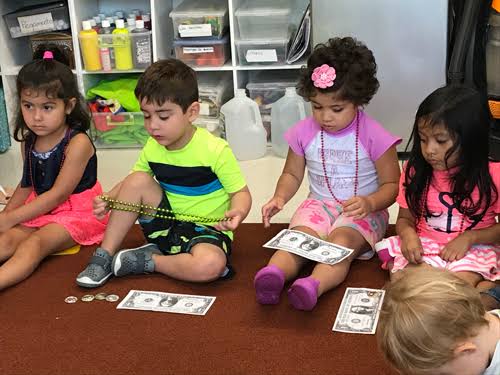
Preschool is a time when children begin making sense of language through conversation, play, songs, and everyday routines. Introducing Spanish during these years can give children an opportunity to communicate across languages while developing an appreciation for different cultures. For families in San Jose, where Spanish is part of the region’s rich linguistic landscape, early exposure can also help children connect classroom learning with the world around them.
The goal is not to make every preschooler fluent by kindergarten. Rather, meaningful early language experiences build familiarity, confidence, and curiosity that can support continued learning as children grow.
Why the Preschool Years Are Well Suited to Language Learning
Young children learn language through repeated, meaningful interactions. They listen to sounds, notice patterns, imitate words, and gradually connect expressions with people, objects, and actions. Because preschoolers spend much of their day learning through direct experience, a second language can be introduced naturally alongside their regular activities.
A teacher might use Spanish while greeting children, naming colors during an art project, or counting steps on the playground. When words are connected to an immediate experience, children have a reason to listen and an opportunity to understand meaning without translating every phrase.
Early exposure does not guarantee fluency or a permanent advantage in every area of development. Its value lies in building a foundation that children can strengthen through consistent instruction and continued use.
Cognitive and Communication Benefits
Greater Awareness of How Language Works
Learning Spanish alongside English can help children notice that people express similar ideas in different ways. They may begin recognizing patterns in sounds, word order, and vocabulary. These observations can encourage attention to language itself, an ability that becomes useful when children learn to read and write.
Research on bilingual development suggests that experiences with multiple languages can shape children’s metalinguistic awareness—the ability to think about language as a system. However, effects on broader skills such as attention and executive function vary across studies and should not be treated as guaranteed outcomes.
Building Listening and Speaking Confidence
Preschool language learning often starts with comprehension rather than conversation. Children may understand hola, gracias, or ¿cómo estás? long before they use those expressions independently. That receptive knowledge is a meaningful part of development.
Songs, picture books, gestures, and repeated classroom phrases give children several ways to understand new vocabulary. Gradually, familiar expressions can become spontaneous responses. A supportive teacher welcomes attempts, models correct pronunciation, and avoids making children feel embarrassed when they make mistakes.
Supporting Early Literacy
Spanish and English share many features, including an alphabet based on Latin letters, although pronunciation and spelling patterns differ. Exposure to Spanish can help children become curious about letter sounds, rhyming, syllables, and the ways spoken language relates to print.
These connections work best when teachers introduce them through age-appropriate activities rather than formal drills. Reading picture books in both languages, singing rhyming songs, and discussing illustrations can nurture vocabulary while keeping learning engaging.
Cultural Understanding and Social Connection
Language carries more than vocabulary. Stories, celebrations, greetings, and family traditions help children understand how people communicate and express belonging.
A preschool classroom that introduces Spanish through authentic cultural materials can encourage children to approach differences with interest rather than uncertainty. Teachers might read stories by Spanish-speaking authors, explore music from different Spanish-speaking communities, or discuss how families use different words at home.
Spanish is spoken across many countries and communities, each with its own traditions and regional expressions. A thoughtful program avoids presenting Hispanic cultures as a single, uniform experience.
What to Look for in a Spanish Preschool Program
Families comparing a Spanish Preschool in San Jose CA should consider how the language is used throughout the day, not simply how many Spanish words appear on a weekly lesson plan.
Look for educators who can model language naturally, explain how children progress, and adapt activities to different developmental levels. Ask whether Spanish is integrated into play, stories, movement, and routines or reserved for brief, isolated lessons.
Immersion or Short Daily Lessons?
Programs differ in how much Spanish children hear. Immersion settings use the language across many classroom activities, while introductory programs may schedule shorter lessons or selected Spanish-language routines. Either approach can provide useful exposure when it is consistent, interactive, and suited to the child’s age.
Parents should also ask how teachers support children who initially understand little Spanish. Visual cues, gestures, repetition, and warm relationships help newcomers participate without feeling pressured to speak before they are ready.
How Parents Can Reinforce Learning at Home
Families do not need to speak fluent Spanish to support a child’s progress. Listening to Spanish-language songs, borrowing bilingual picture books from the library, and practicing a few useful expressions together can make the language familiar.
Consistency matters more than lengthy study sessions. Five minutes spent enjoying a song or naming familiar objects can be more appropriate for a preschooler than memorizing a long vocabulary list. If a child already speaks Spanish at home, maintaining that language is equally valuable; families can ask teachers how classroom learning can complement existing language skills.
Frequently Asked Questions
Will learning Spanish delay my child’s English?
Learning two languages does not inherently cause a language disorder. Children’s vocabulary may be distributed across both languages, so progress is best considered across their full language experience. Persistent communication concerns should be discussed with a qualified speech-language professional.
Do children need to speak Spanish before starting preschool?
No. Many introductory programs welcome beginners and use repetition, context, and interactive activities to build understanding gradually.
What matters most in early language instruction?
Frequent meaningful exposure, skilled educators, positive interactions, and opportunities to hear and use language without pressure are central to a strong foundation.
Creating a Foundation for Lifelong Learning
Early Spanish exposure can help children develop communication skills, linguistic awareness, and curiosity about other cultures. The most effective programs make language part of children’s everyday experiences rather than treating it as a performance goal. For San Jose families exploring early education options, Action Day Schools can be included in a broader comparison of programs that support language development alongside social, emotional, and academic growth.
