

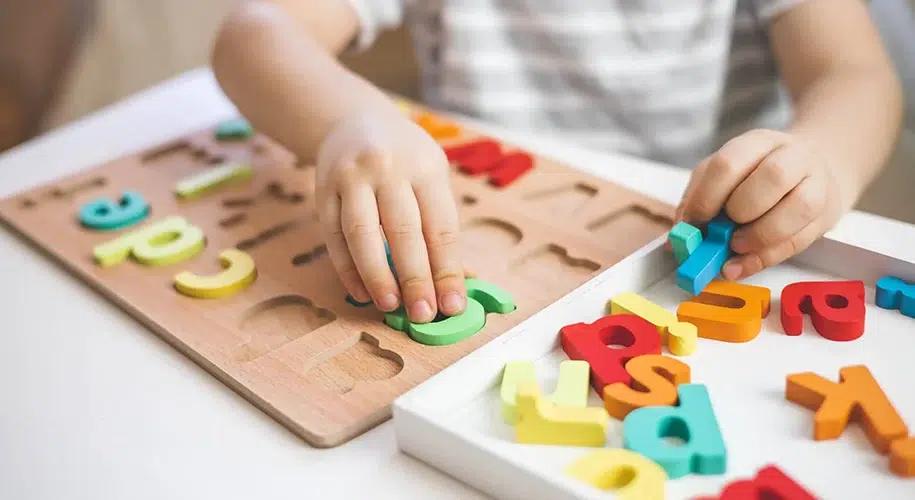
Preschoolers learn through active experiences that invite them to move, talk, imagine, test ideas, and try again. A play-rich routine does not need expensive supplies or a tightly planned schedule. It needs a few dependable moments each day when children can explore with an interested adult nearby.
Simple activities such as sorting socks, building with blocks, acting out a story, or playing learning board games for ages 3 to 4 can create meaningful opportunities to practice early skills. The goal is not to turn every game into a lesson. It is to make learning feel connected to curiosity, relationships, and fun.
Why Play Matters In The Preschool Years
Play gives young children a reason to use language, make choices, solve manageable problems, and interact with other people. A child building a tower may compare block sizes, steady their hands, explain a plan, and cope with the structure falling. Those are valuable learning experiences, even when no worksheet is involved.
Play can support physical, social, emotional, language, and thinking skills simultaneously. The science of playful learning emphasizes experiences that are active, meaningful, socially interactive, and engaging. For adults, that means being available to notice what a child is doing and extending the moment without controlling it.
How To Balance Guided And Open-Ended Play
A useful routine includes both guided play and open-ended play. Guided play has a light structure, such as a challenge to match shapes, count toy animals, or find objects that begin with the same sound. The adult introduces the idea, keeps directions brief, and responds to the child’s effort.
Open-ended play leaves more of the decision-making to the child. Pretend restaurants, block cities, dancing, drawing, dress-up, and homemade obstacle courses all allow children to choose materials, roles, and stories. A short guided activity followed by free play often creates a comfortable balance between support and independence.
Key Skills Preschoolers Can Practice Through Play
Language And Communication
Stories, songs, pretend play, and everyday conversation help children hear and use new words. Invite them to describe colors, textures, actions, and feelings. Back-and-forth talk matters more than getting a single correct answer.
Early Math And Thinking
Children can count snacks, sort buttons by color, compare which pile has more, or arrange toys from smallest to biggest. Matching games and simple patterns also encourage attention, memory, and prediction.
Social, Emotional, And Motor Skills
Turn-taking games offer practice waiting, cooperating, and responding when plans change. Stacking, threading large beads, scooping, hopping, climbing, and tossing soft objects can support fine-motor or gross-motor development while keeping play enjoyable.
How To Choose The Right Activities
Choose activities based on the child in front of you, not on a rigid expectation of what preschool play should look like.
- Match the activity to current abilities. Offer a manageable challenge rather than something that feels impossible.
- Start with one simple goal. Focus on counting, conversation, movement, creativity, or cooperation.
- Keep rules short. One or two clear directions are often enough.
- Consider the setting. Quiet matching may suit one child, while a group scavenger hunt may suit another.
- Leave room for choice. Let children pick a character, color, material, or movement whenever possible.
A Simple Daily Play Routine
A predictable routine can make play easier to begin, but it should stay flexible. Use this as a menu rather than a checklist that must be completed every day.
- 10 minutes of movement: Dance, stretch, hop, or play follow the leader.
- 10 minutes of guided play: Match cards, sort objects, count items, or play a short memory game.
- 15 minutes of creative play: Set out blocks, crayons, puppets, recyclable containers, or dress-up items.
- 10 minutes of reading and talk: Read a picture book and discuss what characters might do next.
- Five minutes of reflection: Ask what felt funny, surprising, easy, or tricky.
Questions Adults Can Ask During Play
Open-ended questions can deepen play without making it feel like a quiz. Try asking, “What do you think will happen next?” “How could you make that taller?” “What is another way to solve it?” or “How does that character feel?”
Comments are useful, too. Saying “You put the wide blocks on the bottom” shows you are paying attention and gives the child space to respond. Pause after speaking. Children often need a little time to form an idea or decide whether they want help.
Ways To Adapt Activities For Different Needs
Small changes can make a familiar activity feel more accessible. Reduce the number of pieces, demonstrate directions with gestures or pictures, provide a quieter space, offer extra response time, or substitute larger objects when small pieces are difficult to handle.
Children may also prefer to watch before joining a group game, especially in a new setting. Predictable routines and repeated favorite activities are valid choices. Ideas for movement, pretend play, music, books, and household activities appear in this guidance on play-based learning for preschoolers, which can help adults build variety without adding pressure.
Common Mistakes To Avoid
- Making every activity instructional: Children need uninterrupted time to invent and explore.
- Adding too many rules: Long explanations can stop momentum before play begins.
- Focusing only on winning Overlooks That Cooperation, practice, and shared laughter are worthwhile outcomes.
- Expecting perfect attention: Interest and energy can vary from day to day.
- When comparing children, observe individual progress rather than measuring one child against another.
A Sample Five-Day Play Plan
Monday: Colors And Sorting
Sort safe household objects by color, size, or texture. Ask the child to explain their sorting rule.
Tuesday: Storytelling And Feelings
Read a short picture book, then invite the child to act out a scene or describe how a character might feel.
Wednesday: Counting And Movement
Count jumps, claps, steps, or beanbag tosses. Let the child choose the next number challenge.
Thursday: Building And Problem-Solving
Build a bridge, tower, road, or shelter. Test what helps keep it balanced, and try a new design.
Friday: Choice-Based Play
Offer two or three play options, then end with a conversation about the week’s favorite moment.
Final Thoughts
Preschool learning can be active, social, and joyful. A strong play routine combines simple structure with enough freedom for children to lead, make mistakes, and try new ideas. Start small, follow the child’s interest, and remember that connection is more important than completing a perfect plan.
