

Older heavy-duty diesel engines remain valuable in trucks, agricultural equipment, construction machinery, generators, and industrial applications. Many owners continue to rely on proven platforms because they understand the equipment, can service much of it in-house, and know how it performs under real working conditions. Well-maintained Cummins 855 engines, along with other legacy diesel platforms, can continue to provide dependable service when their condition is monitored honestly.
Age alone does not decide whether an engine should stay in operation. Service history, workload, environment, parts availability, and the condition of supporting systems all matter. The practical goal is to catch small changes early, complete maintenance consistently, and plan major repairs before an unexpected failure creates expensive downtime.
Why Legacy Engines Still Matter
Legacy engines often have straightforward mechanical designs, familiar service procedures, and an established supply of technicians and replacement parts. That does not mean they are maintenance-free. It means owners can make better decisions when they know the engine’s normal operating behavior and have records that show how it has changed over time.
An older engine can remain a sound business asset when it starts reliably, holds normal oil pressure, controls temperature, produces acceptable power, and does not show escalating oil or coolant use. A machine with a documented history is usually easier to maintain than one with unknown repairs and no operating records.
Build a Reliable Engine Baseline
Before ordering major parts, establish a baseline. Record engine hours or vehicle mileage, oil pressure at idle and under load, coolant condition, fluid consumption, starting behavior, exhaust appearance, and any unusual sound. Inspect belts, hoses, wiring, clamps, fuel lines, and visible intake components at the same time.
This information gives operators something useful to compare during future inspections. For example, a modest change in cranking time or coolant use may be easier to address when it is recognized as a new trend rather than dismissed as normal wear.
Follow Simple Maintenance Routines
Daily or Pre-Shift Checks
- Look for fuel, oil, and coolant leaks before startup.
- Check engine oil, coolant, and other required fluid levels.
- Watch gauges and warning lights as the engine warms up.
- Listen for knocks, hissing, rattles, or new vibrations.
- Note changes in smoke, power, or throttle response.
Scheduled Service Tasks
Use the manufacturer’s service requirements as the starting point, then adjust for the actual duty cycle. Frequent idling, heavy loads, short trips, extreme temperatures, and dusty work areas can require closer attention. Change oil and filters on schedule, replace fuel filters before restriction causes trouble, inspect air filters, and complete valve or overhead adjustments when specified for the engine.
Watch for Early Warning Signs
Diesel engine damage is often preceded by a change in normal behavior. Longer cranking, hard cold starts, reduced power, uneven running, rising fluid consumption, persistent smoke, overheating, low oil pressure, and metal found in drained oil or filters all deserve prompt diagnosis. Continuing to work on an engine with severe overheating, dangerously low oil pressure, heavy knocking, major fluid loss, or sudden power loss can turn a repairable issue into a larger failure.
Protect the Fuel System
Fuel quality is especially important because injection components depend on clean fuel for accurate delivery and reliable operation. Purchase fuel from dependable suppliers, drain water separators, replace filters at the correct interval, and inspect storage tanks for water, sediment, corrosion, or microbial growth. Avoid assuming that poor starting or lost power automatically means injectors need replacement. Check for restricted filters, air leaks, water contamination, and supply problems first.
Manage Cooling and Lubrication
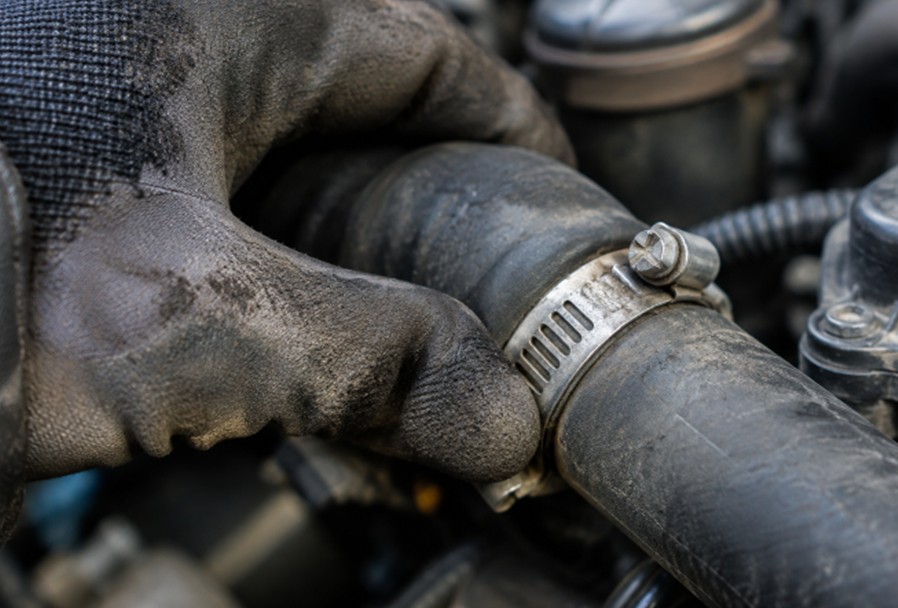
Cooling and lubrication should be treated as connected systems. Keep radiators, charge-air coolers, and protective screens clear of debris. Check hoses, clamps, belts, thermostats, pressure caps, and water-pump condition. Repeated temperature spikes should never be treated as a normal part of hard work.
Use the oil grade and performance category specified for the engine, track oil added between changes, and investigate sudden shifts in pressure or consumption. Oil analysis can be useful for heavily worked equipment because it may identify contamination, soot loading, fuel dilution, or wear metals before a problem becomes obvious during operation.
Handle Emissions Equipment Carefully
Some later-model, repowered, or retrofitted equipment includes emissions-related sensors, catalysts, or particulate filtration. Poor combustion, restricted intake airflow, and fuel-system problems can increase soot and create related faults. California’s heavy-duty diesel maintenance guidance reinforces the importance of maintaining injectors, air filters, turbochargers, fuel filters, coolant, and engine oil.
Do not bypass, remove, or tamper with required emissions systems. Repeated warnings should receive a proper diagnosis, and owners should verify applicable federal, state, and local requirements before modifying equipment.
Repair, Rebuild, or Replace?
A targeted repair may be appropriate when the block and crankshaft are serviceable, the engine has a good history, and the machine still meets operational needs. A full rebuild may be justified when compression is uneven, oil pressure remains low after basic repairs, or wear has affected multiple internal components.
Replacement becomes more realistic when structural damage is severe, parts are difficult to obtain, repair costs approach the machine’s value, or planned downtime costs less than waiting for a failure. The right choice depends on inspection results, not simply the engine’s age.
Create a Maintenance Plan
- Document hours, fluid use, normal gauge readings, and known defects.
- Schedule services by both calendar time and operating hours.
- Compare trends in starting time, temperature, oil use, coolant use, and fuel consumption.
- Complete deeper inspections before busy hauling, harvest, or construction seasons.
- Keep common filters, belts, hoses, clamps, and approved fluids available.
- Schedule major work before an engine failure stops the machine.
Connected diagnostics and condition-based service planning are increasingly important for newer fleet equipment. As modern diesel maintenance and predictive service planning evolve, maintenance teams can combine electronic fault information with hands-on inspections instead of relying on either method alone.
Conclusion
Legacy heavy-duty diesel engines can remain dependable when owners track their condition and act on warning signs early. Consistent maintenance, clean fuel, controlled operating temperatures, correct lubrication, and practical repair planning all reduce the risk of unexpected downtime. The strongest maintenance program is built on records, inspection, diagnosis, and a willingness to address small problems before they become major ones.
