

Apartment listening has a bad reputation it does not deserve. The room is small, the neighbours are close, and yet a well-chosen pair of bookshelf speakers can sound startlingly complete in twelve square metres, provided the electronics behind them are chosen for the space rather than for a spec sheet. The good news is that the classic stereo chain — source into amplifier into two speakers — suits small rooms better than almost anything else.
There is no receiver with nine channels you will never use, no tangle of HDMI leads, and no setup menu standing between you and the play button. What follows is a practical look at building that kind of system: what the amplifier has to do, which speakers behave near walls, and how placement does more for the sound than any cable upgrade ever will.
Why Two Channels Are All a Small Room Needs
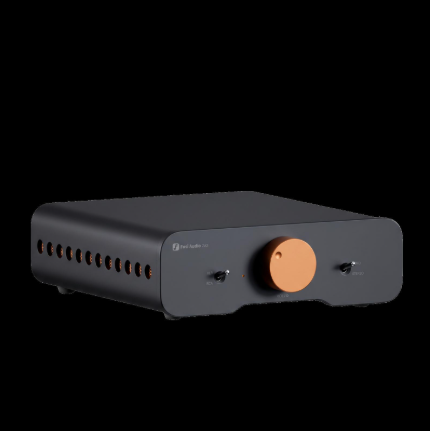
Nearly all music is recorded in stereo, so a system that does two channels properly matches the material it is fed. A dedicated 2 channel amplifier spends its entire parts budget on those two channels — the power supply, the output stage, the volume control — instead of spreading the same money across surround decoding and video switching you will never touch.
Power is the number people fixate on, and in a small room it matters less than you think. At a listening distance of one to two metres, a speaker of average sensitivity reaches satisfying levels on a handful of watts. Clean delivery at low volume is the real test, because apartment listening happens mostly at low volume: evening levels where the music must stay balanced and full rather than turning thin and polite.
Picking Bookshelf Speakers That Behave Near Walls
Bookshelf speakers earn their name honestly in flats. Many end up on sideboards, desks or actual shelves, pushed close to the wall behind them. That placement boosts bass, which can be pleasant or can turn into boom. Two design details help. Front-ported speakers vent to the front, so they tolerate a wall behind them. Compact cabinets with four or five-inch woofers rarely overload a small room the way larger boxes do.
Spend the larger share of the budget here. Speakers decide the character of a system more than any other component, and a modest amplifier driving good speakers beats the reverse pairing almost every time. If you can, judge a pair on its midrange first: voices and acoustic instruments live there, and small-room listening is mostly about exactly those sounds.
Placement Tricks That Cost Nothing
Before buying anything else, try the free upgrades. Get the tweeters roughly at ear height when seated; a stack of books or inexpensive foam pads works until proper stands arrive. Angle the speakers slightly inward, toward the listening seat, and adjust in small steps, because a few degrees of toe-in changes the stereo image more than most people expect.
- Keep the pair the same distance from the side walls, so reflections arrive evenly on both sides.
- A rug between the speakers and your seat calms the glare of a hard floor.
- If the bass booms, pull the speakers 20 cm forward before touching any tone control.
- Change one thing at a time, then sit down and listen to a track you know well.
Low-level listening is where placement earns its keep twice over. A 2 channel amplifier in a flat spends its life in the bottom third of its volume dial, and that is exactly the region where channel balance and tonal evenness separate thoughtful designs from careless ones. Get the speakers right and those quiet evening sessions stay rich instead of threadbare. Soft furnishings help as well: curtains, a sofa and a bookshelf of uneven spines all break up reflections, and most lived-in rooms already own the cure.
Sources, Wiring and Everyday Use
Sources in an apartment system are usually humble: a phone, a laptop, a small streamer, maybe the television for films. Check the input list against what you actually own. An optical input covers most TVs, Bluetooth covers casual listening from a phone, and a USB or analogue input handles a computer. A turntable needs a phono stage somewhere in the chain, built into one of the boxes or added as a small external unit.
When you compare models side by side, the practical shortlist is short: honest power for your speakers, the inputs named above, a remote you will not lose, and a footprint that fits the shelf you actually have. That combination is what to look for in a 2 channel amplifier before anything exotic enters the conversation. Speaker cable needs no ceremony either: ordinary copper of sensible gauge, cut to equal lengths, with bare ends tightened properly or banana plugs fitted for convenience.
Small rooms reward restraint. A 2 channel amplifier and a pair of well-placed bookshelf speakers give you the whole of a recording — the voice floating in the middle, the space around the instruments — at volumes that respect the neighbours and still feel like an event. Set it up carefully once, then forget the system and listen to records. That, in the end, is the entire point of the exercise.
