

By the time the first real snow lands on Rochester, usually the week after Thanksgiving, the garage door has already been through two months of cold mornings and warm afternoons. That swing, freezing at night and thawing by lunch, does more damage to a door than a steady deep freeze does. Meltwater gets into places it should not be, refreezes, and pushes on parts that were never meant to be pushed on.
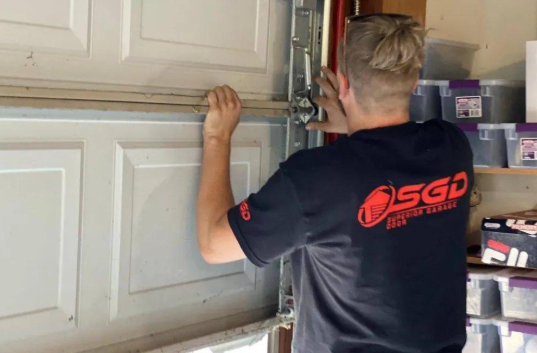
A fall tune-up on a Rochester-area door: rollers, hinges and springs get wiped and lubricated before the snow.
The checklist below is the one a service technician runs in the fall, written out so a homeowner can do most of it alone. It takes about an hour, it needs a step stool and a rag, and it is the difference between a quiet winter and a door hanging crooked in the opening on a Tuesday in January.
Springs: the part that decides everything
Everything else on the door depends on the springs carrying the weight. Start here.
Close the door, pull the red emergency release, and lift the door by hand to about waist height. Let go. A balanced door stays where you left it. A door that sinks has tired springs; a door that keeps rising has springs that are overwound, which is rarer but just as hard on the opener.
Look at the spring itself, the long coil above the door on a torsion system. A gap in the coil means it has already broken. A visible rust bloom along the length means it is close. Springs are rated in cycles, not years, and a standard 10,000-cycle spring on a door that opens six times a day is at the end of its life after about four and a half years.
Do not adjust or replace a torsion spring yourself. It is the one job on a garage door that sends people to the emergency room.
Seals: where the water gets in
Rochester garages sit on slabs that heave a little every winter, and the gap under the door is never the same two years in a row. The bottom seal has to cover that gap, stay flexible at minus 20, and not freeze to the concrete.
Tightening track hardware; loose brackets and rusted bottom fittings are common after a wet Minnesota fall.
Run a hand along the bottom seal. If it is stiff, cracked, or flattened on one side, replace it. The part costs very little and slides into the retainer on most steel doors in ten minutes. While the door is open, check the side and top weatherstripping along the jambs. Daylight showing around the door in the afternoon means cold air and blowing snow at night.
A trick that works on north-facing garages in the newer subdivisions off 19th Street and in the older neighborhoods near Slatterly Park: lay a strip of foam pipe insulation along the inside of the bottom seal for the coldest months. It stops the seal from bonding to ice on the floor.
Rollers, hinges and the track
Wipe the rollers, the hinge pins and the torsion spring with a rag, then spray a low-temperature silicone or white lithium lubricant on each. Skip the track itself; a greasy track collects grit and makes the rollers slide instead of roll. Steel rollers that squeal or wobble are a sign to switch to nylon rollers with sealed bearings, which run quieter and do not seize in the cold.
Look at the vertical tracks where they meet the slab. Salt from the car melts, runs down, and rusts the bottom foot of track and the bottom bracket, the one the cable attaches to. A rusted bottom bracket is a cable failure waiting to happen.
The opener: cold is hard on electronics
The opener is the part most people blame first and the part that is usually innocent. In cold weather it struggles for three reasons: thick grease on the rail, a door that is heavier than it was because the springs are weak, and a force setting that trips before the door clears the frozen seal.
Clean the rail and apply a thin coat of the same lubricant. Test the safety reverse by placing a 2×4 flat on the floor under the door; the door must reverse when it touches it. Wipe the photo eyes near the floor on both sides, since salt film on the lens is the most common cause of a door that will not close.
If the opener is more than 12 years old and chain driven, this is the year to consider replacing it. The current belt-drive units with battery backup keep working through the ice storms that take out power in Olmsted County every couple of winters.
When to call instead of climb
A broken spring, a cable off the drum, a door that is off its track, or a section that has bent: those are service calls, not Saturday projects. Local crews doing Rochester garage door repair handle spring and cable work the same day in most cases, and the visit should include a full balance check so the homeowner is not calling again in February for the part next to the one that failed.
For the preventive items, a once-a-year tune-up in October covers everything on this list, and the technician will catch the two things a homeowner cannot judge from the floor: the remaining cycle life on the springs and the wear in the end-bearing plates. Companies with a maintenance program, Superior Garage Door Repair among them, treat that fall visit as the main event of the year, because it is where the January emergencies get prevented.
Quick answers
Can I run the opener if the door is frozen to the floor? No. Pour warm water along the seal from inside, free the door by hand, then check the bottom section for a bend before reconnecting the opener.
How often should rollers be lubricated in winter? Once in the fall and once in mid-winter, on a dry door. Lubricating a wet door traps water in the hinges.
Is an insulated door worth it in Rochester? For an attached garage, yes. It keeps the garage 20 to 30 degrees above the outside air, which protects the car, the springs and the water heater that lives out there in many local homes.
Superior Garage Door Repair – Rochester
1500 1st Ave NE #225A, Rochester, MN 55906
(585) 488-4898
247superiorgaragedoor.com
