

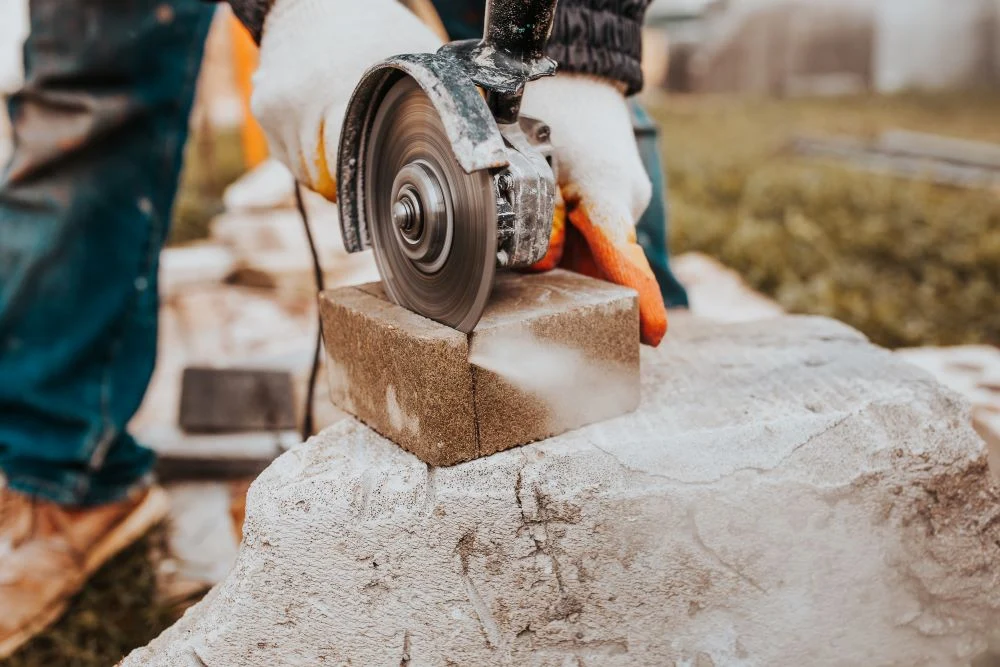
Cutting concrete, brick, and masonry requires the right equipment to achieve clean results and maintain a safe working environment. Whether a contractor is installing paving stones, modifying a concrete slab, or completing a brick renovation, the cutting blade plays an important role in the project’s efficiency and accuracy. Diamond blades are commonly used for these demanding applications because their diamond-embedded edges are designed to cut hard and abrasive materials. Exploring diamond blades for concrete and masonry can help users compare available options before selecting an accessory for a particular job.
However, choosing a diamond blade involves more than checking its price or diameter. Material compatibility, rim design, cutting method, and equipment specifications all influence performance. Understanding these factors can help users make a more appropriate selection.
1. Identify the Material Being Cut
The first step is determining the exact material involved in the project. Concrete, brick, concrete blocks, pavers, and natural stone have different densities and abrasive properties. A blade designed for one application may not deliver the same performance on another.
For example, cured concrete and reinforced concrete can require blades capable of handling demanding cutting conditions. Brick and concrete blocks may benefit from general-purpose masonry blades, while certain natural stones require more specialized designs to achieve the desired finish.
Material condition also matters. Freshly poured or green concrete can behave differently from fully cured concrete, and reinforced concrete introduces additional considerations because of embedded steel. Users should always consult the blade manufacturer’s material recommendations before beginning work.
2. Choose the Right Diamond Blade Rim Design
Diamond blades are available in several rim configurations. Each design offers different cutting characteristics and is suited to particular materials and finishing requirements.
Segmented blades have spaces between the diamond segments. These openings help clear debris and support cooling during cutting. They are commonly used for concrete, brick, blocks, and pavers, particularly when cutting speed and material removal are priorities.
Turbo-rim blades feature a serrated cutting edge that combines aspects of segmented and continuous designs. They can provide a balance between cutting speed and finish quality, making them useful for certain brick, masonry, and stone applications.
Continuous-rim blades have an uninterrupted cutting edge. They are commonly used for tile and finish-sensitive stone applications where reducing edge chipping is important. Many are designed specifically for wet cutting.
The best configuration depends on the workpiece and the required edge quality. A blade designed for aggressive concrete cutting may not be the right choice for delicate tile work.
3. Determine Whether Wet or Dry Cutting Is Appropriate
Diamond blades are manufactured for different cutting methods. Some are rated for wet cutting, others for dry cutting, and some can be used with either method when the equipment also permits it.
Wet cutting uses water to cool the blade and reduce airborne dust. It is frequently used for concrete and masonry projects that involve longer cutting operations or substantial material removal.
Dry cutting can be more convenient for certain outdoor tasks or locations where water delivery is impractical. However, it can generate significant dust, particularly when cutting concrete, brick, and other materials containing crystalline silica.
The Occupational Safety and Health Administration (OSHA) explains that applying water to a saw blade during concrete, brick, and stone cutting can substantially reduce the amount of silica dust generated. Its guidance on respirable crystalline silica in construction also outlines workplace exposure-control requirements.
Users should follow the blade and equipment manufacturers’ instructions. A blade intended for wet cutting should not be used dry unless its specifications explicitly permit that method. Appropriate dust controls and respiratory protection must also be considered for the task.
4. Check Blade Diameter, Arbor Size, and Equipment Compatibility
A diamond blade must be compatible with the saw or grinder being used. Important specifications include the blade diameter, arbor opening, maximum operating speed, and mounting requirements.
The diameter determines the blade’s cutting capacity and must match the equipment’s approved size. The arbor opening must fit the machine’s mounting system correctly, while the blade’s maximum RPM rating must meet or exceed the tool’s operating speed.
Users should also consider the type of equipment. Handheld angle grinders, circular saws, masonry saws, and walk-behind concrete saws require different blade configurations.
A blade should never be forced onto a spindle, modified to fit, or operated without the required guard. Checking the equipment manual and blade specifications before installation helps prevent compatibility problems and unnecessary safety risks.
5. Consider Cutting Depth, Durability, and Project Requirements
The final selection should reflect the scale and demands of the project. A small brick repair may require a different blade from a large concrete-cutting job involving deep or repeated cuts.
Segment height, bond formulation, blade construction, and cutting conditions can all affect service life. The bond holds the diamond particles in place and influences how they are exposed as the blade wears. Different bond formulations are designed for different material characteristics and cutting conditions.
A blade should also provide sufficient cutting depth for the workpiece. If the project requires repeated cuts through thick concrete or masonry, selecting a blade designed for that level of work is important.
Rather than choosing solely by price, users should compare the blade’s intended materials, operating specifications, and expected workload. Selecting an appropriate blade can help reduce premature wear and improve overall cutting consistency.
Making the Right Diamond Blade Selection
Choosing a diamond blade for concrete, brick, and masonry requires careful consideration of the material, rim configuration, cutting method, equipment compatibility, and project demands. Each specification contributes to the blade’s performance and suitability for the task.
For additional guidance, ZainView’s article on how to cut concrete, granite, and stone explores equipment preparation, blade selection, cutting techniques, and protective measures.
Ultimately, the best diamond blade is one that is specifically rated for the material and cutting method, compatible with the equipment, and appropriate for the required cutting depth and finish. Careful preparation and adherence to safety instructions can help make construction and masonry projects more efficient and controlled.
