

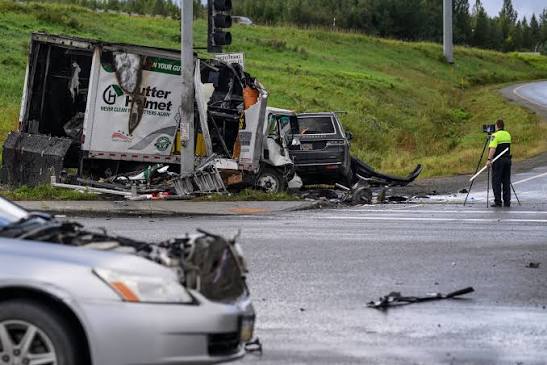
Anyone hurt in a wreck with a semi or delivery rig should look for trusted truck crash injury guidance in Anchorage before speaking with an insurance adjuster. Big rigs bring bigger injuries, more paperwork, and a longer list of people who might share the blame. Learning the basics early can protect a claim from mistakes that are hard to undo later.
A City Built Around Freight
Most goods that reach Southcentral Alaska arrive by sea first. Containers land at the Port of Alaska and roll onto local streets inside tractor-trailers headed for stores, job sites, and villages farther north. As a result, heavy trucks share lanes with commuters on Tudor Road, A Street, and the Glenn Highway daily.
Long-haul carriers also run the Parks Highway toward Fairbanks and continue up the Dalton to the oil fields. A driver who left Anchorage at dawn may be hundreds of miles into a shift by the time traffic thickens near Wasilla. Fatigue builds quietly and often plays a part in serious collisions.
Winter Darkness and Icy Pavement
Alaska roads test every motorist, but a loaded truck needs far more distance to stop than a sedan. Black ice, blowing snow, and packed slush can turn a small misjudgment into a jackknife or rollover. Around the winter solstice, the city sees only a few hours of daylight, so many trips happen in the dark.
Commercial drivers are expected to slow down, add following distance, and pull over once conditions turn unsafe. Carriers are expected to give them schedules that allow for that. Live closures and road reports are posted on Alaska 511 traveler information, and a wreck that follows clear warnings may point to poor judgment or pressure from dispatch.
Records That Can Vanish Quickly
After a car accident, proof is often limited to photos, a police report, and a few witnesses. Truck cases run much deeper. Most commercial rigs carry an electronic logging device that tracks driving time. Many also have engine control modules that store speed, braking, and throttle data from the seconds before impact. Dashcams, dispatch messages, and repair logs can fill in the rest of the story.
Federal hours-of-service rules for commercial drivers cap how long a trucker can drive before resting, and Alaska has a few special provisions of its own. Comparing those limits against log data can show whether someone pushed past safe limits. The catch is that some files are only kept for a short time. A prompt letter asking the carrier to preserve its data can stop key details from being erased or written over.
Smart Moves After a Collision
The days after a crash matter more than most people realize. A few simple actions can make a claim much stronger:
- Get checked by a doctor, even if pain seems minor at first.
- Photograph every vehicle, the road surface, skid marks, and the company name on the cab door.
- Write down the truck number, trailer number, and contact details for anyone who saw the crash.
- Keep receipts, medical bills, and notes about missed work together in one folder.
- Decline a recorded statement to the carrier’s insurer until after getting legal advice.
Back injuries, concussions, and internal damage do not always show symptoms right away. A gap between the crash and the first medical visit is something insurers love to point out, so early treatment helps both health and the claim.
Sharing Blame Under Alaska Law
Alaska follows a pure comparative fault rule. A person can still recover money even if they were partly at fault. Their award simply drops by their share of the blame. Someone found 30 percent responsible would still collect 70 percent of their proven damages.
Insurance companies know this rule well. They may argue that the injured driver was speeding, following too closely, or slow to react. Solid facts from the scene and the truck’s own data are often the best answer to those claims. Many families in Anchorage are surprised by how hard a carrier will push to raise their percentage of fault.
More Than One Party Can Be Responsible
A truck crash is rarely just about the person behind the wheel. The trucking company may have hired someone with a poor safety record or set delivery times that left no room for rest. A shipper may have loaded cargo unevenly, making the trailer unstable on a curve. A repair shop may have missed worn brakes during an inspection. Even a parts maker can be on the hook if a defective tire or steering part fails.
Each of these businesses may carry its own insurance policy. Finding all of them can raise the amount of coverage available for medical care, lost wages, and long-term needs.
Picking Legal Help in Anchorage
Not every injury firm takes on commercial truck cases. It helps to ask a few direct questions during a free consultation. Has the firm handled claims against national carriers? Does it work with crash reconstruction experts? How often will it share updates? Lawyers who once worked for insurance companies can bring useful insight, having seen how adjusters value claims from the inside.
Local knowledge counts too. An attorney who knows Anchorage courts, regional medical providers, and the stretch of highway where a crash happened can often move faster than an out-of-state office.
FAQs
How long does a person have to file a truck accident lawsuit in Alaska?
In most cases, the deadline is two years from the date of the injury under Alaska Statute 09.10.070. Claims involving a city or state vehicle may have shorter notice rules, so acting quickly is wise.
Can an Anchorage resident sue a trucking company based in another state?
Yes. Out-of-state carriers that operate on Alaska roads can be held responsible for crashes here. Federal rules and the carrier’s insurance policy still apply.
What kinds of damages can be recovered?
Injured people may seek payment for medical bills, future treatment, lost income, reduced earning ability, and pain and suffering. Families who lose a loved one may have a wrongful death claim.
Does hiring a lawyer cost money up front?
Most injury firms in Anchorage work on contingency. The fee comes out of any settlement or verdict, and there is no charge if the case does not recover money.
Finding a Path Forward After a Serious Wreck
Healing takes time, and the legal side should not add more stress. Understanding how proof, fault, and insurance work gives injured people a clearer road ahead. Anyone dealing with a crash on the Glenn, the Seward, or a busy Anchorage intersection deserves straight answers and a fair shot at full compensation.
