

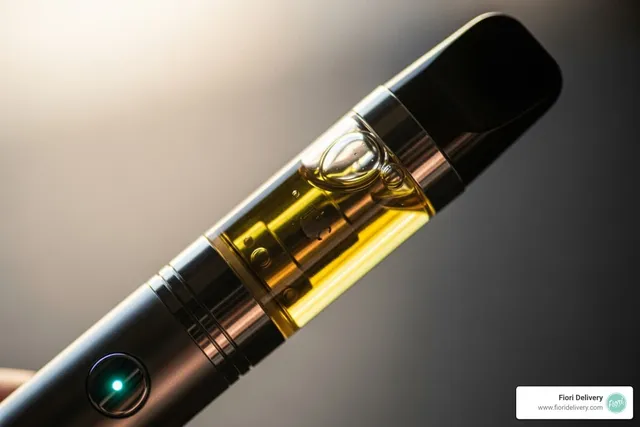
The cannabis market has changed considerably over the past few years. What was once a relatively straightforward choice between a few familiar products has become a much larger market filled with oils, concentrates, edibles, disposable devices, cartridges and different cannabinoid formulations.
For someone looking at cannabis vape cartridges, that variety can be both useful and confusing. Two products can appear similar on the surface while having very different ingredients, cannabinoid concentrations, hardware and manufacturing standards.
That is why choosing a cartridge should involve more than looking at the name on the package or picking the product with the most attractive flavour.
A little research before making a purchase can help you understand what you are actually getting and what questions are worth asking.
Start With the Cannabinoids
The first thing to look at is what cannabinoids the product contains.
THC is the cannabinoid most commonly associated with the intoxicating effects of cannabis, while CBD does not produce the same type of high. There are also different forms of THC, including delta-8 and delta-9, which can have different legal considerations depending on where you live.
ZainView has previously covered the distinction between delta-8 and delta-9 THC, noting that although they are chemically related, they are different forms of THC.
For consumers, the important point is not to assume that every cartridge labelled “THC” contains the same formulation.
Read the label and find out exactly what the product contains.
Look Beyond the Brand Name
Brand recognition can make shopping easier, but a familiar-looking name should not replace basic research.
When comparing different cart brands, look for information about the manufacturer, ingredients, cannabinoid content and testing. A transparent company should make it reasonably easy for consumers to understand what is inside its products.
If a product description gives you plenty of marketing language but very little information about its contents, that is worth noticing.
The same principle applies to online shopping in almost every category. A good-looking website can tell you how a company wants its products to appear, but clear product information tells you much more about what you are actually buying.
Check for Laboratory Testing
Third-party laboratory testing is one of the most useful things to look for when researching cannabis products.
Testing can provide information about cannabinoid concentrations and, depending on the laboratory and jurisdiction, contaminants or other substances that consumers would not want in a product.
A certificate of analysis, often called a COA, can therefore be more informative than a collection of impressive claims on a product page.
If testing information is available, check that it relates to the actual product or batch rather than assuming that a generic laboratory report applies to everything a company sells.
The more specific the information, the more useful it is.
Pay Attention to Ingredients
A cartridge is not simply THC suspended in a container.
Depending on the product, formulations can include cannabis extracts, terpenes and other ingredients. Consumers should therefore read the ingredient information carefully rather than assuming every cartridge is formulated in exactly the same way.
This becomes especially important when someone has allergies, sensitivities or other personal reasons to avoid particular ingredients.
If the ingredients are unclear, contacting the manufacturer before purchasing is a sensible step.
A reputable seller should be able to explain what is contained in the product rather than leaving consumers to guess.
Hardware Matters Too
The oil inside a cartridge gets most of the attention, but the hardware is also an important part of the product.
Cartridges are designed to work with particular batteries or devices, and compatibility can vary. The heating element, airflow and construction can all affect how the device functions.
Consumers should follow the manufacturer’s instructions and avoid using damaged cartridges or incompatible equipment.
It is also worth paying attention to obvious signs of poor construction. Leakage, cracks or other physical damage are reasons to stop and assess the product rather than continuing to use it.
A cartridge may contain a carefully formulated oil, but that does not make faulty hardware safe or suitable to use.
Don’t Assume the Most Expensive Product Is the Best
Price can be useful when comparing products, but it should not be the only factor.
A higher price does not automatically mean higher quality, just as a cheaper product is not automatically poor quality.
Instead, compare what you are actually receiving for the price.
Look at the amount of product, cannabinoid concentration, ingredients, testing information, manufacturing details and hardware. Two cartridges with similar prices may offer very different levels of transparency.
This is where doing a little research can pay off.
Rather than asking, “Which one costs the most?” ask, “Which product gives me enough information to understand what I am buying?”
Be Careful With Health Claims
Cannabis products are sometimes promoted with claims about sleep, anxiety, pain, relaxation or other health concerns.
Consumers should be careful about treating these statements as established medical facts.
Individual experiences can vary considerably, and a product advertisement is not a substitute for medical advice or clinical evidence. ZainView’s existing cannabis coverage itself discusses both potential effects and possible disadvantages associated with cannabis products, including concerns around dosing and side effects.
Anyone considering cannabis for a medical issue should speak with an appropriate healthcare professional, particularly if they take prescription medication or have an existing health condition.
The same applies to people who are unsure whether cannabis is appropriate for them at all.
Know the Rules Where You Live
Cannabis laws are not the same everywhere.
Some jurisdictions permit certain cannabis products while restricting others. Rules may also differ depending on THC concentration, cannabinoid type, age, possession, purchasing and where a product can legally be used.
That means information from a website based in another state or country may not apply to you.
Before purchasing a cannabis cartridge, check the current laws that apply to your location. Do not assume that an item being advertised online means that it is automatically legal to buy, possess or use where you live.
This is particularly important with products containing different forms of THC.
Avoid Unclear Sources
One of the biggest challenges when shopping for cannabis products online is knowing where the product actually comes from.
Packaging can look professional without providing much evidence about manufacturing standards. A product can also be described as “premium” without explaining what that means.
Whenever cannabis products are legal in your jurisdiction, regulated and transparent sources generally provide consumers with more useful information than unidentified sellers.
Look for clear company information, product details, testing documentation and appropriate legal notices.
If a seller makes it difficult to determine who manufactured a product or what is actually inside it, that uncertainty is worth taking seriously.
Think About Your Own Experience Level
Not every cannabis product is appropriate for every consumer.
Cannabis can affect people differently, and products with concentrated THC can be particularly strong. Someone who is inexperienced may have a very different response from someone who has used cannabis regularly.
That makes it unhelpful to treat potency as a competition.
A product containing a higher concentration of THC is not automatically a better choice. Consumers should pay attention to the labelled concentration and follow applicable instructions rather than assuming that stronger means better.
Anyone who is inexperienced, concerned about possible effects or uncertain about whether cannabis is appropriate for them should seek professional advice before use.
Storage and Safety Still Matter
Once a cannabis product has been purchased legally, proper storage is another consideration.
Keep products according to the manufacturer’s instructions and away from children and pets. Cannabis products should also be stored securely so that other people cannot accidentally access them.
Cartridges and batteries should be handled according to their respective instructions, particularly when charging or storing devices.
These may seem like basic precautions, but responsible product use includes what happens after the purchase as well as what happens before it.
A Better Way to Compare Products
Instead of choosing a cartridge because of its flavour, packaging or popularity, create a simple checklist.
Ask:
- What cannabinoids does it contain?
- Is the concentration clearly stated?
- Are the ingredients listed?
- Is the manufacturer identifiable?
- Is independent testing available?
- Does the testing relate to the specific product or batch?
- Is the cartridge compatible with the intended device?
- Is the product legal where you live?
- Are there clear storage and usage instructions?
If a product provides clear answers to these questions, you have much more information to work with.
If it does not, there is no need to rush the decision.
Informed Choices Matter More Than Marketing
The growing range of cannabis cartridges gives consumers more options, but more choice also means more responsibility to look beyond the packaging.
A colourful label, an interesting flavour or a familiar brand name may catch your attention, but the more important details are often less exciting: ingredients, cannabinoid content, laboratory testing, manufacturing information, hardware quality and legal status.
Taking a few minutes to investigate those details can make the shopping process much clearer.
The goal is not to find the product with the biggest claims. It is to understand what you are considering and make decisions based on reliable information rather than marketing alone.
In a market that continues to evolve, that simple habit can be one of the most valuable tools a consumer has.
