

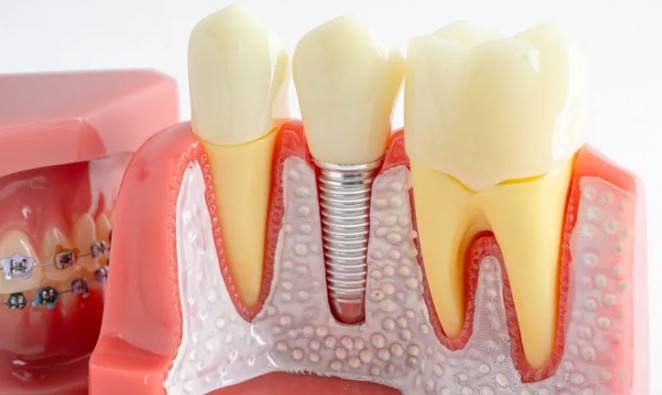
A missing or badly damaged front tooth can affect far more than chewing. It can change the way a person smiles, speaks, and feels in social settings. For patients considering front tooth dental implants Cedarhurst, Advanced Implant Dentistry provides an evaluation focused on rebuilding both oral function and a natural-looking smile.
Front teeth are part of the aesthetic zone, meaning they are highly visible when a person smiles or talks. Advanced Implant Dentistry approaches these cases with coordinated implant and restorative planning, using its prosthodontic and implant-focused team, digital technology, and in-house laboratory to evaluate the details that can affect the final appearance.
Can Advanced Implant Dentistry Help Replace a Missing Front Tooth?
Yes. A dental implant may be an option for replacing one missing front tooth or supporting a broader restoration when several teeth are involved. However, candidacy is individual. The team considers bone volume, gum health, bite forces, general health, smoking status, the condition of nearby teeth, and the cause of tooth loss before recommending treatment.
A front-tooth implant is not simply a titanium post with a crown attached. The position of the implant must support the planned crown while also protecting the gum contour around it. That is why a complete assessment is important before an extraction, implant procedure, or temporary restoration is scheduled.
Why Are Front Tooth Implants More Demanding Than Other Dental Implants?
The margin for error is smaller in the front of the mouth. An implant placed too far forward may create an overly prominent appearance or allow the implant structure to show through thin gum tissue. An implant positioned too far back can make the replacement tooth appear recessed. An incorrect angle can also affect crown shape, symmetry, cleaning access, speech, and bite comfort.
For this reason, Advanced Implant Dentistry plans the visible crown before placing the implant. This restoration-driven approach helps the team consider tooth length, tooth proportion, smile line, gum position, and the relationship between the replacement tooth and its neighbors. Implant survival matters, but a successful aesthetic-zone result also depends on healthy-looking hard and soft tissue.
How Does Advanced Implant Dentistry Plan Aesthetic Zone Implants?
Digital Scans and 3D Imaging
Advanced Implant Dentistry uses 3Shape TRIOS intraoral scanning and RAYSCAN cone beam CT imaging to evaluate the area in three dimensions. These records can help the doctors assess available bone, root locations, surrounding anatomy, gum architecture, implant angulation, and the intended crown position.
When appropriate, the digital information can be used to design a custom surgical guide. A guide helps transfer the planned implant position, depth, and angle to the procedure. Technology does not guarantee a specific outcome, but it can support careful clinical judgment and more controlled planning.
Coordinating the Implant and Crown
The final restoration should blend with the patient’s own teeth in shade, shape, surface character, and position. Advanced Implant Dentistry’s in-house laboratory allows direct communication between the doctors and restorative team during crown design. Digital design and 3D printing can also support the development of temporary and final restorations that suit the patient’s smile.
What Does Research Say About Front Tooth Implant Aesthetics?
Studies commonly evaluate anterior implant results with Pink Esthetic Score and White Esthetic Score systems. These assessments consider visible factors such as gum contours, papillae, crown form, and color. Research results are useful for understanding trends, but they do not predict an individual patient’s result because anatomy, treatment technique, healing, and maintenance differ from person to person.
For example, a systematic review of anterior maxilla implant outcomes included 282 narrow-diameter implants and 100 regular-diameter implants placed with bone augmentation. At 36 months, reported implant survival ranged from 93.8% to 100% for narrow-diameter implants and was 100% for regular-diameter implants in the included studies. Those figures describe the reviewed research groups, not a promise for any individual treatment.
Can Patients With Limited Bone Still Be Candidates?
Bone can shrink after tooth loss, trauma, or infection. If the ridge does not provide enough support for the ideal implant position, bone grafting may be considered. Not every patient needs a graft. The recommendation depends on imaging, the condition of the gums and bone, the planned crown position, and whether a stable aesthetic result can be pursued safely.
In the front of the mouth, bone evaluation is especially important because it helps support the gum tissues that frame the replacement tooth. A strong foundation can contribute to a more stable contour around the crown over time.
Is Immediate Front Tooth Implant Treatment Right for Everyone?
Immediate placement means placing an implant at the time of extraction. Immediate or early restoration refers to providing a temporary tooth soon after placement or after a short healing period. This can be appealing, but the timing must be selected carefully.
Infection, intact bone walls, gum thickness, implant stability, bite forces, and overall health all influence whether immediate, early, or delayed treatment is appropriate. A long-term systematic review of immediate and early anterior implant protocols found acceptable soft-tissue and aesthetic outcomes in selected cases, while also noting the need for more long-term comparative research. An examination and imaging review are necessary to determine the most suitable sequence.
What Happens During a Consultation?
- Health and dental review: The team discusses medical conditions, medications, prior treatment, and the reason for tooth loss or damage.
- Smile and bite assessment: The visible teeth, gum line, tooth proportions, bite, and neighboring teeth are evaluated.
- Digital records: Intraoral scans and cone beam CT imaging may be used to assess bone and plan treatment.
- Options discussion: The doctors explain possible timelines, temporary tooth options, grafting needs, alternatives, risks, and maintenance requirements.
- Personalized plan: Recommendations reflect the patient’s anatomy, treatment goals, health, budget, and preferred schedule.
Who May Benefit From an Evaluation?
- Patients with one missing front tooth.
- Patients with a severely damaged front tooth that may not be restorable.
- Patients dissatisfied with an existing front-tooth replacement.
- Patients with bone loss following extraction, trauma, or infection.
- Patients who want to understand whether immediate, early, or delayed treatment is appropriate.
Frequently Asked Questions
How much does a front tooth implant cost?
Cost depends on the condition of the tooth, bone and gum health, grafting needs, temporary restoration, final crown, and the number of teeth involved. A consultation is needed for a personalized estimate.
How long does treatment take?
The timeline varies. Some patients may qualify for immediate placement, while others need healing, grafting, or staged treatment before receiving the final crown.
Will a front tooth implant look natural?
A natural-looking result depends on implant position, gum contour, crown design, tooth shade, bite, and healing. Careful planning is essential because the area is visible when smiling and speaking.
