

Why Full-Arch Planning Matters
Replacing every tooth in an upper or lower arch is different from restoring a single missing tooth. The decision can affect chewing, speech, smile appearance, facial support, cleaning routines, and comfort. For people who live and work in the Panhandle, a treatment plan should also fit real life, including travel distance for appointments, time away from work, and the ability to follow a recovery diet and follow-up schedule.
People exploring full mouth implants Panhandle TX, should view the process as a personalized treatment plan rather than a one-size-fits-all product. Bone levels, gum health, bite pressure, remaining teeth, medical conditions, budget, and daily preferences can all influence the most appropriate option. A thoughtful plan explains not only what is recommended, but why it suits the patient’s circumstances.
Compare Replacement Options
There is no universal best choice for every patient. Some people prioritize the convenience of teeth that stay in place, while others value a removable design that may be easier to clean or repair. A staged approach may also be appropriate when infection, damaged teeth, gum disease, or other concerns need attention before final teeth are made.
Main Full-Arch Options
- Traditional dentures: Removable teeth that rest on the gums. They do not require implant surgery, but fit and stability can change over time.
- Implant-supported removable teeth: A removable restoration that connects to implants for added retention and stability.
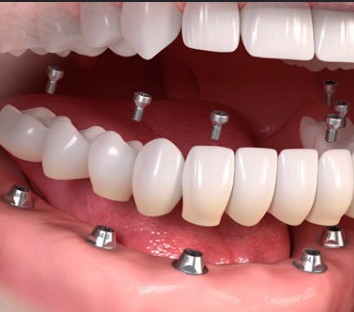
- Fixed full-arch teeth: A restoration supported by implants that remains in place for daily wear and is removed only by the dental team when needed.
- Staged treatment: A plan that addresses urgent care first, then moves toward a longer-term restoration after healing.
When comparing choices, ask about stability while eating, surgery requirements, expected healing, home cleaning, repair procedures, and future maintenance. Removable teeth can usually be taken out for cleaning. Fixed teeth may feel more like natural teeth in daily use, but they require careful cleaning beneath the restoration with tools and techniques recommended by the dental team.
Health and Candidacy Factors
Age alone does not determine whether someone may be considered for implant treatment. An evaluation may include an oral examination, X-rays, or 3D imaging, gum measurements, bite analysis, and a review of medications and health history. Implant dentistry includes both surgical and restorative planning, which is why patients benefit from understanding how the foundation, gums, bite, and final teeth work together.
The relationship between implant surgery and restoration design is important because the final teeth must be planned around the available bone and soft tissue. The care team may review:
- Jawbone volume and density
- Active gum disease, decay, or infection
- Smoking, vaping, or other nicotine use
- Diabetes and other health conditions
- Grinding or clenching habits
- Ability to maintain daily cleaning and attend follow-up visits
- Expectations about appearance, speech, comfort, and chewing
Bone loss does not automatically rule out every option. Depending on the individual situation, a clinician may discuss grafting, additional healing time, a different implant arrangement, or a removable alternative. Only an in-person examination can determine whether a specific treatment approach is suitable.
Questions for the Consultation
Bring written questions, a medication list, and notes about the problems you want to solve. Ask whether any natural teeth can be preserved, what temporary teeth may be available, who will complete each stage of care, and what happens if healing does not proceed as expected.
- What options are available for my upper arch, lower arch, or both?
- What type of final restoration is being recommended and why?
- How many visits, scans, and procedures may be needed?
- Which materials are planned for temporary and final teeth?
- How will I clean the finished restoration at home?
- What follow-up appointments and maintenance are included?
- What future repairs or replacement needs should I anticipate?
Treatment Timeline and Recovery
Exact timelines vary, but many full-arch plans involve consultation, imaging, preparation, surgery, temporary teeth when appropriate, healing, final scans or impressions, placement of the final restoration, and follow-up adjustments. Some cases move quickly, while others require staged healing for safety and predictability.
Recovery may include tenderness, swelling, bruising, and temporary diet changes. Plan ahead by arranging transportation if instructed, stocking soft foods, taking medications exactly as prescribed, avoiding tobacco or nicotine when advised, and keeping follow-up appointments. Individual instructions from the treating clinician should take priority over general online guidance.
Costs, Risks, and Maintenance
Full-arch costs vary because treatment may include imaging, extractions, gum care, grafting, sedation, implants, temporary teeth, laboratory work, final materials, and later adjustments. Request an itemized written estimate and ask what is included if a component needs repair. Dental insurance may help with certain related services, but benefits should be confirmed directly with the insurance plan.
Every dental procedure has potential risks. Possible concerns include infection, delayed healing, implant failure, gum inflammation, bite problems, discomfort, damage to a restoration, or the need for additional treatment. Smoking, uncontrolled medical conditions, untreated gum disease, grinding, poor cleaning, and missed maintenance can increase complications.
Long-term success also requires daily care. Brush the restoration and gumline as instructed, clean beneath fixed teeth with recommended tools, attend regular examinations, and report bleeding, pain, looseness, odor, or bite changes promptly. The visible teeth may eventually need adjustment, repair, or replacement due to normal wear, even when implant fixtures remain stable.
Simple Pre-Treatment Checklist
- List the eating, speaking, comfort, or confidence concerns you want addressed.
- Gather medication details and relevant medical history.
- Ask whether any healthy natural teeth can be retained.
- Compare traditional dentures, removable implant-supported teeth, and fixed options.
- Request a written treatment timeline and itemized estimate.
- Ask about temporary teeth, recovery restrictions, and cleaning methods.
- Understand the maintenance schedule and possible future repair needs.
- Consider a second opinion before agreeing to extensive tooth removal or complex treatment.
Conclusion
Full-arch tooth replacement requires careful planning, evaluation, and an understanding of each available option. By considering health needs, treatment goals, costs, recovery, and long-term maintenance, patients can make informed decisions with their dental care team. A thorough consultation helps create a restoration plan that supports comfort, function, and confidence.
