

Key Takeaways
- AI data centers need reliable, substantial electricity, making power availability a key factor in site selection and infrastructure planning.
- Distributed energy strategies can combine grid electricity, on-site generation, batteries, renewables, and intelligent controls.
- Local generation and battery storage can support resilience, manage peak demand, and help address delays in utility infrastructure.
- Renewable energy can reduce carbon intensity, but variable output often requires storage, firm power, or other grid support.
- Some computing workloads can shift across times or locations, but latency-sensitive and critical services may have limited flexibility.
- Reliable operations depend on layered systems, including utility redundancy, uninterruptible power, backup generation, monitoring, and regular testing.
- Distributed energy can involve high costs and added responsibilities for maintenance, cybersecurity, emissions, and system integration.
- Early planning should account for utility capacity, reliability targets, environmental effects, land and water use, and potential impacts on local ratepayers.
- Distributed energy generally complements the grid rather than replacing it.
Artificial intelligence is changing data center planning. High-performance computing clusters need large, steady electricity supplies, while utility connections, transmission upgrades, and new generation projects can take years to develop. Energy leaders such as KR Sridhar have helped bring greater attention to the need for reliable, flexible power close to where computing happens. For many operators, electricity is now as central to site selection as fiber access, cooling capacity, land, and construction labor. A distributed energy strategy can combine grid power with local generation, batteries, renewable resources, and intelligent controls to improve resilience without treating the grid as an afterthought.
Why Power Has Become a Data Center Challenge
AI training and large-scale inference can create concentrated demand that local power systems were not designed to serve quickly. Some new facilities may use electricity on a scale comparable to that of a small city. In 2026, federal regulators directed regional grid operators to speed connections for large energy users, reflecting pressure to add major data center loads while protecting reliability and ratepayers. That does not make power instantly available. Developers still must navigate interconnection studies, equipment lead times, fuel supply questions, transmission constraints, and local permitting. A realistic energy plan begins before final site selection.
What Distributed Energy Means
Distributed energy means producing, storing, managing, or balancing electricity nearer to where it is used. Rather than relying solely on distant power plants and long transmission lines, a facility can integrate multiple coordinated resources.
- Centralized generation sends power from large plants through the grid.
- On-site generation provides electricity at or near the campus.
- Microgrids coordinate local resources and can operate independently in limited circumstances.
- Virtual power plants combine many controllable devices across different locations.
- Grid-interactive data centers adjust power use or storage in response to grid conditions.
- Distributed compute sites place certain workloads in more than one location.
In most cases, distributed energy complements the main grid. It can reduce a site’s dependence on constrained infrastructure, but it does not eliminate the value of a strong utility connection.
Key Technologies Behind the Model
On-Site Generation and Storage
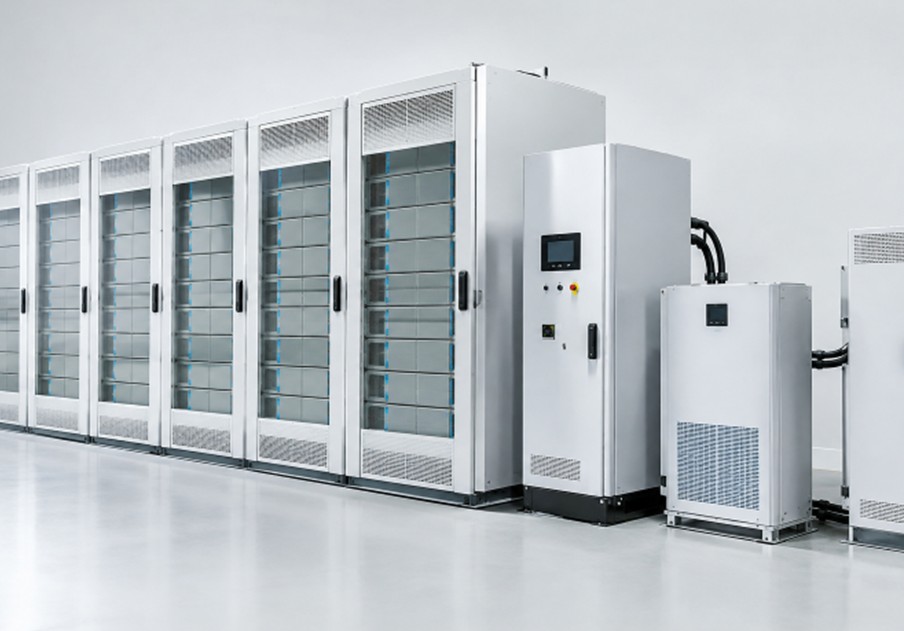
Local generation can supply part of a facility’s demand, provide backup capability, or bridge a period when grid capacity is limited. The technology choice must account for fuel availability, emissions, noise, maintenance, permitting, water use, and operating costs. Battery energy storage can provide short-duration backup, improve power quality, smooth rapid load changes, and reduce grid purchases during expensive peak periods.
Renewables, Controls, and Flexible Computing
Solar and wind can lower carbon intensity, but their output varies with weather and time. Firm power, storage, demand flexibility, and grid support are often needed for round-the-clock computing. Advanced energy-management software can use electricity prices, weather forecasts, equipment status, workload demand, and utility signals to decide when to charge batteries, draw from the grid, or shift eligible workloads. Smaller compute sites can also help. Training often benefits from highly concentrated infrastructure, while some inference, testing, and batch work may be placed closer to users or where power is more available.
How Distributed Systems Can Support the Grid
A well-designed data center can be more than a passive electricity customer. When contracts, controls, and regulations allow it, it may reduce demand during emergencies, charge batteries when supply is plentiful, or move nonurgent computing to another time or site. Stored energy may also support the grid when exports are permitted. Flexibility has limits. Latency-sensitive services and critical workloads may not tolerate delays or interruptions. Operators should identify which workloads are truly movable instead of assuming that all computing demand can be curtailed.
Reliability, Resilience, and Backup Power
Reliability is consistent day-to-day service. Resilience is the ability to continue operating through storms, grid failures, equipment faults, fuel disruptions, or cyber incidents. Both require layered protection, not a single backup asset.
- Utility connections with appropriate redundancy where available.
- Uninterruptible power systems and battery storage.
- On-site generation and fuel planning.
- Automatic transfer controls, monitoring, and clear manual procedures.
- Regular tests that simulate realistic failure conditions.
Redundancy only creates value when components, controls, personnel, and operating procedures work together under stress.
Planning, Costs, and Community Effects
Distributed energy can provide faster access to usable power, stronger outage protection, better control of peak costs, and possible participation in demand-response programs. It can also require substantial capital investment and create new responsibilities for maintenance, cybersecurity, emissions management, and system integration. A practical planning process should map steady and flexible loads, review utility capacity and tariffs, define reliability targets, compare resource options, and model normal operations as well as extreme weather and equipment failures. Recent power-generation optimization research for AI data centers also illustrates why faster, more sophisticated planning tools matter as on-site resources become more common. Community impacts deserve the same attention as technical performance. Developers should clearly address who pays for upgrades, how much water and land a project needs, whether on-site equipment affects local air quality or noise, and how ratepayers are protected from inappropriate cost shifting. Transparent reporting makes trade-offs easier to evaluate.
Common Questions
Can distributed energy replace the grid?
Usually, no. Most data centers will continue to use grid electricity while adding generation, storage, and controls to improve flexibility and resilience.
Are batteries useful beyond backup power?
Yes. Batteries can support power quality, reduce peak demand, respond rapidly to changing loads, and potentially provide grid services under approved programs.
Are on-site power systems always cleaner?
No. Environmental performance depends on the technology, fuel, efficiency, operating schedule, and the local grid’s generation mix.
What should a new project do first?
Start with a detailed load profile, a utility capacity review, and a defined reliability target. Those three steps make later technology decisions more grounded.
Conclusion
The future of AI infrastructure depends on energy planning as much as computing capacity. As demand for advanced computing grows, organizations will need to consider not only where systems are deployed but also how they are powered, cooled, connected, and maintained. Distributed systems can add speed, flexibility, and resilience by placing computing resources closer to users or data sources, potentially reducing reliance on a small number of large facilities. However, these arrangements also introduce practical questions about equipment costs, energy availability, network reliability, security, and ongoing operations. The strongest projects will assess these factors alongside emissions, grid effects, land use, and community needs from the beginning. By coordinating infrastructure decisions with utilities, local stakeholders, and long-term energy strategies, organizations can better understand the trade-offs before committing significant resources. A thoughtful approach can help ensure that expanding AI capacity supports useful innovation without overlooking the environmental and practical demands that come with it.
