

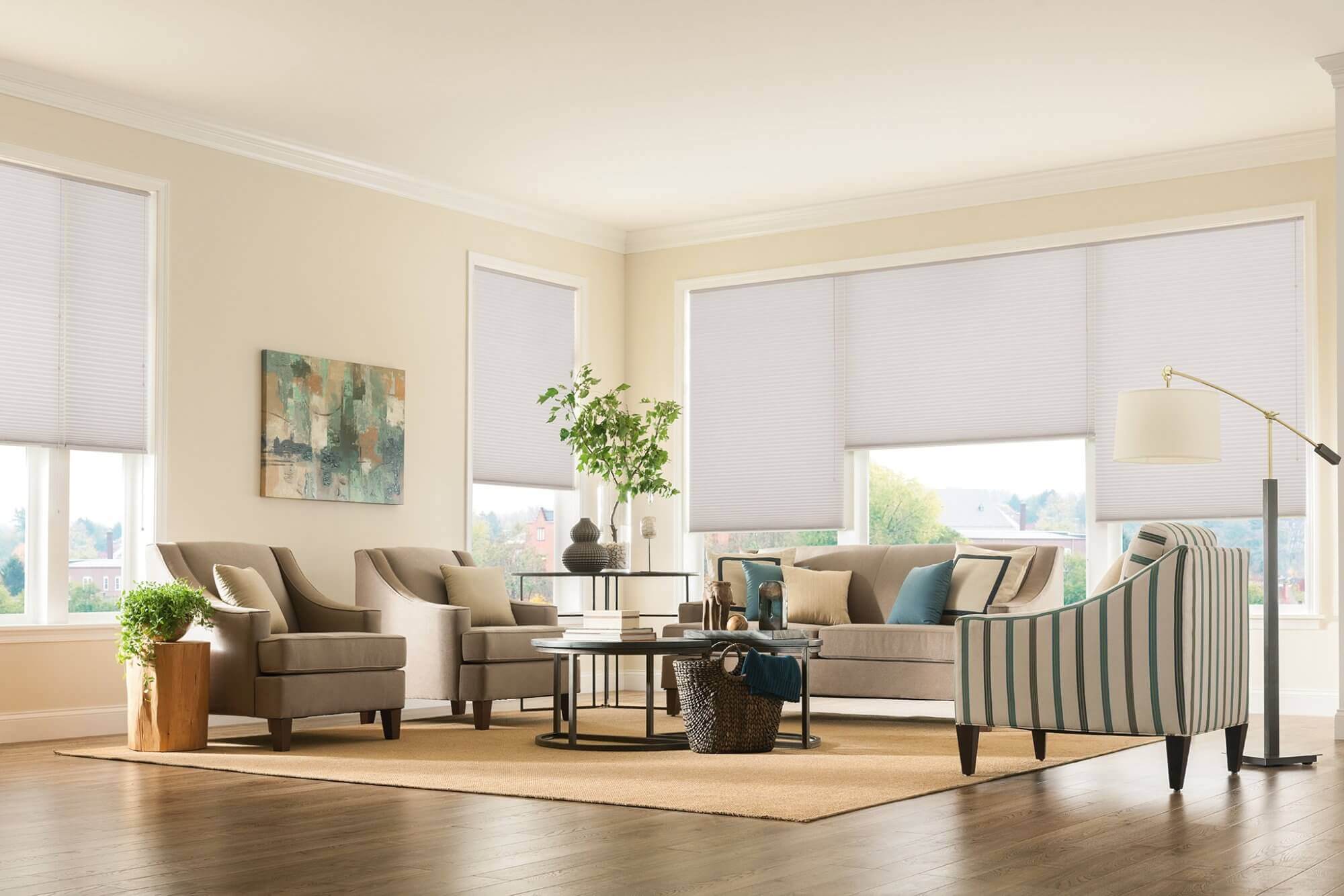
Planning window treatments for one room is manageable. Planning them across an entire home is where things start to fall apart.
One room ends up too heavy, another too bare. A fabric that looked great in the living room suddenly feels out of place in the bedroom. And before you know it, nothing quite connects.
The solution isn’t to make everything match. It’s to make everything feel like it belongs together, while still working for the way each room is used.
That balance—between cohesion and practicality—is what makes a home feel considered rather than pieced together.
Start With a Direction, Not a Decision
Before you start picking fabrics room by room, take a step back and decide on a general direction for the house.
This could be as simple as sticking to a neutral palette, or leaning towards natural fabrics like linen and cotton. It could be choosing one hardware finish—brushed brass, matte black—and repeating it throughout.
You don’t need to lock in every detail. But having a loose framework helps prevent the kind of mismatch that happens when every room is treated as a separate project.
Think of it as setting the tone, not the rules.
Living Room: Where It All Shows
The living room tends to carry the most visual responsibility. It’s where guests sit, where light is most noticeable, and where window treatments are hardest to ignore.
You want something that softens the light without shutting it out. Too sheer, and the room can feel exposed. Too heavy, and it starts to feel dim—even during the day.
This is why medium-weight fabrics usually land well here. Linen blends, soft cotton—something that filters light but still feels present.
Scale is just as important. Curtains that are too narrow or slightly short can make the whole room feel underdone. This is one of those cases where custom curtains tend to be worth it, simply because they get the proportions right.
If the windows are large, let them feel large. Don’t crowd them with unnecessary layers.
Bedrooms: Think About Mornings, Not Just Nights
Bedrooms are often approached with one goal: block light.
That’s fair—but it’s not the whole picture.
Yes, you may want darkness at night. But during the day, the same heavy blackout curtain can make the room feel dull and closed. So the question becomes: do you want a space that’s flexible, or one that’s always either fully open or fully shut?
A lighter fabric with proper lining often gives you that balance. You still get darkness when you need it, but the room doesn’t feel weighed down the rest of the time.
Also consider what’s happening around the window. If there’s a bed directly underneath, or very little wall space, bulky curtains can feel intrusive. In those cases, a more contained treatment may simply work better.
Kitchen: Don’t Overthink It
Kitchens are practical spaces, and the window treatment should reflect that.
Anything too long, too heavy, or too delicate quickly becomes a problem. Heat, moisture, and daily use don’t leave much room for high-maintenance choices.
Keep it light. Keep it washable. Keep it out of the way.
Shorter cafe curtains or simple treatments tend to work best, especially around sinks or worktops. You still want softness—but not at the cost of usability.
If you have to adjust it constantly or worry about staining it, it’s probably not the right choice.
Dining Area: Let It Sit Quietly
Dining spaces don’t need as much intervention.
If the room is part of an open-plan layout, it makes sense to echo what’s happening in the living area—similar fabric, similar tone, just scaled appropriately. This keeps everything feeling connected without being repetitive.
If it’s a separate room, you have more freedom. But even then, restraint tends to work better than statements. You want the space to feel calm, not overly styled.
Light should still come through easily. The room should feel comfortable during the day, not dependent on artificial lighting.
Bathrooms: Less, But Better
Bathrooms don’t need much—but what you use needs to work.
Heavy fabrics don’t belong here. They hold moisture, take longer to dry, and can start to feel impractical very quickly.
Lighter, more resilient materials are a better fit. Something that handles humidity without becoming a maintenance issue.
In many cases, the simplest solution is also the best one. The window treatment should provide privacy, do its job, and then step back.
Home Office: Fix the Light, Don’t Remove It
If you’ve ever worked with sunlight hitting your screen, you already know the problem.
But blocking all the light isn’t the answer either.
A home office works best when the light is softened, not eliminated. You want to reduce glare without turning the room into a dim box.
This is where lighter, filtering fabrics make sense. They take the edge off direct sunlight but still allow the space to feel active and usable.
It’s a subtle difference, but it changes how comfortable the room feels over long hours.
Hallways and In-Between Spaces
These are easy to ignore, but they still affect how the home flows.
Windows in hallways or staircases don’t need much attention. In fact, overdoing them can make these areas feel unnecessarily busy.
Keep it simple. Let light come through. Maintain some consistency with nearby rooms, but don’t try to make these spaces carry design weight they don’t need.
Tie It All Together Without Matching Everything
A well-planned home doesn’t repeat the same curtain in every room.
Instead, it repeats ideas.
Maybe it’s a similar colour palette—soft neutrals, warm tones. Maybe it’s the use of natural fabrics or the same patterned curtains throughout. Maybe it’s the way curtains are always hung slightly higher, or always full-length where possible.
These small consistencies are what make the home feel cohesive, even when each room is doing something slightly different.
Think About Daily Use
This is where a lot of decisions fall apart.
A curtain might look great in a photo, but if it’s difficult to open, gets in the way of furniture, or needs constant adjustment, it quickly becomes frustrating.
Think about how you’ll actually use each window. Will it be opened often? Does it sit behind furniture? Do you need quick privacy, or just occasional coverage?
Answering these questions honestly usually leads you to better choices than focusing on aesthetics alone.
Final Thought
Planning window treatments across a home isn’t about getting everything perfect.
It’s about avoiding obvious mistakes, keeping things consistent, and making sure each room works the way it should.
Once that’s in place, the rest falls into line.
And the result doesn’t feel designed in a forced way—it just feels right, without you having to think about it too much.
