

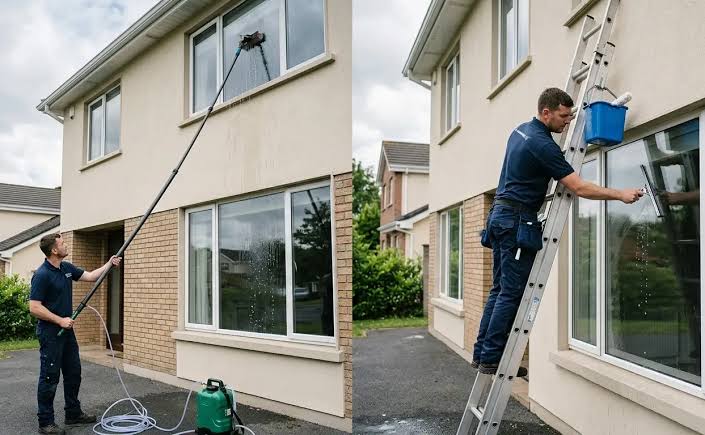
Two proven approaches dominate modern window washing: the traditional hand-squeegee method and the pure water, water-fed pole system. Both produce clear glass, but they differ in how they handle edges, frames, height, stains, and safety. If you have second-story windows over shrubs, interior French panes, or exterior glass kissed daily by sprinklers, choosing the right technique can affect everything from clarity to cost and disruption. This article explains what each method does best, when one outperforms the other, and when specialty restoration is needed instead of routine cleaning. With a little know-how about glass behavior, frames, and access, you can set expectations, ask sharper questions, and plan a maintenance rhythm that keeps views crisp longer.
What “Pure Water” Cleaning Does Well
Pure water cleaning uses a water-fed pole with a brush head to scrub the glass and rinse it with deionized or reverse-osmosis filtered water. A resin tank and TDS meter strip minerals so the rinse can air-dry without spotting. On exterior panes up to three stories, this method is efficient and safer because the technician can work from the ground. It also flushes dirt out of frames and sills, reducing the gray drip lines that sometimes appear after a basic wipe. For large banks of windows, skylights with awkward approaches, and solar panels, a soft-bristle or hybrid brush plus a generous rinse delivers uniform clarity while protecting landscaping and siding from soap runoff.
If flower beds or sloped grades limit ladder placement, a carbon-fiber pole can reach above hedges and eaves, cutting setup time and fall exposure. When you research local providers, map listings like Glide Window Cleaning of Orem can help you confirm proximity and plan for routing and timing. For best results with pure water, remove, brush, and rinse screens separately so trapped dust doesn’t wick back onto drying glass.
Where the Traditional Squeegee Method Excels
The squeegee method pairs an applicator and detergent with precise rubber channels to pull solution off the glass, followed by microfiber detailing around edges and corners. It shines on interior work, French panes, and divided lites where drips must be tightly controlled. When glass carries construction debris, tree sap, adhesive, or paint overspray, a careful pre-soak and, when appropriate, a new razor scraper used with glide can remove contaminants that a brush will only smear. On hydrophobic glass that beads water aggressively, squeegeeing eliminates the risk of dried droplets that pure water may leave despite extended rinsing.
Consider a storefront with expansive plate glass, tight gasket edges, and baked-on traffic film. A technician using a wide squeegee channel, bucket-on-a-belt, and lint-free towels can deliver crisp edges against frames and mullions, matching the level detail retailers expect at eye level. Indoors, drop cloths, cone signs, and short step ladders keep foot traffic safe and floors dry in ways a water-fed setup cannot match.
Glass, Frames, and Coatings That Change the Choice
Not all glass behaves the same. Aftermarket sealants, factory hydrophobic coatings, or wax residue from prior cleanings can cause water to bead rather than sheet. With pure water, heavy beading often demands extra agitation, longer rinses, and sometimes repeat passes; even then, faint spots can remain until a detergent wash rebalances the surface. Conversely, uniform sheeting is a green light for water-fed work because droplets evaporate evenly. Oxidized aluminum frames complicate things too: chalky residue can wash onto the pane during brushing and dry as streaks unless you pre-rinse the frames and rinse again after agitation.
Screens, storm windows, and weep holes also matter. Leaving screens in place during an exterior pure-water rinse can trap dirt and leave muddy tracks as the pane dries. The better sequence is to remove screens, brush and rinse them flat, wipe tracks to clear grit from weep paths, then clean the glass. On old double-pane units with failed seals, no cleaning method can remove the interior fog; replacement is the only cure, so set expectations before work begins.
Access, Safety, and Time Trade-offs on Multi-Story Work
Ladders still have their place, but they require stabilizers, levelers, and diligent tie-offs on uneven grades. Each move takes time and introduces fall risk. Water-fed poles reduce those moves and improve ground safety, especially around landscaping where ladder feet are unstable. On taller commercial sites without boom access, rope techniques and anchors are a separate discipline that calls for specialized training; many mid-rise properties, however, can be serviced from ground level with high-modulus poles and portable purification.
There is a practical trade-off: pure water is fast on many similar panes but can struggle with edges under rubber gaskets or behind decorative grids. Traditional tools are slower at height but allow surgical edge detailing and immediate quality checks. Wind and sun also matter. On hot, sunny elevations, pure water can flash-dry during the rinse and leave faint spotting; working the shaded sides first or cleaning earlier in the day helps. When gusts blow rinse water back onto cleaned panes, squeegeeing may be the steadier option.
Keeping Results Longer: Simple Aftercare that Matters
Mineral spots rarely come from rain; they come from sprinklers. Adjust spray arcs so water doesn’t hit glass, or switch to drip lines near windows. Wipe window sills and tracks between appointments so muddy weep holes do not streak the pane after a storm. Clean screens periodically with a soft brush and mild soap to keep airborne dust from transferring back onto glass. Avoid pressure washing frames at close range, which can force water past gaskets and leave dirt lines that bleed out later. A seasonal schedule that factors local pollen bursts or leaf drop will keep maintenance quick and predictable.
Some projects need more than cleaning. Hard water deposits from years of sprinkler overspray, concrete dust, or acid rain may etch or bond to the surface. In those cases, a technician may use a mild, buffered mineral remover and a white pad, then neutralize and rinse before returning to normal maintenance. Also be cautious with razors on tempered glass; if a test pass feels gritty, stop and switch techniques to avoid scratching from embedded fabricating debris. Whether you prefer the speed of pure water or the precision of a squeegee, the best approach matches the soil on the glass, the surface’s behavior ,and the access you can provide, pane by pane.
