

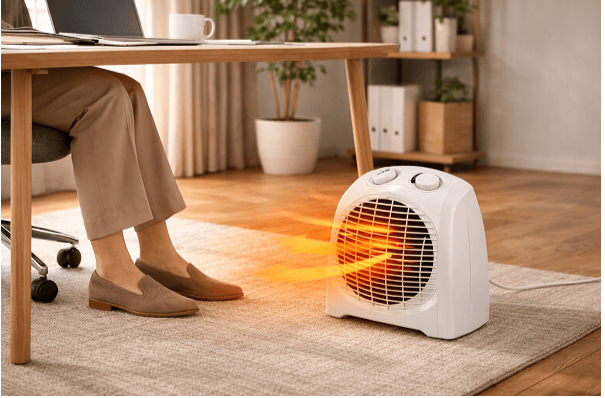
How to Measure the Heat Output You Need From an Electric Fan Heater
A portable electric fan heater can heat up a chilly room quickly. However, it needs to have enough heating power for your space. Otherwise, it just runs without warming things up. Purchase a heater that’s too small for your space and it could run all day with minimal impact. Purchase one that’s too large and you’ll waste electricity or overheat the room. It’s important to choose a heater that matches your room, climate, and personal usage habits.
Fortunately, you don’t need to be a heating expert. You can follow a few quick tips to help ensure you purchase the correct size heater.
Start With the Room Size
Measure the room you want to heat. Find the length and width of the room in feet. Multiply those two numbers together.
For instance, if your room is 12 feet by 10 feet, then it is 120 square feet. This gives you the square footage of the floor space. This is a great place to start if you need a general estimate.
Electric fan heaters often list their power level in watts. Watts are a measure of power, so the higher the watts usually means more heat. A general rule of thumb is 10 watts for every square foot. So, a room with average insulation and ceiling height would require about 10 watts per square foot.
A heater rated near 1,200 watts should be suitable for heating our theoretical room.
Keep in mind this is only an estimate. The condition of the room itself can make a difference to how much heating power you need.
Check the Heater Wattage
Check the heater’ label or box for information on wattage. Most small fan heaters come with two heat levels. For example, one may offer 750 watts of heat. The higher setting may increase the heat level to 1,500 watts.
A 1,500-watt heater is very common for residential use. That is equal to about 5,120 BTUs of heat output per hour. A 750-watt setting will put out roughly half that heat.
BTU stands for British Thermal Unit. This is another measurement of heat output. You may see BTU amounts on heater advertisements that use different power sources like propane, natural gas, or electricity.
You don’t need to think about BTUs when buying a heater. Watts are much easier to work with when talking about electric fan heaters. However, it’s good to know both measurements speak to how much heat the heater puts out.
Think About Heat Loss
Heat can escape from your room in a variety of ways. Cold air can come in through spaces near doors or windows. Heat may also escape under thin walls, poor insulation, or through a cold basement floor.
Two rooms that are the same size may require different heaters because of heat loss.
Let’s go back to our hypothetical 120-square-foot room. If it’s a home office with sealed windows and insulated walls then 1,200 watts should be fine.
But what if that room was a cold and drafty garage? You may be able to use a small fan heater to take the chill off. But it may never feel completely warm.
Ask yourself these questions when shopping for a heater:
- Does the room have poor insulation?
- Are the windows old and drafty?
- Are there high ceilings in the room?
- Is it located over a garage or unfinished space?
- Will people leave the door open frequently?
- Is this room on an extreme end of the house (coldest area)?
The more yes answers you have, the higher wattage heater you will need to pick. Aim for the higher end of the recommended range.
Rooms with high ceilings require more heating power. Heat rises. A large portion of that heat could end up above you instead of around your desk or chair. If the heater has a fan, setting it on low could help push heated air back down toward where you are.
Consider Your Climate
 The climate you live in also matters. A heater that is sufficient for mild temperatures may not work well during a polar vortex. If you live in a relatively warm climate you may only need a fan heater for rare cold snaps. With that in mind, a small heater may be sufficient to keep your bedroom, office, or bathroom warm.
However, if you live in a climate with long winters you will likely need more power. You may even need multiple heat sources to fully warm a larger room. Remember that a portable fan heater is designed to heat up small spaces. It should not be used to replace your main central heating system in most homes.
Use it as spot heat. Spot heat refers to heating the area you are occupying. You may want to warm up near a desk, next to a chair, or in a chilly guest bedroom.
Take Notice of the Heater’s Controls
Heat output isn’t the only thing to consider. The controls can impact your comfort level and power consumption. A heater with a thermostat will automatically turn off when the room hits the desired temperature. Then it will turn back when the room gets chilly again.
This can help you avoid rooms that fluctuate between freezing and overheated. Having both a low and high setting can be beneficial. You can crank it on high to heat the room up. Then set it on low to maintain the temperature.
Some heaters also include an eco-mode setting. This may automatically adjust the heat level based on the room temperature. Consult the product manual to learn more about how this function works. Just because a heater costs more doesn’t mean it puts out more heat. If two electric heaters are both 1,500 watts they both draw the same amount of power on high and produce roughly the same heat. The fan style, features, noise levels, and safety features can vary.
Check the Power Source
Check your room’s outlet before buying a heater. Almost all portable heaters can plug into a wall outlet directly. Don’t plug your heater into a power strip or extension cord unless the manufacturer specifically states that it’s safe. Heaters use a lot of electricity and poor cord use increases fire risks.
It’s also best not to plug anything else into the same outlet. A microwave, hair dryer, or air fryer can all put heavy loads on that circuit. If your breaker flips every time you turn the heater on, stop using that outlet. Contact an electrician if the problem persists. A qualified professional can install a new outlet or circuit for your heater.
Case Study: Does Heater Wattage Really Matter?
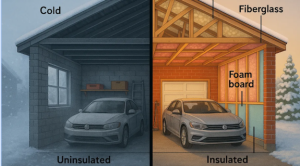 Picking an electric fan heater based on room size is sensible, but actual performance is governed by many other factors.
For instance, the U. S. Department of Energy notes that heating requirements are based on multiple criteria such as room size, insulation, air leakage, climate and the efficiency of windows and doors. It offers detailed information on heating load to explain how two rooms with the same square footage can have vastly different heating needs.
Let’s say you have two rooms which are both 120 square feet in size.
Room 1 is a well-insulated home office with no drafts and sealed windows. It has an average ceiling height and one regular door that stays closed. Room 2 is an attached garage with very little insulation, a very large door and higher ceiling.
These rooms have the exact same area but their heating needs are very different. Room 1 will hold heat more efficiently than Room 2 because there is less opportunity for warm air to escape. Room 2 will lose heat constantly due to its size and poor insulation.
So why does wattage matter – if at all?
Electric fan heater wattage can give you a rough estimate of how much heat the appliance puts out, but it isn’t the only consideration. The wattage tells you how much electricity the heater uses at a given setting. Higher wattage means greater electricity consumption and more potential heating power.
Take that information and combine it with the above example. Two rooms with the same square footage do not necessarily require the same wattage heater.
Think of wattage as a baseline recommendation rather than a surefire way to heat your space.
https://perfectdealz.co.za/blogs/news/what-size-heater-do-i-need-room-guide-south-africa
Electric Fan Heater FAQs
How many watts do I need to heat a room?
A general rule of thumb is about 10 watts for every square foot. However, heat loss, insulation, ceiling height and even outdoor temperatures can influence how much wattage you need to comfortably heat the room.
Is a 1,500W heater enough for a bedroom?
Rooms that are medium or small enough could make use of a 1,500W heater. As long as the bedroom is well insulated and isn’t too large, you should achieve warm comfort levels with a 1,500 watt heater.
How do I calculate what size heater I need?
To start calculating which heater size is right for you, begin by calculating square footage of the room. Measure length x width = floor space. Then multiply your square footage by 10 watts to get started. Make adjustments for insulation levels and other criteria.
What is the difference between watts and BTUs?
Watts are a measurement of electricity, while BTUs measures heat energy. Electric heaters are usually labeled by wattage. If you need to convert watts to BTUs, a rough formula is 1 watt equals 3.41 BTU/hr.
Does a higher wattage heater put out more heat?
The higher the wattage, the more heat an electric resistance heater will put out when it’s on. Just because a heater has higher watts doesn’t mean you should buy it. You also need to take heating requirements into account.
Can a small heater heat up a large room?
While it won’t cool down the room, a small heater will struggle to produce enough heat to compensate for heat loss. If the heater runs but the room doesn’t get any warmer, consider upgrading to a larger heater.
Does insulation impact what size heater I need?
Insulation directly affects how well heat is distributed throughout the room. A poorly-insulated room will lose heat more easily than a room that is well-insulated. If two rooms are the same size but one has poor insulation, you will need a more powerful heater for that room.
Are two smaller heaters better than one big heater?
Operating two heaters at once could heat more space, but also draw more electricity. Check your outlets and don’t overload circuits. Follow all safety instructions when using more than one heater at a time.
Can I use an extension cord for my electric heater?
Extension cords are not recommended for use with electric heaters. Some manufacturers allow for the use of power strips while others don’t. As a general rule, plug your heater directly into the wall outlet. Do not use an extension cord.
Why does my heater run all the time?
If the heater has to run constantly to reach a certain temperature, it probably can’t maintain that temperature. Check your insulation and seal off drafts. A heater that runs and produces little to no heat might be too small for the room.
What’s the best fan heater for a small room?
Look for portable fan heaters that have options for controlling heat levels. A thermostat allows you to pick the temperature you want and the heater will turn on and off as needed. Safety features, timers and lower wattage settings can help you customize your experience.
Is a 2,000w heater too much for a small room?
Not necessarily. If your 2,000w heater has settings, you can adjust the temperature as needed. Many models come with thermostats which will turn the heater on and off once the optimal temperature has been reached.
Final Words
To select the best electric fan heater size start with your room measurements. Multiply your room’s square footage by roughly 10 watts. Then account for drafts, high ceilings, poor insulation, and exterior temperatures. A 750 watt heater may be sufficient for a small room with no windows. A 1,500 watt heater is probably your best bet for the average room. A very large room or extremely drafty space may require two or more heaters.
Finding a heater with the right heat output can help keep your space cozy without overheating or wasting electricity. Take a few minutes to measure your room and read the heater specifications. These small efforts can keep you comfortable and safe all winter long.
