

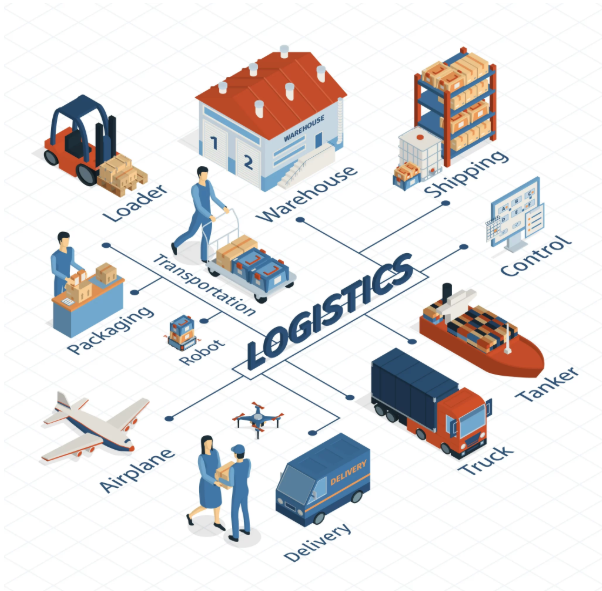
When launching a logistics business, few people think about future scaling, there are simply too many factors that could hinder development. Consequently, investing in specialized software at the outset can seem like an unjustified risk.
Small companies often opt for SaaS solutions combined with manual management. This works fine until the company begins to expand. At that point, business owners might consider leveraging custom logistics software development services.
When Off-the-Shelf SaaS Is Sufficient
It is fair to acknowledge that not every logistics enterprise requires a bespoke software solution tailored to its specific needs. In many cases, the SaaS platform chosen at the start functions perfectly well without any customization. This is typically true when:
- the fleet is small;
- processes are standard and do not require unique, non-standard logic;
- there is no need for complex integrations with ERP, CRM, or telematics systems;
- there are no plans to increase the budget allocated for software solutions.
If these points describe your current business scale, then an off-the-shelf service is a cost-effective and sensible choice.
Situations Where a Custom Solution Is the Only Option
This usually manifests in the following ways:
- a subscription package contains only a few useful features, while the rest are irrelevant;
- it is impossible to implement necessary integrations, or the available APIs are too limited in functionality;
- business processes are forced to adapt to the software’s limitations, rather than the other way around;
- analytics tools are not specialized for logistics, lacking data that is critical for planning;
- the long-term cost of subscription renewals ends up being higher than the price of developing a custom solution.
The final factor is often not immediately apparent at the outset: a subscription model, frequently accompanied by periodic price increases, does not guarantee that all of a logistics business’s automation and synchronization needs will be met. To achieve greater specialization, off-the-shelf solutions often require third-party integrations, which also come at an additional cost.

How to Get Started Without Unnecessary Risk
Transitioning to custom software can seem like a major, time-consuming, and expensive undertaking especially in the logistics sector, where any downtime is critical. These concerns are well-founded; attempting to overhaul everything at once can easily lead to budget overruns and disrupt existing (even if suboptimal) processes.
Therefore, it is best to begin the transition by scaling through smaller, incremental changes. It is advisable to partner with a company that possesses deep expertise in the logistics sector, their support will make the customization process significantly smoother.
Typical steps in this modernization journey include:
- Identifying the specific process currently acting as the greatest bottleneck for your business;
- Completing a “discovery” phase, during which experts analyze your requirements, assess project complexity, and develop a technical roadmap with clear timelines and a defined budget;
- Launching an MVP (Minimum Viable Product) or a functional prototype to test it with actual users before committing to full-scale development;
- Adding new modules as your company grows and new operational challenges arise.
This gradual approach allows you to secure the necessary capabilities quickly, without causing disruptive shocks to your existing workflows.
