

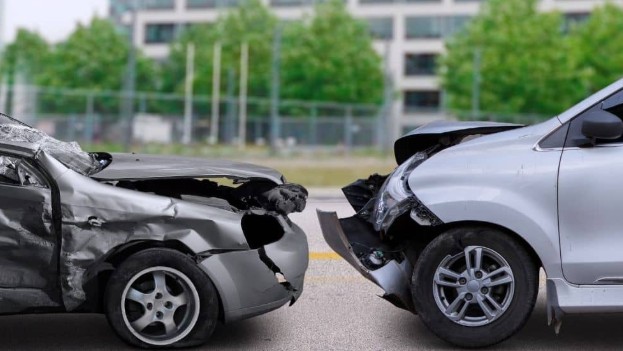
Accidents rarely unfold in a perfectly simple way. A collision may involve a distracted driver, poor road conditions, and a mechanical problem. A slip-and-fall incident might stem from a wet floor, inadequate lighting, and a visitor who was not paying attention to where they were walking. When several factors contribute to an injury, determining liability becomes more complicated than simply identifying one person who made a mistake.
The legal question is generally not whether there was only one cause. Instead, investigators, insurers, and courts examine which actions or failures contributed to the accident and whether those contributions create legal responsibility. Understanding how this process works can help injured people make sense of cases where the facts do not point neatly in one direction.
An Accident Can Have Multiple Causes
Most injury claims begin with the concept of causation. For someone to be legally responsible, their conduct must generally have played a meaningful role in causing the injury. That does not necessarily mean it was the only cause or even the most obvious one.
Consider a driver who speeds through an intersection during heavy rain and collides with another vehicle after the traffic signal malfunctions. The crash may involve several contributing circumstances: the driver’s speed, the weather, the malfunctioning signal, and possibly the actions of the other driver. Each factor must be examined separately.
This distinction between a contributing factor and legal liability is important. Not every circumstance surrounding an accident creates a claim against someone. Weather, for example, may help explain why an accident occurred without making any particular party legally responsible. The focus is often on whether a person, business, or other entity failed to meet a reasonable duty of care and whether that failure contributed to the resulting harm.
The Role of Negligence in Determining Responsibility
In many personal injury cases, liability is based on negligence. Although the precise legal standards vary by jurisdiction, the analysis commonly involves four basic questions:
- Did the party owe a duty of reasonable care?
- Did their actions or omissions fall below that standard?
- Did the conduct contribute to the accident or injury?
- Did the injured person suffer actual damages as a result?
The challenge in a multi-cause accident is often the third question. Establishing causation may require separating the conduct that merely existed in the background from conduct that actually helped produce the injury.
For example, a property owner may know that a stairway is poorly lit but argue that a visitor fell because they were looking at a phone. Both facts may matter. Evidence such as surveillance footage, maintenance records, witness statements, and the physical condition of the property can help establish how much each circumstance contributed to the incident.
Comparative Fault Can Affect the Outcome
Another complication arises when the injured person may have contributed to the accident. Many states use some form of comparative negligence or comparative fault, which allows responsibility to be divided among multiple parties.
Suppose a driver is injured by another motorist who made an unsafe turn, but the injured driver was also traveling above the speed limit. A fact finder may determine that both drivers share responsibility. Depending on the applicable state law, the injured person’s compensation may be reduced by their percentage of fault, and in some circumstances, a higher level of fault can limit recovery altogether.
These rules make the details of an accident especially significant. A seemingly minor allegation of shared responsibility can affect settlement discussions and the value of a claim. Speaking with a personal injury lawye can help an injured person understand how the facts of a particular case may be evaluated and what evidence may be relevant to questions of fault.
Evidence Often Tells the Story Better Than Assumptions
When multiple causes are possible, early assumptions can be misleading. A police report or insurance determination may provide useful information, but it does not always capture every relevant fact. Liability investigations can involve a broader range of evidence.
Physical and Digital Evidence
Vehicle damage, photographs of an accident scene, defective equipment, and damaged property can reveal how an incident occurred. Digital evidence has also become increasingly important. Traffic cameras, dashcams, security footage, electronic vehicle data, and phone records may provide a clearer timeline.
Witness and Expert Analysis
Witnesses can offer observations that are not visible in photographs or official reports. In more complex cases, accident reconstruction specialists, engineers, or medical professionals may be asked to analyze particular aspects of causation.
Expert opinions are not automatically decisive, but they can help explain technical questions that a jury or insurance adjuster cannot answer through ordinary observation.
Third Parties May Share Responsibility
Some cases involve parties who were not present when the accident happened. An employer may face liability for certain actions of an employee. A manufacturer could be investigated when a defective product contributes to an injury. A government entity or contractor might be relevant when a dangerous road condition is involved, subject to special legal rules and deadlines.
Identifying all potentially responsible parties matters because focusing on only one explanation can leave important questions unanswered. At the same time, simply naming multiple parties does not establish liability. Each potential claim must be supported by evidence connecting that party’s conduct to the injury.
Why Timing Matters in Complex Accident Cases
Evidence can disappear quickly. Surveillance recordings may be overwritten, vehicles repaired, hazardous conditions corrected, and witnesses’ memories less reliable over time. This is one reason prompt documentation can be valuable after an accident.
Photographs, contact information, medical records, and notes about what happened may help preserve details that become important later. However, documentation also has limits. A photograph can show a damaged vehicle, for instance, without necessarily proving who caused the collision. The strongest analysis usually considers the full body of available evidence rather than relying on a single detail.
A More Complete View of Accident Liability
When an accident has more than one possible cause, liability is rarely determined by one fact alone. The process involves examining conduct, duties, causation, available evidence, and the possibility that responsibility is shared among several parties.
The central issue is not always finding one person to blame. It is understanding how the accident happened and determining which actions or failures had a legally meaningful connection to the injury. That careful, fact-based approach is essential in cases where the truth is more complicated than a single explanation.
