

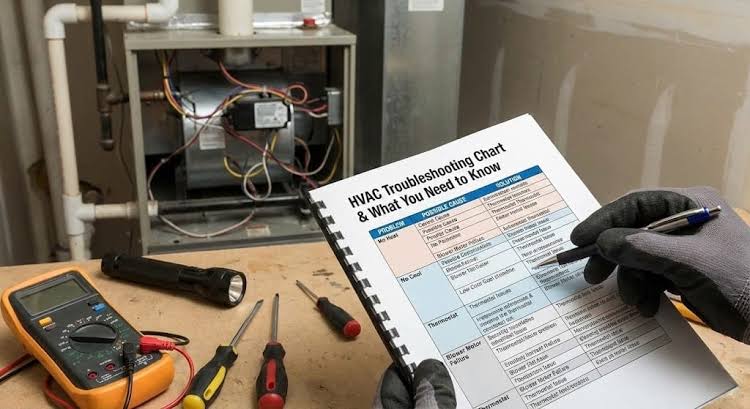
Humid summers and quick cold snaps around Arlington, Tennessee push heating and cooling systems hard. When a home will not cool on a 95-degree afternoon or a heat pump runs nonstop during a chilly morning, it is tempting to assume the equipment has failed. Often, the first answers are simpler: a starved blower, a dirty coil, a control setting that calls for auxiliary heat at the wrong time, or a condensate issue that quietly locks the system out. Before you schedule a service visit, a focused check of airflow, refrigerant clues, and thermostat logic can point you toward the real constraint. Here is a practical way to evaluate the most common culprits without guessing.
Start With Airflow: Filters, Blowers, and Duct Static Pressure
Open every supply register, and make sure return grilles aren’t blocked by furniture or rugs. Then pull the filter and read its rating. Extra-restrictive filters with a high MERV number can raise static pressure enough to starve the evaporator coil, especially when they are dirty. Low airflow can make the coil too cold, which can frost the refrigerant lines and reduce tank cooling capacity while the thermostat keeps calling. If airflow problems persist, a licensed contractor should measure total external static pressure with a manometer and adjust blower speed. For a local contractor website, see www.milliganmechanical.com.
Next, check the blower and ductwork. A blower motor can be a permanent split capacitor (PSC) or electronically commutated (ECM); PSC blowers lose torque as pressure rises, while ECMs try to maintain target airflow but may run louder at high static. Kinked flex duct, crushed boots, or a closed balancing damper can choke airflow just as effectively as a clogged filter. If you can see the edge of the indoor evaporator coil, check for dust matted across the fins. A gentle cleaning by a pro restores heat transfer and can prevent recurring freeze-ups caused by reduced airflow across the coil.
Outdoor Unit and Refrigerant Clues: Frost, Fan Noise, and Coil Cleanliness
Walk to the outdoor condenser or heat pump and check the coil for debris. Grass clippings, cottonwood, and dust block the thin aluminum fins, forcing the compressor to work harder and lengthen cycles. With power off at the disconnect, a careful rinse from inside out with a garden hose helps; avoid a pressure washer that can flatten fins. Keep shrubs trimmed 12 to 18 inches back so the fan can breathe. If you see a frozen suction line, oily residue on a service port, or hear a persistent hiss after shutdown, those are classic signs of a refrigerant issue that requires gauges and training to evaluate.
There is a trade-off between “topping off” refrigerant and finding the leak. Adding refrigerant without leak detection may restore cooling temporarily but risks returning frost, longer run times, and compressor stress. A technician verifies charge by superheat and subcooling, not by sight, and traces leaks at flare connections, the evaporator, or along the line set. Homeowners can help by noting when icing appears, whether the indoor coil freezes before the outdoor unit, and if water drips from the furnace after a thaw, all of which help narrow the likely fault.
Thermostat Settings, Defrost, and Auxiliary Heat Behavior
Thermostat placement and programming change how a heat pump behaves. Large setbacks on winter mornings can trigger electric heat strips as auxiliary heat, producing comfort faster but with a steep energy penalty. Instead of dropping the setpoint 8 degrees overnight, try 2 to 3 degrees or use a “smart recovery” schedule. In summer, aggressive setbacks can also push the system to run hard at peak humidity, reducing comfort even if it eventually reaches the setpoint. If the thermostat sits near a sunny window or supply register, it may end calls early, leaving bedrooms stuffy.
On cold, damp days, a heat pump’s defrost cycle is normal. Steam rising from the outdoor unit and a brief pause in the outdoor fan signal that the reversing valve has switched to melt frost off the coil. If defrost seems constant, or indoor air turns noticeably cool during heat calls, the defrost sensor or control board could be out of calibration. Use Emergency Heat only when the outdoor unit is disabled; running in that mode full time defeats the heat pump’s efficiency and can mask an outdoor problem that needs attention.
Moisture Management: Condensate Drains, P-Traps, and Indoor Humidity
Air conditioners and heat pumps produce condensate that must drain freely. A partially clogged drain line grows biofilm that slows flow, trips a float switch, and quietly shuts off cooling. The line should have a P-trap so negative pressure at the air handler doesn’t pull air up the drain and stall water. If you hear water sloshing in a secondary pan or see a wet safety switch, cut power and clear the line with a wet/dry vacuum from the termination outside. A mild vinegar rinse discourages slime; avoid bleach that can degrade some plastics and react with coil metals.
Be cautious with the fan setting in humid weather. Running the blower continuously between cooling cycles can re-evaporate water off the coil and raise indoor relative humidity. In spring and fall, continuous fan may help mix air between floors; in July, it can work against your dehumidification. If humidity stays high, look for leaky return ducts in the attic pulling in hot, moist air. Mastic-seal duct joints and insulate long runs to reduce latent load and protect against sweating ducts that drip onto ceilings.
Two Arlington Scenarios and What to Check Before the Service Call
Scenario 1: The bonus room over a garage stays hot in July. Check that the system filter is clean and the room’s supply register is fully open. Look for long, uninsulated flex duct runs across a hot attic or a crushed section near a truss. Many rooms over garages lack a clear return path; try a door undercut or transfer grille to let air flow back to the hall return. If the room still lags the rest of the home, ask about Manual D duct corrections, a booster fan, or zoning with a bypass-free design so the rest of the house is not overcooled.
Scenario 2: The outdoor heat pump ices over on a 35-degree, drizzly day. A light glaze that clears during defrost is normal. A unit buried in ice with a stopped outdoor fan is not. Cut power to prevent damage, clear leaves and snow from the coil, and switch the thermostat to Heat so electric strips can carry the load temporarily. Do not chip at the ice; bent fins kill airflow. Persistent icing points to a failed fan motor, a stuck reversing valve, a bad defrost sensor, or a low refrigerant charge that only a trained technician can confirm safely.
Before you call an Arlington HVAC contractor, a few targeted checks can separate a control setting from a true mechanical fault. Verify airflow by opening registers, clearing returns, and using a reasonable MERV filter. Keep both coils clean and the outdoor unit unobstructed. Use thermostat schedules that avoid unnecessary auxiliary heat, and make sure the condensate drain is clear and properly trapped. These steps will not fix a failed compressor or a leaking coil, but they can restore performance in many cases and give you concrete observations to share if you need a service visit.
