

Few things are more frustrating than a shower that suddenly turns to a trickle or a blasting faucet that sends water everywhere. Water pressure that’s too low wastes time and can hint at hidden restrictions or leaks, while pressure that’s too high stresses pipes, fixtures, and appliances. The good news: many pressure issues can be narrowed down quickly with a few simple checks. This practical guide explains how residential water pressure works, what to test first, common causes you can spot without tools, and when it’s time to bring in a licensed plumber for a lasting fix.
If you do decide you need expert help, look for a properly licensed, insured local provider with strong community presence and clear contact information. Local listings such as Champion Plumbing of Edmond, OK can be a useful starting point for verifying basic details and service area before you call.
How Water Pressure Works in a House
Municipal water systems typically deliver water to homes at a range that’s safe for distribution but not always ideal for indoor fixtures. A pressure regulator (also called a pressure-reducing valve, or PRV) at your home’s main water entry point lowers and stabilizes incoming pressure. Inside your plumbing, branch lines supply various fixtures. Any restriction, leak, or malfunction along the way can change how strong water feels at the tap.
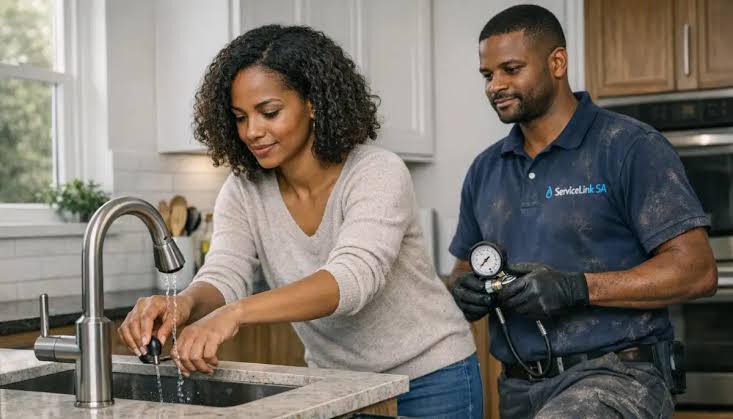
Normal residential water pressure is commonly considered to be between 40–60 psi (pounds per square inch), with 50 psi a comfortable midpoint for most homes. Much below 40 psi and showers feel weak; sustained pressure above 80 psi can damage pipes, water heaters, washing machine hoses, and ice maker lines. A simple, inexpensive gauge attached to a hose bib can tell you your static pressure in seconds, giving you a baseline before you troubleshoot further.
Quick Checks You Can Do in 10 Minutes
Start by comparing multiple fixtures. If the problem is isolated say, only the kitchen faucet is weak focus on that fixture first. If every tap is affected, the issue is likely at the main line, PRV, or water heater. Try these steps:
First, check the shutoff valves. Under-sink and toilet angle stops can be partially closed after repairs or cleaning. Turn them fully counterclockwise to open. Next, clean aerators and showerheads. Mineral buildup is a frequent culprit; unscrew the tip, soak it in vinegar, and flush it clean. If your shower pressure improves with the showerhead removed, you’ve found the restriction. Finally, test pressure at an outdoor spigot with a gauge. If the reading is normal at the spigot but low inside, the restriction is somewhere past that point often a clogged fixture, cartridge, or a localized pipe issue.
Common Culprits and What They Mean
Clogged aerators and cartridges: Faucets and shower valves often use cartridges with fine passages that can trap debris. If cleaning the aerator doesn’t solve it, the cartridge may need cleaning or replacement. This fix usually requires basic tools and the correct replacement part for your valve brand.
Partially closed or faulty valves: The main shutoff, water meter valve, or isolation valves near fixtures can fail or be left half-closed after work is done on the system. Make sure the main valve and meter valve (where accessible) are fully open. If a valve handle spins freely or leaks, it may be failing internally.
Pressure regulator (PRV) failure: A failing PRV can cause either low pressure throughout the house or surges that vary by time of day. If your outdoor spigot reads very high pressure while interior fixtures feel inconsistent, the PRV may not be reducing pressure properly. PRVs are adjustable on some models, but if adjustment doesn’t stabilize readings, replacement is typically the solution.
Supply line issues and hidden leaks: Sudden, unexplained low pressure across the whole house may indicate a leak in the service line from the street or a significant leak inside walls or under the slab. Watch for continuously spinning water meters when no fixtures are running, damp spots, warm areas on flooring (possible hot-water slab leaks), or the sound of running water. Hidden leaks require prompt professional diagnosis to avoid structural damage and high water bills.
Water heater problems: If only your hot water pressure is low, the problem could be sediment in the tank, a clogged hot-water line, a failing heat trap, or a partially closed valve at the heater. Flushing the water heater annually helps minimize sediment that can restrict flow. Tankless units can also scale up internally, especially in hard-water areas, requiring descaling maintenance.
When It’s Not Just Pressure: Temperature, Air, and Noise Clues
Short bursts of strong flow that taper off can point to air trapped in lines or debris moving through the system. Gurgling or sputtering at startup often means air; banging or knocking noises (water hammer) indicate pressure surges and abrupt flow stoppage. Water hammer can damage pipes and appliances over time and is often corrected with properly sized hammer arrestors and stable pressure control.
If your water temperature fluctuates along with pressure hot turning scalding when someone flushes a toilet your home may benefit from a thermostatic mixing valve at the water heater or fixture-level anti-scald technology. These devices balance temperature and help keep showers comfortable even when pressure changes briefly.
How to Measure and Track Pressure Safely
A screw-on pressure gauge for an outdoor hose bib or laundry faucet is the easiest way to check static pressure. Take readings at different times: mid-morning, evening peak, and overnight. If you see wide swings (for example, 45 psi at one check and 85 psi at another), your PRV may need adjustment or replacement. Keep notes for a few days; consistent data helps you or a plumber pinpoint the cause more quickly.
For homes with sensitive appliances or multi-story layouts, consider adding point-of-use pressure gauges or a whole-home gauge downstream of the PRV to monitor performance. If your baseline is consistently over 80 psi, a working PRV and thermal expansion control at the water heater become more important to protect fixtures and reduce stress on the system.
DIY vs. Pro: Where to Draw the Line
DIY-friendly tasks include opening valves fully, cleaning aerators and showerheads, replacing faucet cartridges, and using a gauge to document pressure. Always turn off water and power (for electric water heaters) before attempting any work, and follow appliance manuals.
Call a professional for problems with your main shutoff, meter-side valves, PRV adjustments or replacement, water heater gas connections, suspected slab or wall leaks, and persistent whole-home pressure fluctuations. Specialized tools leak detection equipment, expansion control components, and proper PRV sizing help ensure fixes last and comply with local codes. For complex plumbing issues, choosing an experienced professional can help ensure the problem is diagnosed accurately and repaired safely. Homeowners looking for reliable service can turn to this top-rated Northwest Chicago Plumber for expert assistance with challenging plumbing problems.
Preventive Steps to Keep Pressure Stable
Annual maintenance pays off. Flushing your water heater to reduce sediment, exercising shutoff valves so they don’t seize, and checking pressure with a gauge a few times a year can catch issues early. In hard-water regions, adding and maintaining a water softener or performing periodic descaling on tankless units helps preserve flow and extend fixture life.
If you’re renovating or adding bathrooms, consult a plumber about pipe sizing, fixture flow rates, and the capacity of your PRV and water heater. Good planning prevents low-pressure surprises when multiple fixtures run at once and ensures your system remains balanced for comfort and longevity.
