

Table of Contents
- Start With a Property-Specific Plan
- Divide Work by the Right Frequency
- Prioritize High-Touch and Shared Areas
- Include Air, Moisture, and Ventilation in the Conversation
- Match Methods to the Building Type
- Choose a Partner and Scope the Agreement Carefully
- Track Results Without Complex Software
- Common Mistakes to Avoid
- Frequently Asked Questions
- Final Takeaway
A workplace cleaning plan should do more than make a building look presentable. In Houston, Texas, it also needs to support safe daily operations through humid weather, changing occupancy, busy common areas, and occasional storm-related disruptions. Offices, restaurants, medical practices, warehouses, schools, and retail properties all need a plan that reflects how people actually use the space.
Local experience can help when defining that scope. A janitorial company serving Houston businesses, Star Building Services has provided commercial cleaning programs in the area since 2008, offering routine janitorial work, office and restaurant cleaning, floor care, high dusting, post-construction cleaning, and emergency response. Its work across Harris County, including the Texas Medical Center, Energy Corridor, Galleria, and industrial areas near the Port of Houston, illustrates why a single generic checklist rarely fits every property.
Start With a Property-Specific Plan
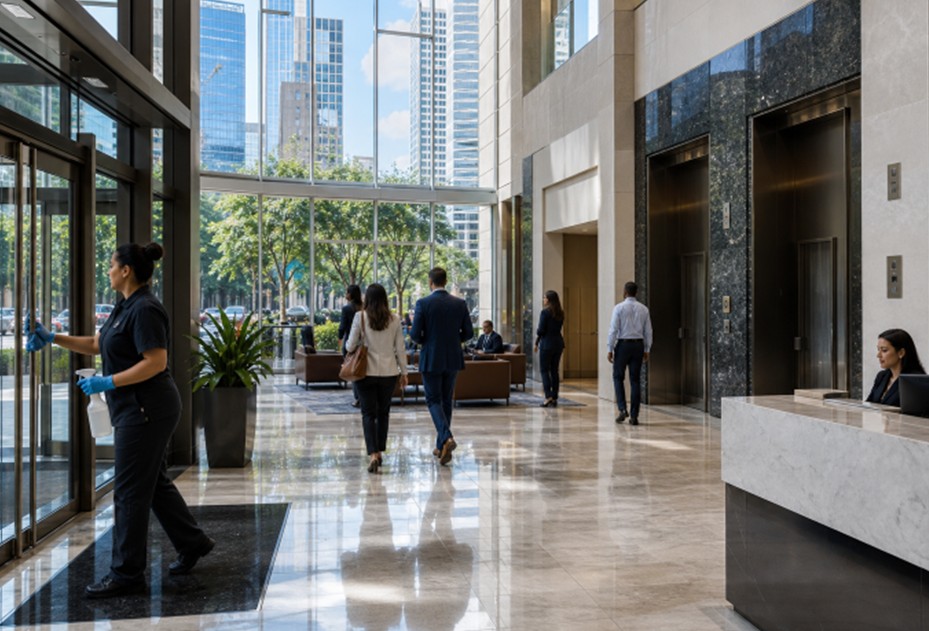
Cleaning frequency should be based on building size, visitor volume, operating hours, surface types, and the work performed on site. A downtown office lobby may need repeated attention during business hours, while private offices may only need routine service after hours. Likewise, a warehouse with loading activity and dust-producing operations requires a different approach from a medical office with patient-facing rooms.
Begin with a walkthrough before changing schedules or requesting quotes. Document every entrance, restroom, breakroom, storage area, shared workspace, elevator, stairwell, and exterior access point. Then record peak traffic times, persistent odor or moisture concerns, restricted rooms, previous complaints, supply shortages, and tasks that are routinely missed.
Divide Work by the Right Frequency
A tiered schedule keeps essential tasks from being crowded out by less urgent work. The exact cadence will vary, but most plans can be organized into these categories:
- Daily: Restrooms, trash removal, entryways, visible spills, breakrooms, and frequently touched surfaces.
- Weekly: Detailed dusting, interior glass, lower-use rooms, equipment exteriors, and baseboards.
- Monthly: High dusting, vents and returns that are safe to clean, storage spaces, and detailed hard-floor care.
- Seasonal: Carpet extraction, floor refinishing, exterior washing, and post-construction cleanup.
- Event-based: Illness response, tenant turnover, severe-weather cleanup, special events, and unexpected spills.
Prioritize High-Touch and Shared Areas
Door handles, elevator buttons, railings, faucets, counters, payment terminals, shared keyboards, and refrigerator handles deserve attention because many people use them throughout the day. Visible dirt matters, but usage patterns are often the better guide when assigning labor.
Cleaning, sanitizing, and disinfecting are different steps. Cleaning removes soil and can reduce germs. Sanitizing reduces germs to a safer level, while disinfecting uses a product designed to destroy certain germs on a surface. The CDC guidance for cleaning and disinfecting facilities emphasizes cleaning surfaces before disinfection when dirt or residue is present. Staff should also follow product labels, required contact times, surface compatibility instructions, and workplace safety procedures.
Include Air, Moisture, and Ventilation in the Conversation
A cleaning plan cannot solve every air-quality issue, but cleaning teams can report dusty returns, blocked vents, condensation, water intrusion, and rooms with recurring odors. Property managers, HVAC professionals, and cleaning supervisors should have a clear process for sharing those observations. The CDC’s information on improving workplace air cleanliness describes building-level measures such as ventilation and filtration. Cleaning staff should not alter HVAC equipment unless they are trained and authorized to do so.
Match Methods to the Building Type
Offices and Multi-Tenant Buildings
Focus on lobbies, restrooms, kitchens, conference rooms, shared desks, elevators, and interior glass. Schedule noisy floor work or detailed service outside normal business hours when practical.
Restaurants and Commercial Kitchens
Separate front-of-house tasks from back-of-house, restroom, grease, floor, and exhaust-related work. Cleaning procedures should support the facility’s food-safety requirements and inspection readiness.
Medical, Industrial, and Community Facilities
Medical spaces may require trained crews, protective equipment, color-coded tools, and documented procedures. Industrial sites often require plans for dust control, high surfaces, traffic lanes, loading zones, and restricted areas. Schools, churches, and community buildings benefit from flexible schedules around events, holidays, and changing attendance.
Choose a Partner and Scope the Agreement Carefully
When evaluating a commercial cleaning provider, ask whether work is completed by employees, subcontractors, or both. Request proof of insurance, safety training, and procedures for urgent requests. A detailed agreement should identify rooms, surfaces, service windows, supplies, floor-care expectations, access rules, inspection standards, emergency contacts, and the process for changing scope when occupancy changes.
Review quotes line by line. The lowest price may exclude paper products, periodic floor work, high dusting, after-hours response, or quality checks. A clear scope makes it easier to compare providers and hold everyone accountable after service begins.
Track Results Without Complex Software
Use routine walkthroughs and a simple log to track recurring complaints by location, missed tasks, restroom supply levels, response times, and visible conditions at entries, floors, glass, and common touchpoints. Ask employees or tenants for short feedback after the first 30 to 60 days, then use the results to adjust frequencies rather than letting the plan become static.
Common Mistakes to Avoid
- Using the same schedule for every room, regardless of traffic or risk.
- Disinfecting dirty surfaces instead of cleaning them first.
- Ignoring moisture, odors, ventilation concerns, and recurring sources of dirt.
- Failing to plan for storms, construction, illness events, holidays, or large gatherings.
- Leaving employees unsure who receives complaints or handles urgent cleanup.
Frequently Asked Questions
How often should a commercial office be cleaned?
It depends on occupancy, public contact, shared spaces, and business hours. Many offices need service several times per week, while high-traffic properties may need daily service or daytime support.
Should every surface be disinfected every day?
No. High-touch areas and spaces with known exposure to illness may require more frequent treatment, while other surfaces can follow a regular cleaning schedule.
When should a business reassess its plan?
Review the plan after renovations, seasonal changes, tenant turnover, staffing shifts, major events, recurring complaints, or meaningful changes in occupancy.
Final Takeaway
A smart Houston cleaning plan is specific, measurable, and flexible. By auditing the building, assigning tasks by frequency, focusing on shared areas, communicating about air and moisture concerns, and reviewing performance regularly, businesses can maintain cleaner spaces while using labor and supplies more effectively.
