

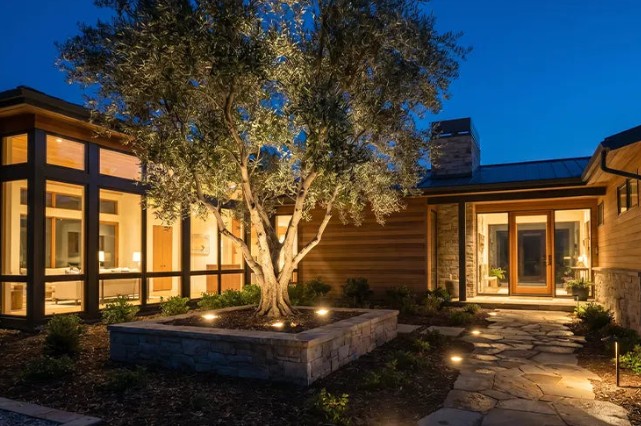
Lighting is often planned one room at a time. A pendant is chosen for the kitchen, wall lights are added to the hallway, and outdoor fixtures are selected months later when the patio or entrance needs an upgrade.
There is nothing wrong with improving a home gradually, but treating every fixture as a separate decision can eventually create a property that feels visually disconnected. One room may use very warm decorative lighting, another may rely on cooler white fixtures, while the exterior follows a completely different style.
A more thoughtful approach is to consider lighting as a whole-home system. Indoor and outdoor fixtures do not need to match, but they should support the same overall architecture, atmosphere, and way of living.
A coordinated lighting plan can help interior rooms and outdoor living spaces feel visually connected after sunset.
Begin With the Way Each Space Is Used
Before choosing styles or finishes, think about what happens in each area of the home.
A kitchen needs clear task lighting for food preparation. A living room may require softer illumination for conversation, reading, and television. Bedrooms benefit from calmer light at night, while hallways and stairs need enough visibility for comfortable movement.
Outdoor spaces have similar differences. The front entrance requires useful illumination around the door and steps, a patio needs comfortable ambient light, and a garden path only needs enough guidance for people to understand where they are walking.
Listing these activities first makes it easier to select fixtures according to function rather than appearance alone.
Build Indoor Lighting in Layers
One ceiling fixture is rarely enough to make a room feel comfortable throughout the day.
Most successful interiors use several lighting layers. Ambient lighting provides general visibility, task lighting supports activities such as reading or cooking, and accent lighting draws attention to artwork, shelves, architectural details, or decorative surfaces.
Homeowners exploring different types of Indoor Lighting can compare chandeliers, pendants, wall sconces, ceiling lights, floor lamps, table lamps, and other fixture types according to the role each one needs to perform.
Not every room requires every layer, but giving individual lights smaller jobs usually creates a more flexible environment than expecting one central fixture to do everything.
Repeat Design Elements Instead of Matching Every Fixture
A cohesive home does not require every light to come from the same collection.
In fact, using identical fixtures throughout several rooms can make a home feel overly coordinated. A more natural approach is to repeat selected elements such as finish, material, shape, or color temperature.
For example, black metal may appear in a kitchen pendant, living-room wall light, and exterior fixture near the patio. Brass could be repeated in a dining chandelier and smaller bedroom sconces. Glass might appear in several different forms without the fixtures looking identical.
These subtle connections create consistency while allowing each room to maintain its own character.
Keep Light Color Consistent Between Connected Rooms
Color temperature can have as much visual impact as fixture style.
If a warm living room opens directly into a dining area illuminated with noticeably cooler white light, the transition can feel abrupt. This becomes even more obvious in open-plan homes where several areas are visible at the same time.
That does not mean every bulb or LED source must use exactly the same specification. The goal is simply to avoid dramatic differences between visually connected spaces.
Warm lighting is commonly used in living rooms, dining rooms, and bedrooms because it supports a relaxed residential atmosphere. Task areas may use brighter illumination while remaining reasonably consistent in tone.
Use Lighting to Define Open-Plan Areas
Modern homes often combine kitchen, dining, and living spaces within one larger room. Lighting can help create boundaries without walls.
Pendants above a kitchen island identify the preparation zone. A chandelier or group of smaller pendants can define the dining table, while floor lamps and wall lighting help establish the living area.
The fixtures can be different, but they should not compete for attention. If one area contains a highly decorative chandelier, nearby lighting may work better when it is visually quieter.
This creates hierarchy and prevents a large open room from feeling crowded with statement pieces.
Connect Indoor Rooms With Outdoor Living Areas
The relationship between indoor and outdoor lighting becomes particularly important around patios, decks, balconies, and gardens visible through large windows.
During the day, these spaces may feel naturally connected. At night, however, an illuminated living room beside a completely dark garden can make the windows feel like black walls.
A small amount of exterior illumination can preserve that connection. Wall lights near doors, softer lighting around a patio, and selected landscape accents can extend the visual depth beyond the glass.
This does not require making the garden extremely bright. One illuminated tree or pathway deeper in the yard may be enough to keep the exterior visually present from inside.
Give Outdoor Fixtures Different Jobs
Just as indoor rooms benefit from several lighting layers, outdoor areas work better when different fixtures have specific purposes.
Wall lights can illuminate entrances and façades. Path lights guide movement closer to the ground. Bollards can define larger walkways and driveways, while spotlights can highlight trees, stone walls, or architectural features.
Homeowners comparing different categories of Outdoor Lighting should consider where each fixture will be installed, how the beam is distributed, and how much weather exposure the location receives.
The most attractive outdoor system is usually not the one with the greatest number of lights. It is the one where each fixture has a clear reason to be there.
Coordinate Exterior Finishes With the House
Outdoor fixtures remain visible throughout the day, so they should relate to the architecture as well as the nighttime lighting effect.
A matte black wall light may connect naturally with black window frames, railings, or door hardware. Warmer metal finishes can complement brick, timber, or stone, while simple geometric fixtures often work well with contemporary façades.
The exterior lighting does not need to copy the indoor fixtures. Instead, look for one or two shared visual characteristics.
A modern brass pendant inside might be paired with a simpler dark exterior fixture if both share clean geometric forms. Likewise, lantern-inspired outdoor lights can relate naturally to a more traditional interior without being identical to anything inside.
Control Glare Indoors and Outdoors
More brightness does not automatically create better lighting.
Indoors, exposed bulbs and poorly positioned ceiling lights can cause uncomfortable glare while reflecting from televisions and computer screens. Outdoors, a bright fixture near eye level can make surrounding darker areas harder to see.
Consider diffusers, shades, beam direction, mounting height, and viewing position when selecting fixtures.
After installation, experience the lighting from the places where people actually sit, stand, and walk. A fixture that looks attractive from across the room may feel very different when viewed directly from the sofa or dining table.
Use Separate Controls for Greater Flexibility
A whole-home lighting plan becomes much more useful when different areas can operate independently.
In the evening, homeowners may want wall lamps in the living room without the main ceiling fixture. The dining light may need dimming during dinner, while the kitchen remains brighter for cleanup.
Outside, entrance lighting may stay on longer than patio or landscape fixtures. Side passages and garages may benefit from motion activation rather than continuous illumination.
Separate switches, dimming, timers, sensors, and compatible smart controls allow the lighting to respond to actual activity instead of operating every fixture at once.
Final Thoughts
A cohesive lighting plan does not mean making every room and outdoor area look the same.
It means thinking about the home as a connected environment. Start with how each space is used, build lighting in layers, repeat selected design elements, keep color temperatures reasonably consistent, and allow indoor and outdoor areas to support one another after sunset.
When lighting is planned this way, individual fixtures can still have their own personality while contributing to a home that feels more comfortable, intentional, and visually connected from the front entrance to the living room and out into the garden.
