

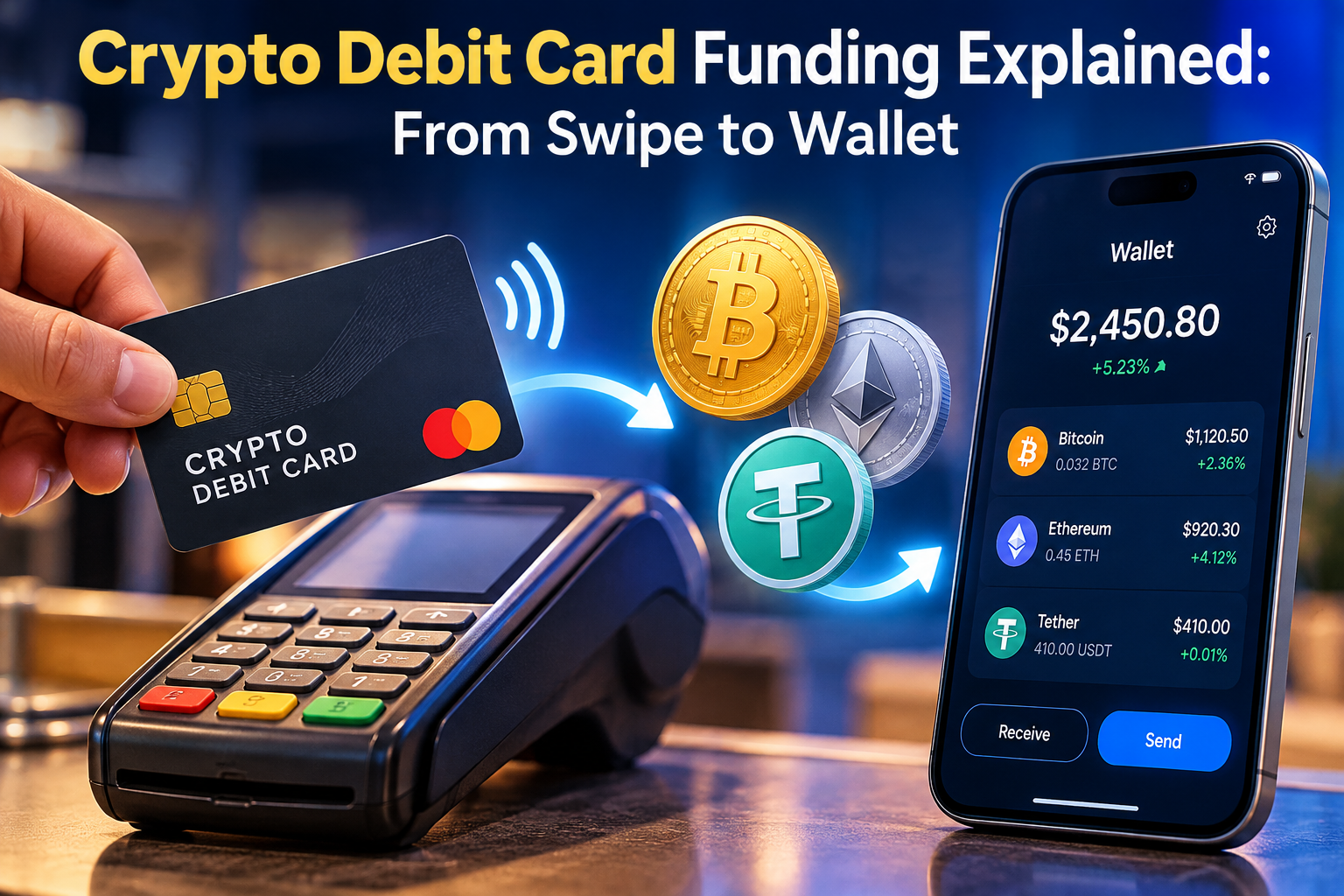
You tap your card. The payment goes through. A few moments later, your crypto balance changes. Simple, right?
Well, mostly. Behind that deceptively ordinary card payment is a chain of authorization, payment processing, conversion, and wallet crediting. The good news is that you do not need to understand every piece of financial plumbing to use it. But knowing what happens behind the scenes can make the process feel a lot less mysterious.
The Swipe Isn’t The Crypto
Start with one important distinction: a debit card does not directly send cryptocurrency. When you use a crypto debit card to purchase digital assets, the card supplies traditional currency. The crypto platform then uses that payment to complete the cryptocurrency purchase.
Typically, the process begins when you connect an eligible debit card to a crypto platform. You select the cryptocurrency you want, enter how much you want to spend, and review the transaction details.
Then comes the familiar part: confirm the payment. Your bank or card issuer authorizes the debit-card transaction just as it would for another purchase. If approved, the payment moves through the conventional card network. The cryptocurrency transaction happens alongside that process, rather than being transmitted through the card itself. A little less futuristic than it sounds. Much more practical.
Then The Money Changes Form
Suppose you decide to spend $200 on Bitcoin. Your debit card is charged according to the transaction total. The platform processes that payment and uses the value to facilitate the cryptocurrency purchase. The amount of Bitcoin you receive depends on the quoted crypto price and any applicable fees or costs. That distinction matters.
The amount leaving your bank account and the amount of cryptocurrency appearing in your wallet are not necessarily equivalent in dollar terms. Crypto prices move, and platforms may apply transaction fees, spreads, or card-processing charges. So before clicking that final confirmation button, look at the numbers. Future-you will appreciate it.
Where Does The Crypto Go?
Once the purchase has been processed, the cryptocurrency is credited to the wallet associated with your account. For many users, this is the satisfying part. The payment has cleared, the purchase has been completed, and the digital asset now appears in the wallet balance.
A custodial wallet can manage technical elements such as private-key storage while giving users tools to buy, sell, send, and receive supported cryptocurrencies. Depending on the platform and transaction, the crypto may arrive within minutes, although processing times can vary.
The Fee Line Deserves A Second Look
Here is where a quick purchase can become slightly less simple. The price displayed for the cryptocurrency is only part of the transaction. Depending on the service, you may encounter a transaction fee, card-processing fee, spread, or another cost. These charges can affect how much cryptocurrency ultimately reaches your wallet.
That is why the transaction summary matters. Check the total card charge. Check the amount of crypto you will receive. Check the fees. If something looks unfamiliar, pause before confirming. There is no prize for clicking fastest.
Why Use A Debit Card At All?
Convenience is the obvious answer. Debit-card funding can give users a familiar way to purchase cryptocurrency without first arranging a separate bank transfer. Instead of moving money into an account and waiting for it to become available, users can potentially connect an eligible card and fund a purchase through a process they already understand.
For someone new to cryptocurrency, that familiarity can make a complicated financial product feel considerably more approachable.
Still, convenience has limits. Supported cards, transaction limits, verification requirements, fees, and processing times can vary between platforms.
From Everyday Payment To Digital Asset
The whole journey is easier to understand when you break it into four stages: your debit card provides the traditional currency, the payment is authorized, the platform facilitates the crypto purchase, and the resulting asset is credited to your wallet.
The swipe starts the process. It does not magically turn dollars into Bitcoin. That distinction is small, but useful. Once you understand it, the path from card payment to crypto wallet becomes far less mysterious, and you can focus on the things that actually deserve your attention: fees, limits, transaction details, and where your digital assets end up.
