

Key Takeaways
- Many tree hazards show visible warning signs before a major storm arrives.
- Dead limbs, trunk cracks, root movement, decay, and sudden leaning should be taken seriously.
- Careful pruning can reduce risk, while aggressive cutting can create new problems.
- Heavy rain, wet soil, and strong winds can make weak trees less stable on Chesapeake properties.
- Never approach a tree that is in contact with a power line, or attempt dangerous storm cleanup alone.
Storm preparation in Chesapeake is not only about securing patio furniture and checking flashlights. Mature trees near homes, fences, driveways, and utility lines also deserve attention before the weather turns severe. A local Chesapeake tree service, such as 757 Tree Solutions, can help property owners assess tree structure, root stability, and surrounding risks. The Chesapeake-based company provides arborist-led pruning, removal, plant health care, and emergency tree services for homeowners in Chesapeake, Suffolk, and Virginia Beach.
From Great Bridge and Greenbrier to Deep Creek, Hickory, and Western Branch, Chesapeake’s diverse neighborhoods depend on healthy trees for shade, property value, and environmental benefit. Trees in these Chesapeake communities also need regular observation. A tree that appears stable during dry weather may become more vulnerable when wind loads increase and soil becomes saturated after the heavy rainfall common to the Chesapeake region.
Why Storm Planning Matters in Chesapeake
Thunderstorms, tropical weather, heavy rainfall, and gusty winds can expose existing weaknesses in trees. Chesapeake’s location near the Atlantic and proximity to coastal storm systems mean homeowners face particular seasonal risks. A mature tree beside a home may have enough room to grow for years, but a decayed limb over the roof or a compromised root system near the driveway can turn into a serious property hazard when conditions change.
Preparation does not mean removing every large tree. Healthy trees provide shade, habitat, and curb appeal throughout Chesapeake neighborhoods. The goal is to identify defects that raise the chance of failure, then choose an appropriate response. Virginia storm-preparation guidance for trees emphasizes resilient tree care and planning before storms occur.
Start With a Safe Yard Inspection
Walk the property from the ground and look up from a safe distance. Do not climb a tree, use a ladder near damaged limbs, or stand underneath a branch that appears cracked, hung up, or broken.
Warning Signs to Look For
- Fresh cracks in the trunk or where large branches join the tree.
- Dead branches, loose bark, or limbs without leaves when nearby limbs are healthy.
- Cavities, mushrooms, soft wood, or extensive decay around the trunk base.
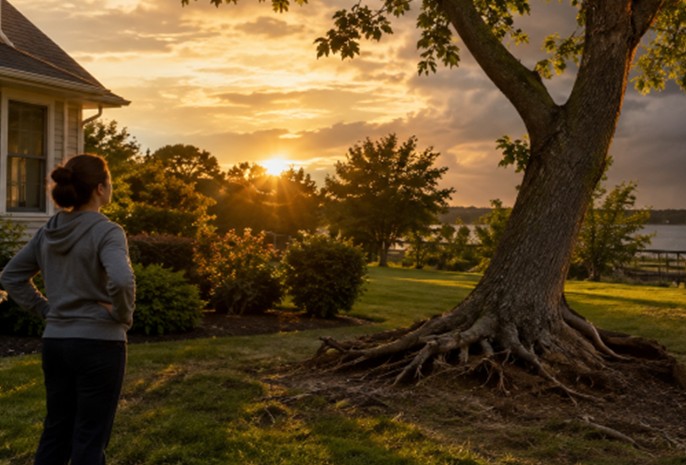
- Roots lifting from the ground, cracked soil, or a new lean after rain or wind.
- Branches rubbing against the roof, siding, gutters, or one another.
- Multiple trunks with a narrow, weak-looking connection between them.
- Large areas of missing bark or visible wounds on the trunk.
A long-standing lean is not automatically dangerous. A lean that has recently changed, especially with exposed roots or shifting soil, deserves prompt professional attention.
Pruning Can Lower Risk When Done Correctly
Pruning is a structural task, not simply a cosmetic haircut. Proper work removes dead, broken, rubbing, or poorly attached limbs while retaining enough healthy canopy for the tree to function well.
Pruning Priorities
- Remove dead, broken, and clearly damaged branches.
- Provide reasonable clearance from roofs, walkways, and parking areas.
- Address branches that cross or rub together.
- Evaluate long, overextended limbs that may be poorly supported.
- Make cuts just outside the branch collar rather than cutting flush to the trunk.
Avoid topping a tree or stripping away large portions of its canopy. Heavy, indiscriminate cuts can stress the tree and may lead to weak regrowth. Large limbs, high branches, and trees near structures should be handled with appropriate equipment and training.
Protect the Root Zone Before Heavy Weather
Roots are easy to overlook because most of the system is underground, yet they are central to stability. Soil compaction, trenching, grading, and repeated vehicle traffic beneath mature trees can damage roots without producing immediate canopy symptoms.
- Keep vehicles, trailers, and heavy equipment off the soil beneath established trees whenever possible.
- Avoid unnecessary digging or trenching near the trunk and major roots.
- Use a broad, shallow layer of mulch, keeping mulch away from direct contact with the trunk.
- Watch for standing water, erosion, exposed roots, and soil cracks after heavy rainfall.
Know When Trimming Is Not Enough
Pruning cannot correct every hazard. Advanced decay, major trunk cracks, root failure, or a tree leaning toward a structure may require more than a trimming plan. A qualified assessment should consider the tree’s condition, likely direction of failure, nearby targets, access for equipment, and whether preservation options such as cabling or bracing are realistic.
Removal should not be based on size or age alone. A large, old tree can remain valuable and stable, while a smaller tree with severe structural defects may create a more immediate concern.
Prepare the Rest of the Property
- Bring in or secure patio furniture, grills, planters, umbrellas, and loose decorations.
- Park vehicles away from trees with visible defects or dead overhead limbs.
- Keep driveways and access routes clear for emergency vehicles or utility crews.
- Inspect fences, sheds, outdoor lighting, and other items located beneath tree limbs.
- Take current photos of the home, roof, vehicles, and landscape for insurance records.
- Keep emergency contacts and insurance information easily accessible.
What to Do During and After a Severe Storm
Stop all outdoor tree work when severe weather approaches. Stay indoors, keep children and pets inside, and do not shelter beneath a tree. The National Weather Service’s wind-safety advice reinforces the importance of avoiding outdoor hazards created by strong winds and falling trees.
Once the storm has fully passed, look for damage from a safe location. Stay far away from downed power lines, damaged utility equipment, leaning trees, split trunks, and suspended limbs. Call 911 if someone is injured or trapped, contact the utility company when lines are affected, and document property damage only when it is safe to do so. Notify the insurance carrier before major cleanup begins.
Common Questions From Chesapeake Homeowners
How often should trees be checked?
Inspect trees visually after major storms and whenever you notice cracks, decay, root movement, dead limbs, or a changing lean. Mature trees near homes and busy areas may benefit from periodic professional review.
Can a healthy tree still fall?
Yes. Extreme weather can damage even a healthy tree. Good structure, sound root conditions, and routine care can reduce risk, but they cannot eliminate it.
What happens to the stump after removal?
Stump grinding can be useful when a stump interferes with mowing, drainage, planting, walkways, or future construction. The best choice depends on how the space will be used afterward.
A Simple 2026 Storm-Readiness Plan
- Spring: Inspect for winter damage and schedule needed pruning.
- Early summer: Check trees near structures and clear loose items from the yard.
- Before forecast storms: Move outdoor belongings, monitor alerts, and avoid risky yard work.
- After severe weather: Wait for safe conditions, photograph damage, and arrange evaluations when needed.
- Year-round: Watch for decay, dead limbs, exposed roots, and changes in tree structure.
Conclusion
Chesapeake homeowners cannot control wind and rain, but they can reduce avoidable tree hazards before storm season. Early inspections, thoughtful pruning, protected root zones, and a practical emergency plan can help protect homes, vehicles, and the people who use the property every day. By taking these steps now, residents throughout Chesapeake can ensure their trees remain both beautiful and safe for years to come.
